H.E.L CrystalSCAN
Up to eight crystallisations. One run. The whole solubility curve.
Mapping solubility and the metastable zone one vessel at a time takes weeks, and every run drifts a little from the last. CrystalSCAN runs up to eight crystallisations at once under independent control, with a turbidity probe in every reactor catching dissolution and nucleation as they happen.
Up to 8 reactors · 2 mL to 500 mL · −60 to +200 °C · configured to your compound
Enquire
Tell us what you’re crystallising
Compound, solvent and rough volume. A specialist will tell you which CrystalSCAN fits — or if it does not.
The problem
One vessel at a time costs you the metastable zone
A solubility curve is many points, and the metastable zone width needs each of them at more than one cooling rate. Done sequentially, that is weeks of bench time, and small differences in stirring, heating and timing between runs blur exactly the boundary you are trying to find.
Up to eight reactors under independent control, each with its own turbidity probe, collect the whole set in one run. Dissolution and nucleation are detected automatically, in clear or coloured solutions, so the clear point and cloud point come from the instrument rather than the eye.
Proof
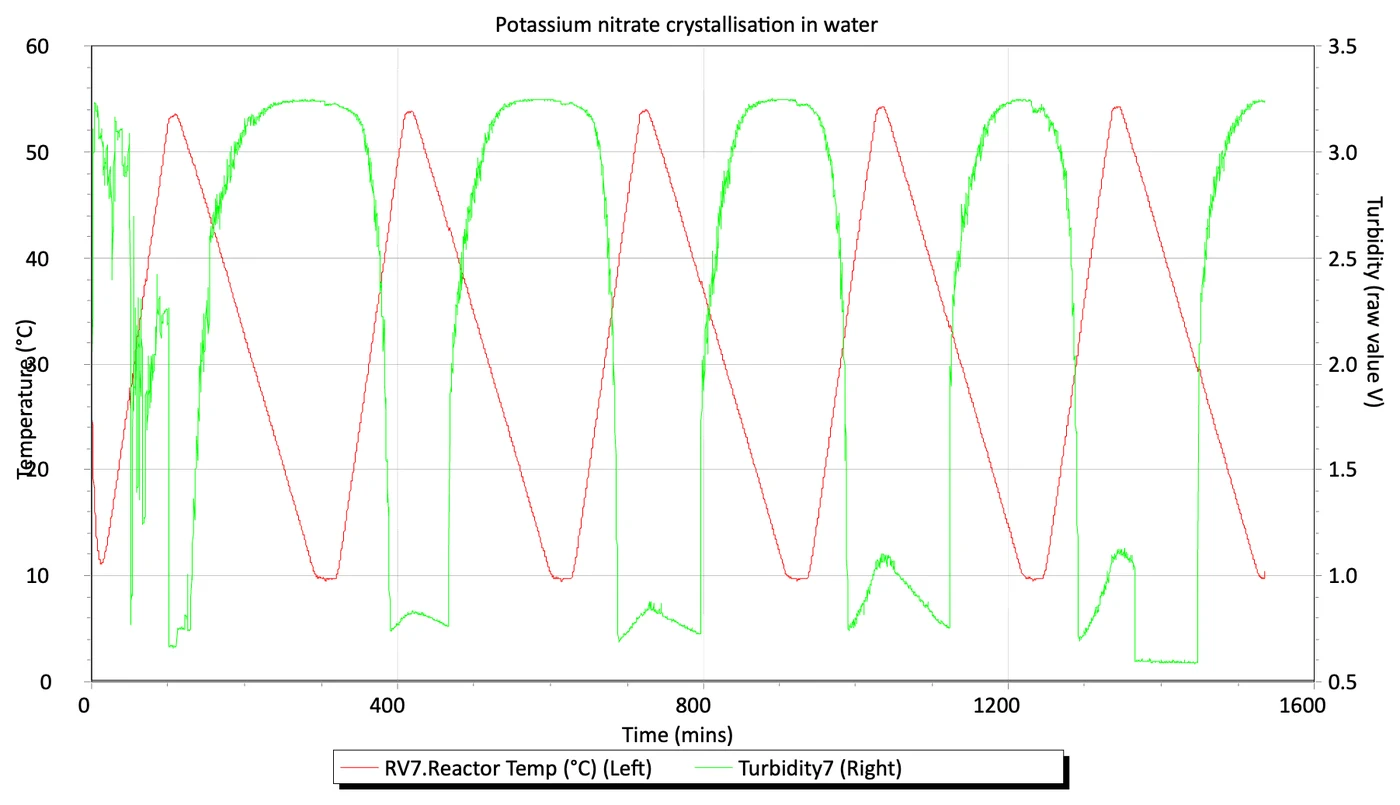
Crystallisation data from the instrument
Every trace below is turbidity against temperature as the instrument recorded it. The point of the probe is that the clear point and the cloud point are read from a signal, not judged by eye.
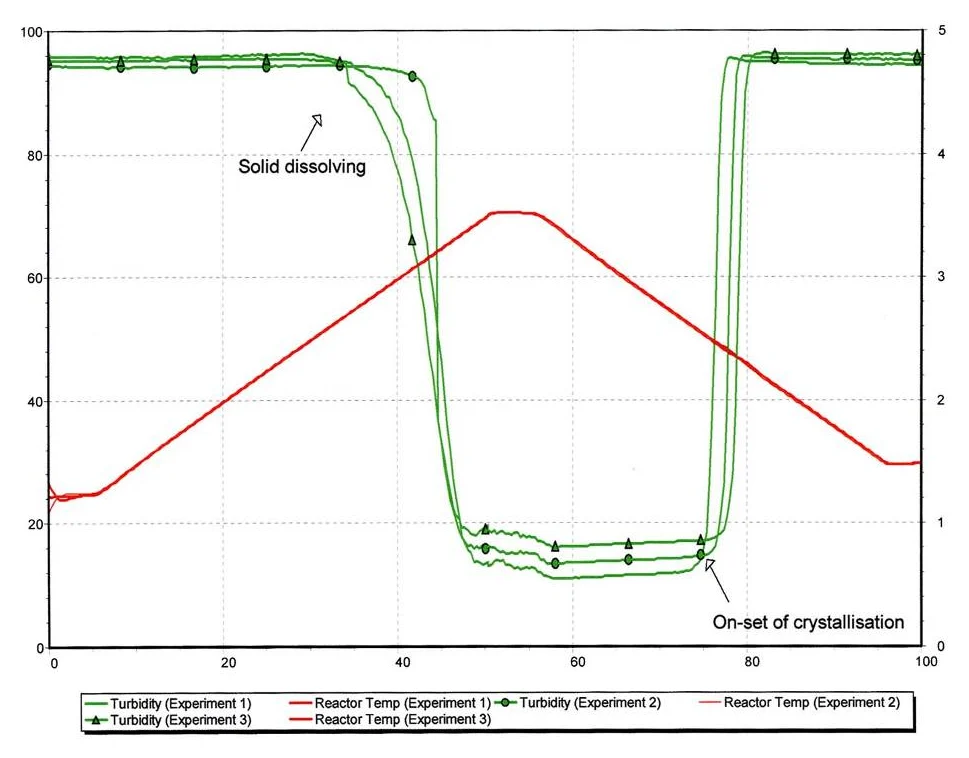
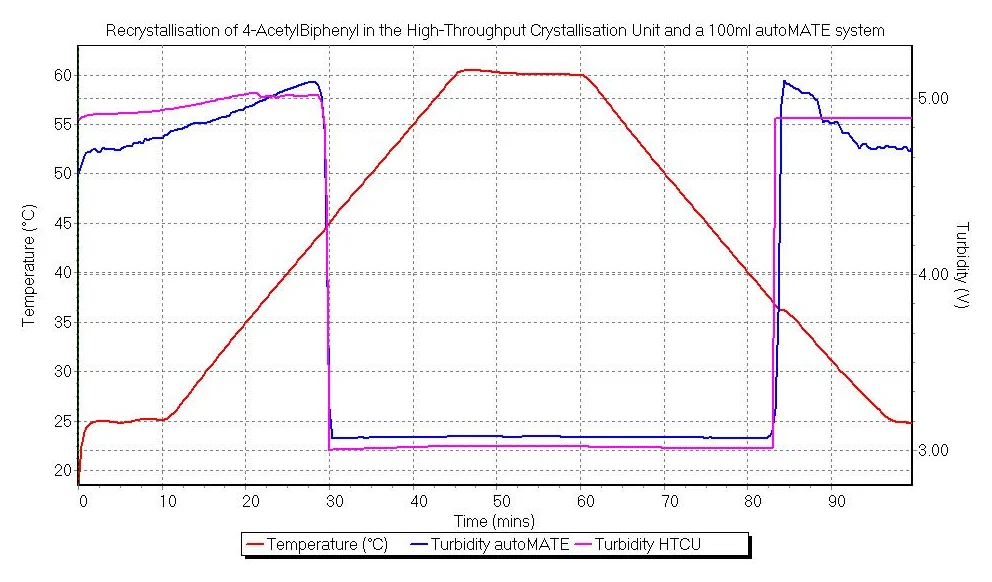
Tap any chart to enlarge.
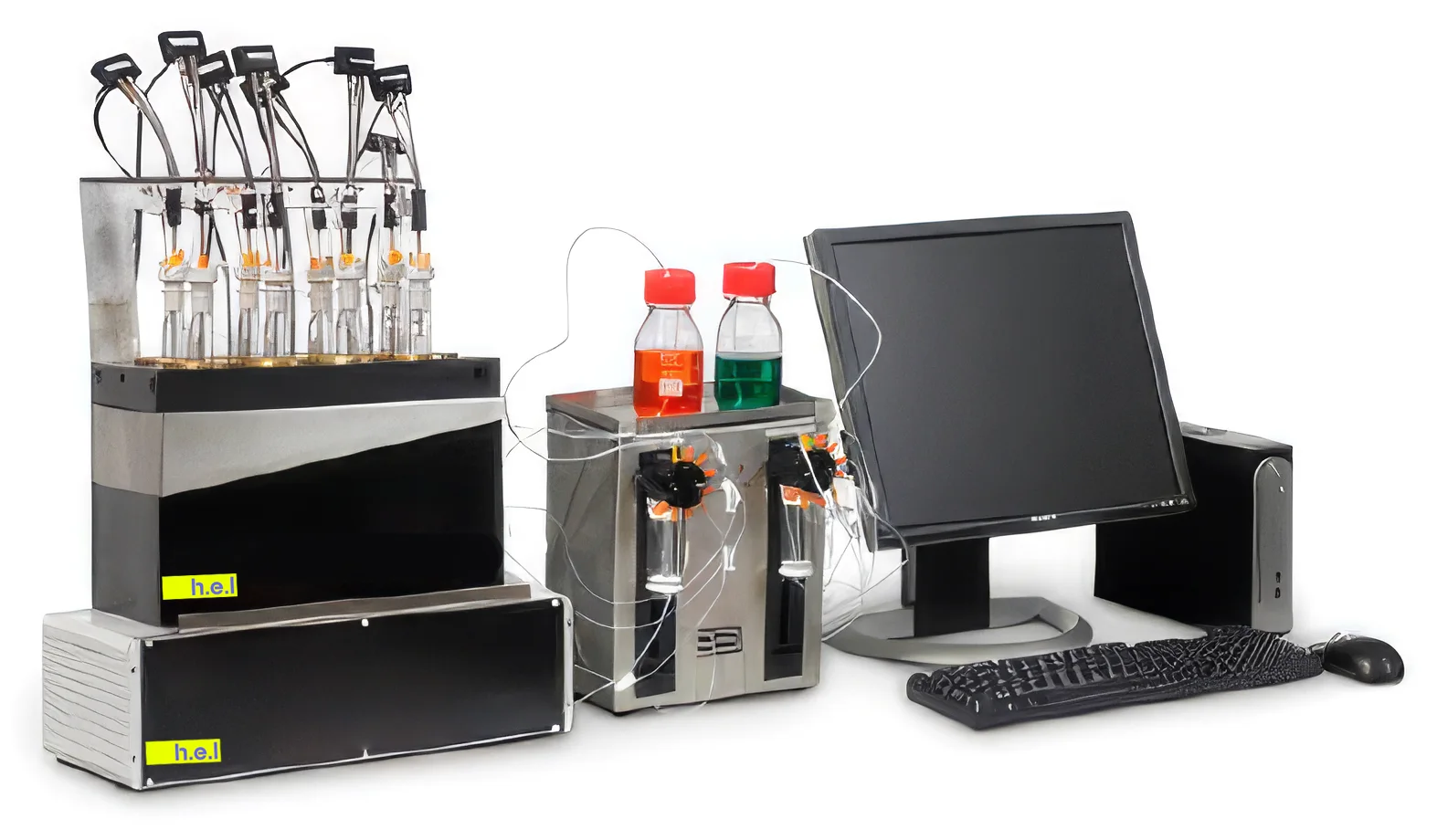
Built on the PolyBLOCK platform. CrystalSCAN is H.E.L’s multi-reactor PolyBLOCK fitted with CrystalEYES turbidity probes and WinISO control — the same reactors, stirring and temperature control H.E.L has built for parallel chemistry for over thirty years.
Vessels from HPLC vials and test tubes to flat-bottom flasks, custom and high-pressure vessels. Magnetic, suspended or overhead stirring; the stirrer design is made not to damage crystals.
Why CrystalSCAN
The main points
Applications
What CrystalSCAN measures
Yours not listed? If it is a solid coming out of or going into solution under controlled temperature, it very likely runs — ask a specialist. See the full specifications on the CrystalSCAN product page.
The range
Two configurations, one platform
CrystalSCAN 8
8-reactor system
Screening and solubility mapping
Volume: up to 120 mL per reactor. Control: independent temperature and stirring in each.
CrystalSCAN 4
Four reactors
Larger volumes and scale-up
Volume: up to 500 mL per reactor. Control: independent temperature and stirring in each.
CrystalEYES
The probe on its own
Add turbidity sensing to reactors you already have
Scale: from ~3 mL test tubes to vessels over 10 L by changing the probe. CrystalEYES details.
Vessels from HPLC vials and 5 mL test tubes to 500 mL flasks, custom and high-pressure. Cooling below ambient needs a circulator, available as an option. Every system is configured to your compound and laboratory before order.
Contact
Talk to a crystallisation specialist
Tell us what you’re crystallising — compound, solvent, rough volume — and a specialist will come back with whether CrystalSCAN suits it and which configuration it would take.
If it’s not the right tool, we’ll say so. For serious evaluations we can run your compound in our applications laboratory before you commit.
marketing@helgroup.com