
Catalysis and Hydrogenation Systems
Hydrogenation, carbonylation and syngas chemistry — screened 7 vials at a time, 96 at a time, or in continuous flow.
Not sure which? Compare the range side by side ↓
High-throughput screening
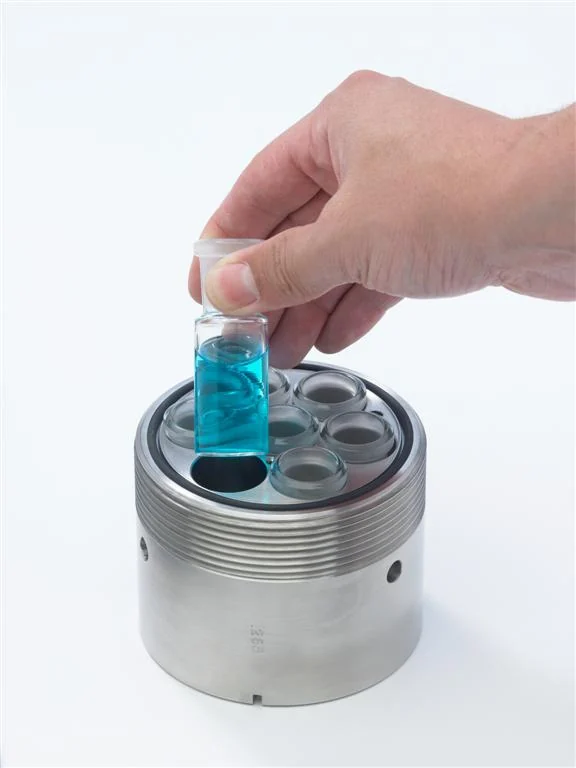

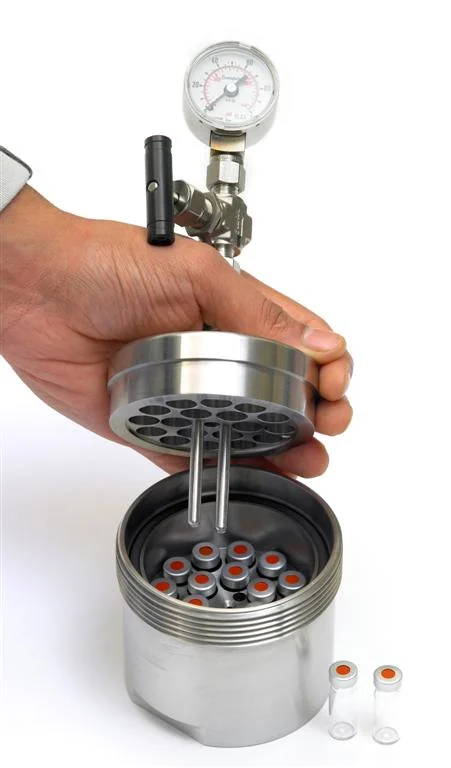
CAT 7, 18 and 24 plus the DigiCAT 96 — from a single pressure vessel holding 7 glass vials on a hotplate to 96 simultaneous reactions in a single 96-vial plate (Zinsser). Choose the throughput you actually need.
Read more ↓Automated catalyst screening
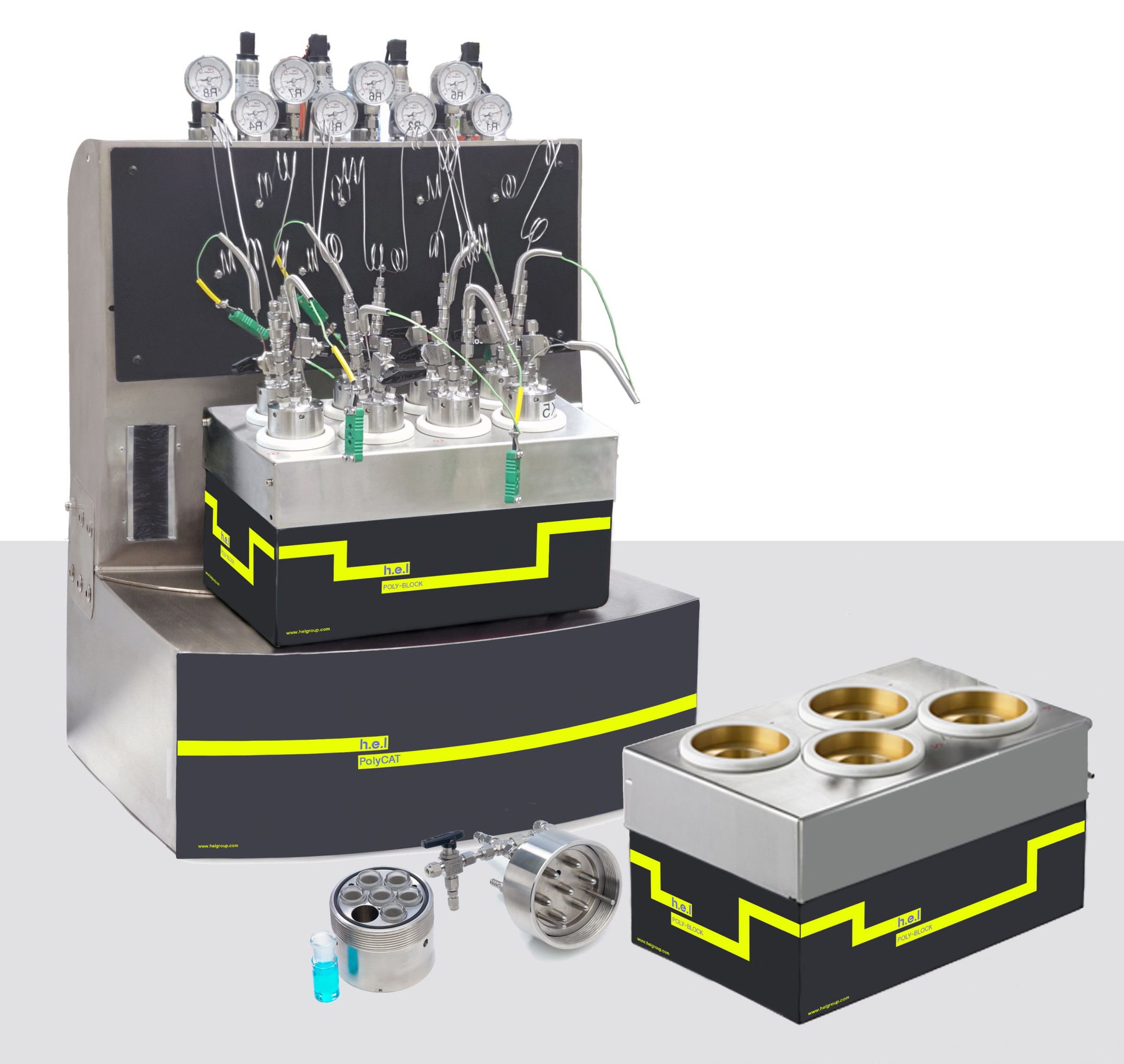
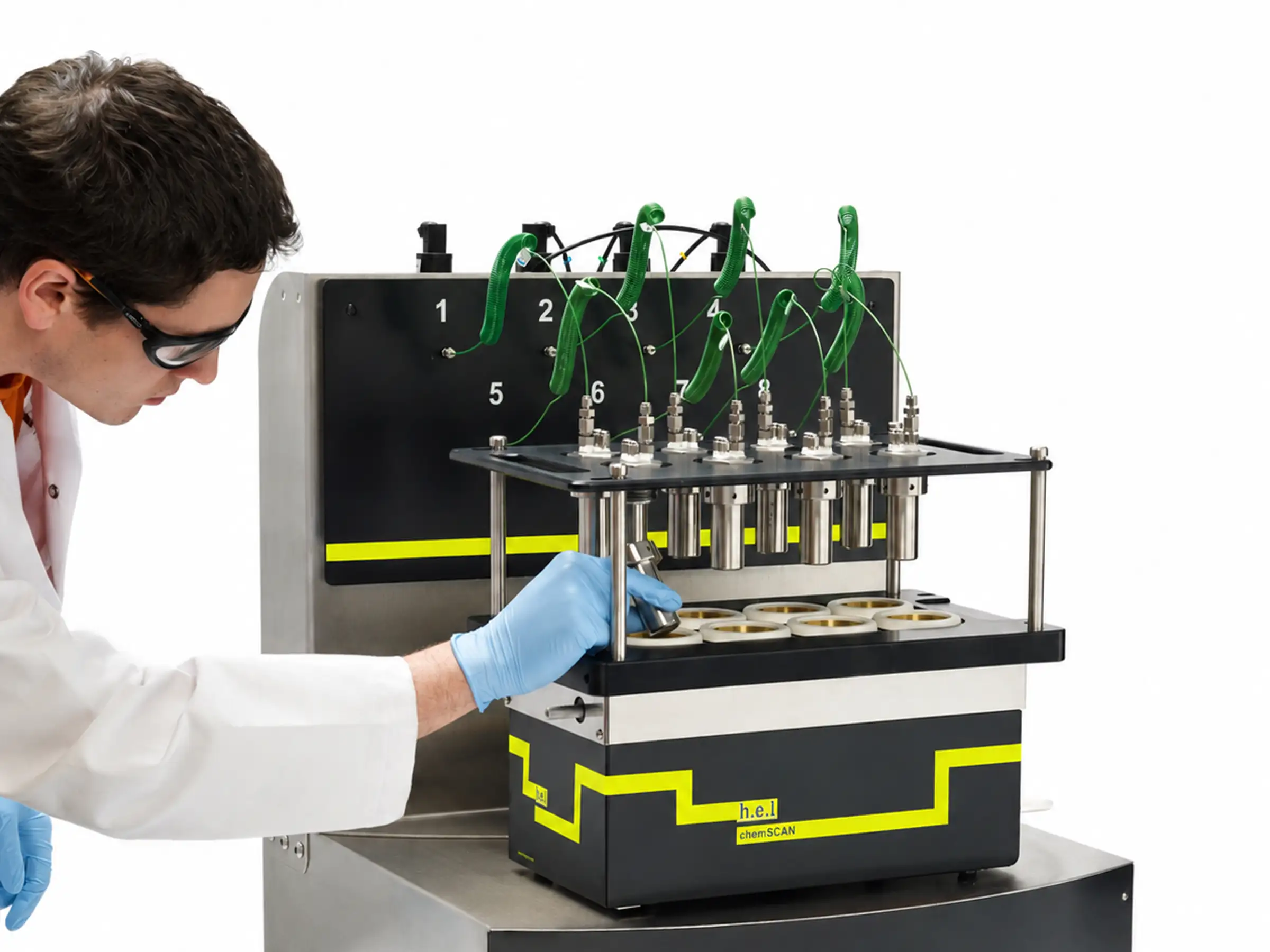
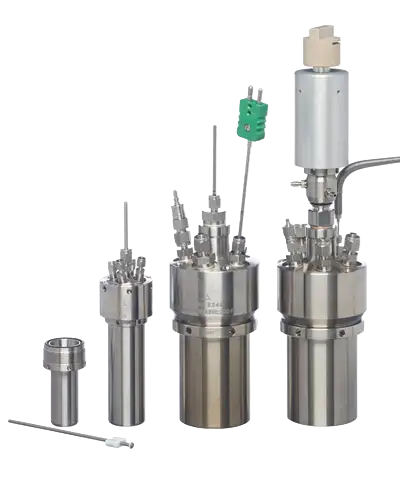
The ChemSCAN range — 4 or 8 independently controlled high-pressure reactors to 200 bar, each measuring gas consumption in real time. Eight conditions in the time one would normally take.
Read more ↓Continuous-flow development
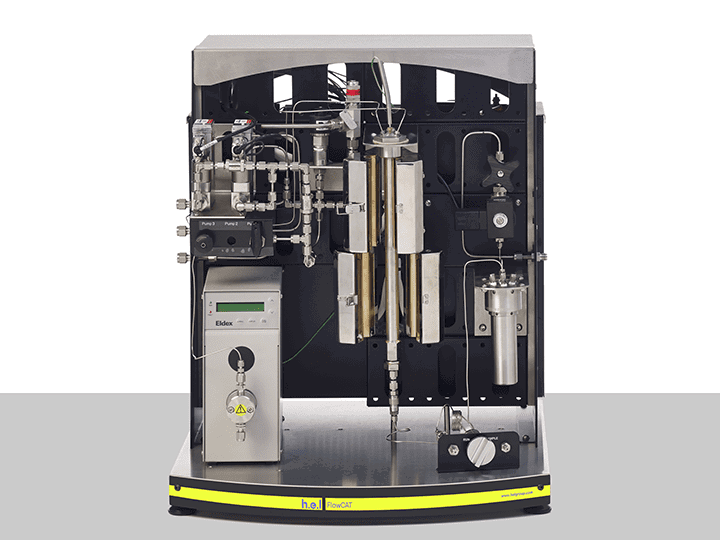
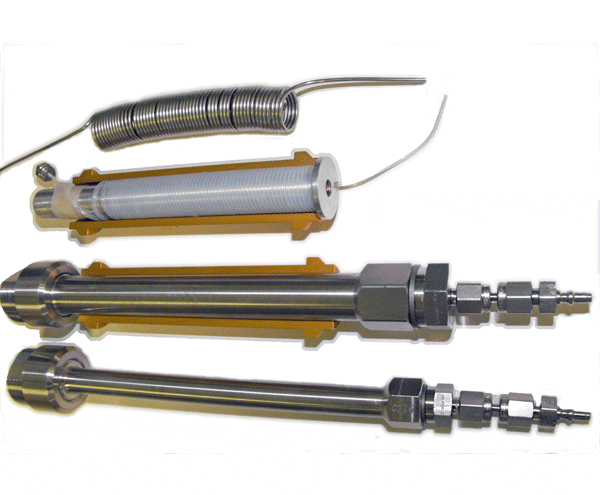
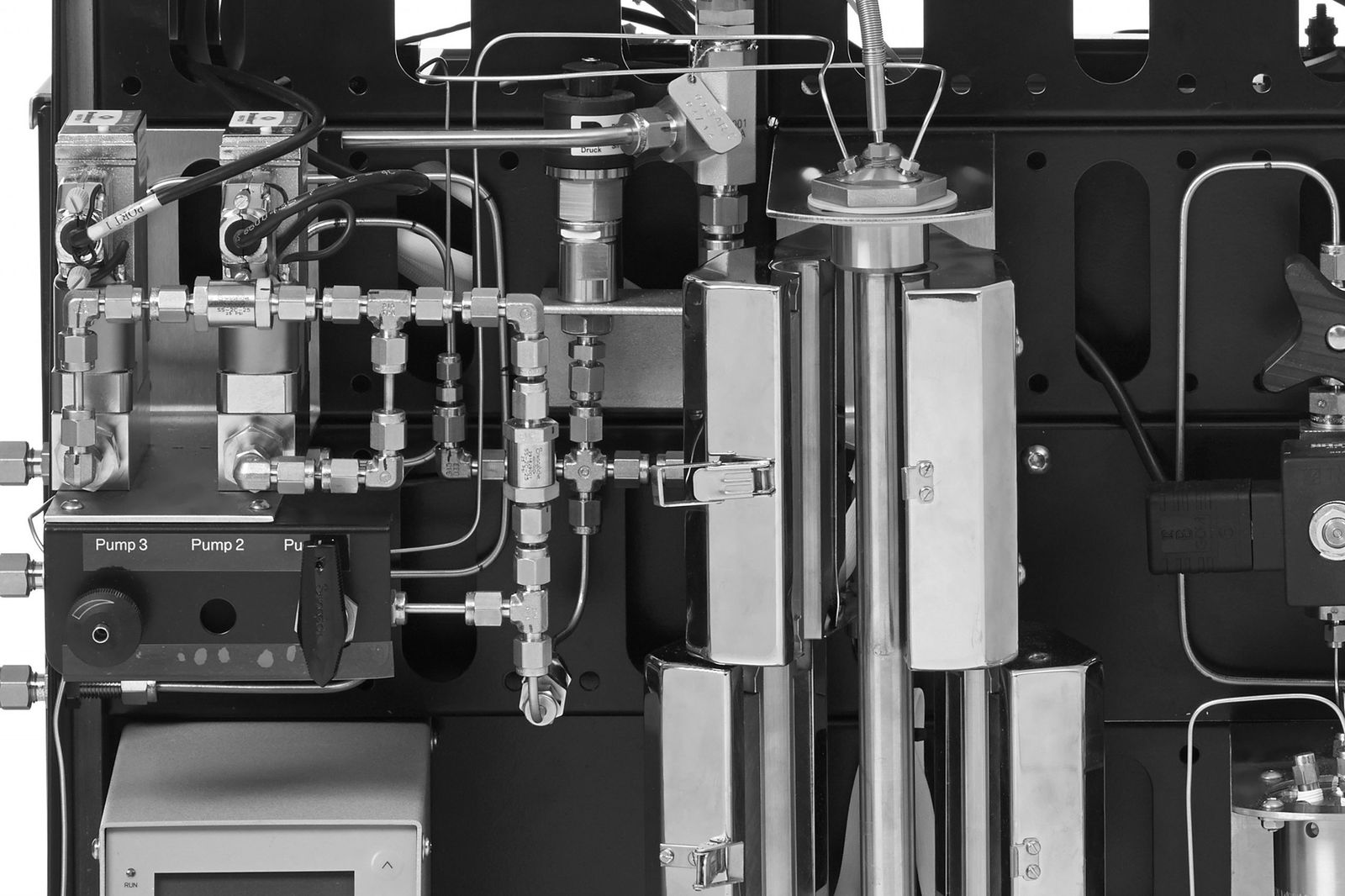
FlowCAT — an automated fixed-bed continuous-flow platform to 200 bar and 550 °C, running multiple process conditions unattended in a single run, with optional on-line GC-MS or FTIR integration.
Read more ↓The CAT and DigiCAT ranges — pick your level of throughput and automation
Not every screen needs a fully automated reactor. Across the CAT and DigiCAT ranges you select the throughput and automation your application actually requires — from 7 vials on a stirrer hotplate to automated 96-vial experimentation — giving scalable routes into catalyst development and process optimization. Every system is fully customisable to your requirements.
CAT 7, CAT 18 & CAT 24
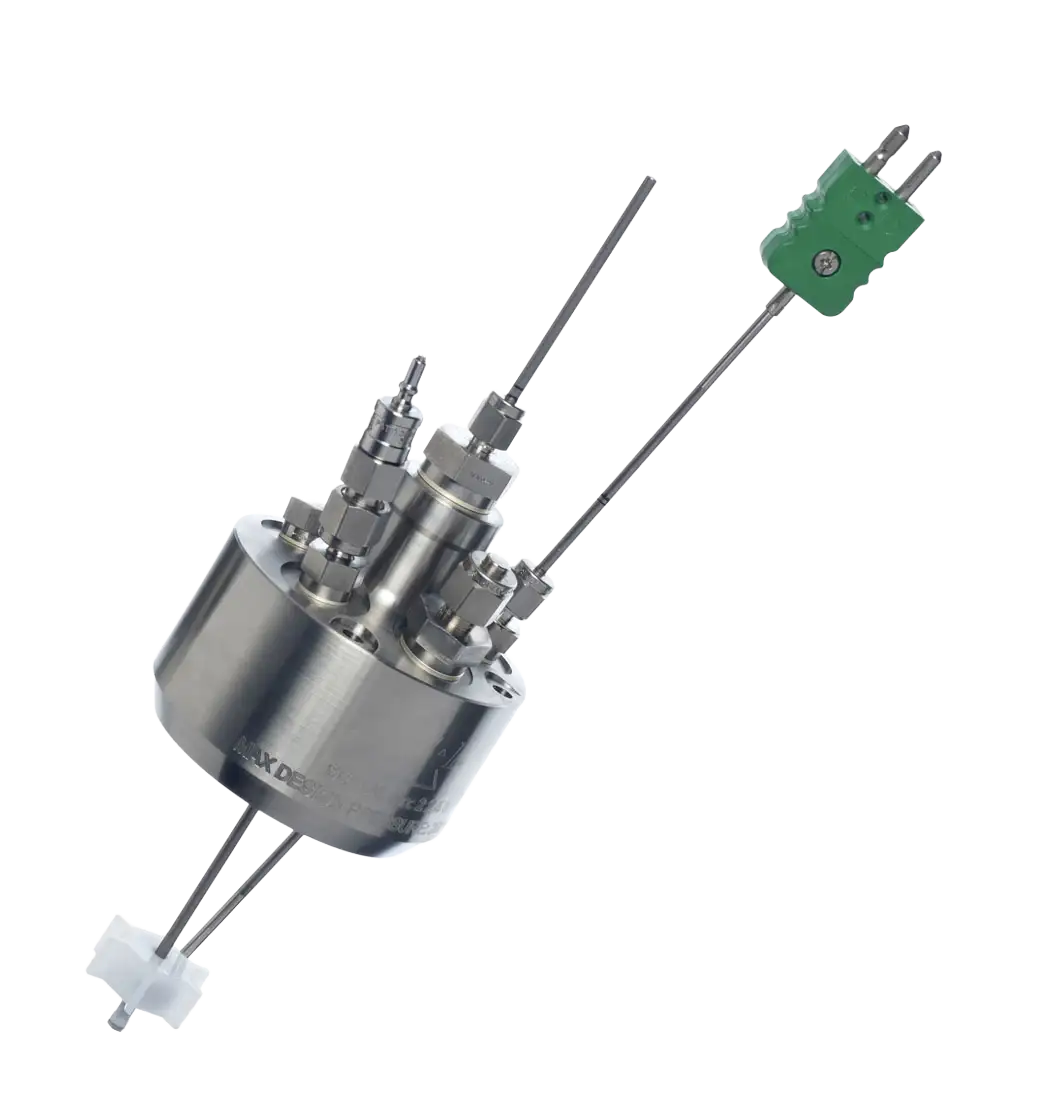
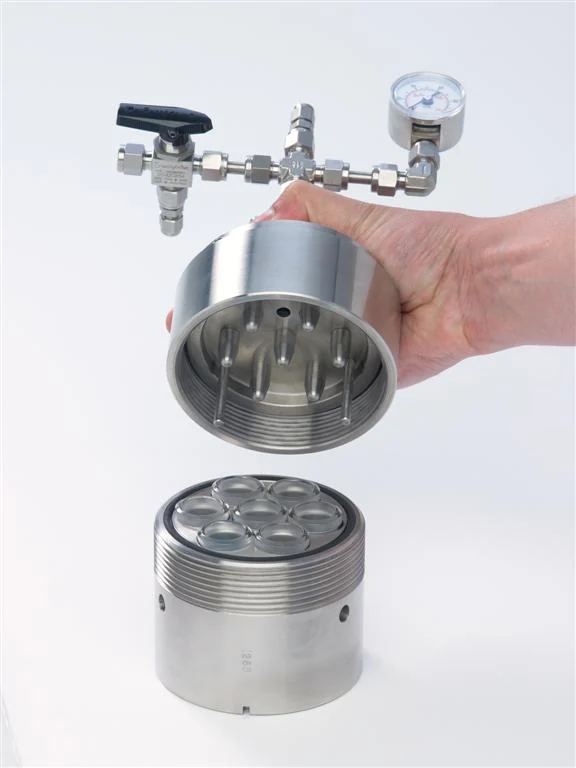
Manual high-pressure screening — a single pressure vessel holding 7, 18 or 24 glass vials, heated and stirred on a standard magnetic hotplate, in 316L stainless steel or Hastelloy C276. All vials run at the same temperature and pressure, so replicates run within a single experiment.
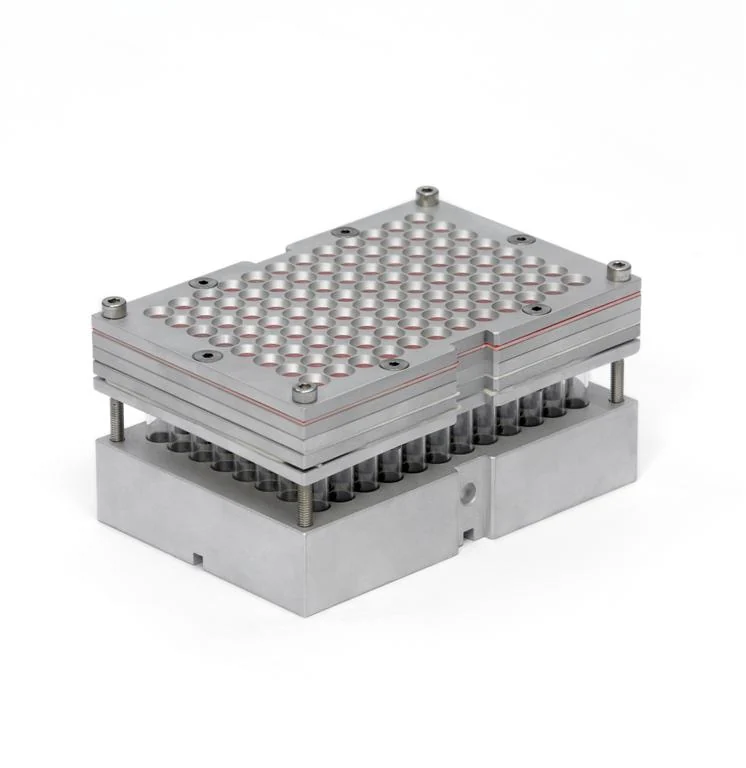
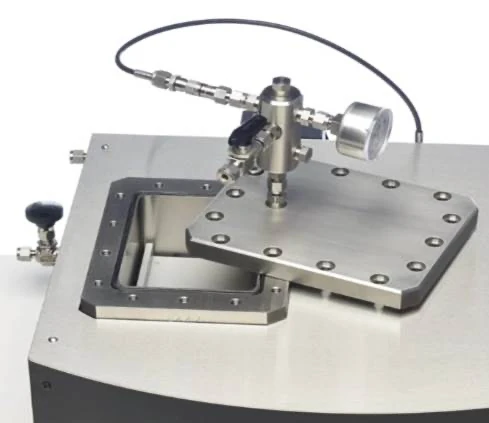 The 96-vial plate drops straight into the DigiCAT 96
DigiCAT 96
High-throughput 96-well screening — a 96-vial plate (Zinsser) for 96 simultaneous reactions in a compact, high-specification format, ideal for early-stage development. Available fully automated or manual.
DigiCAT platform
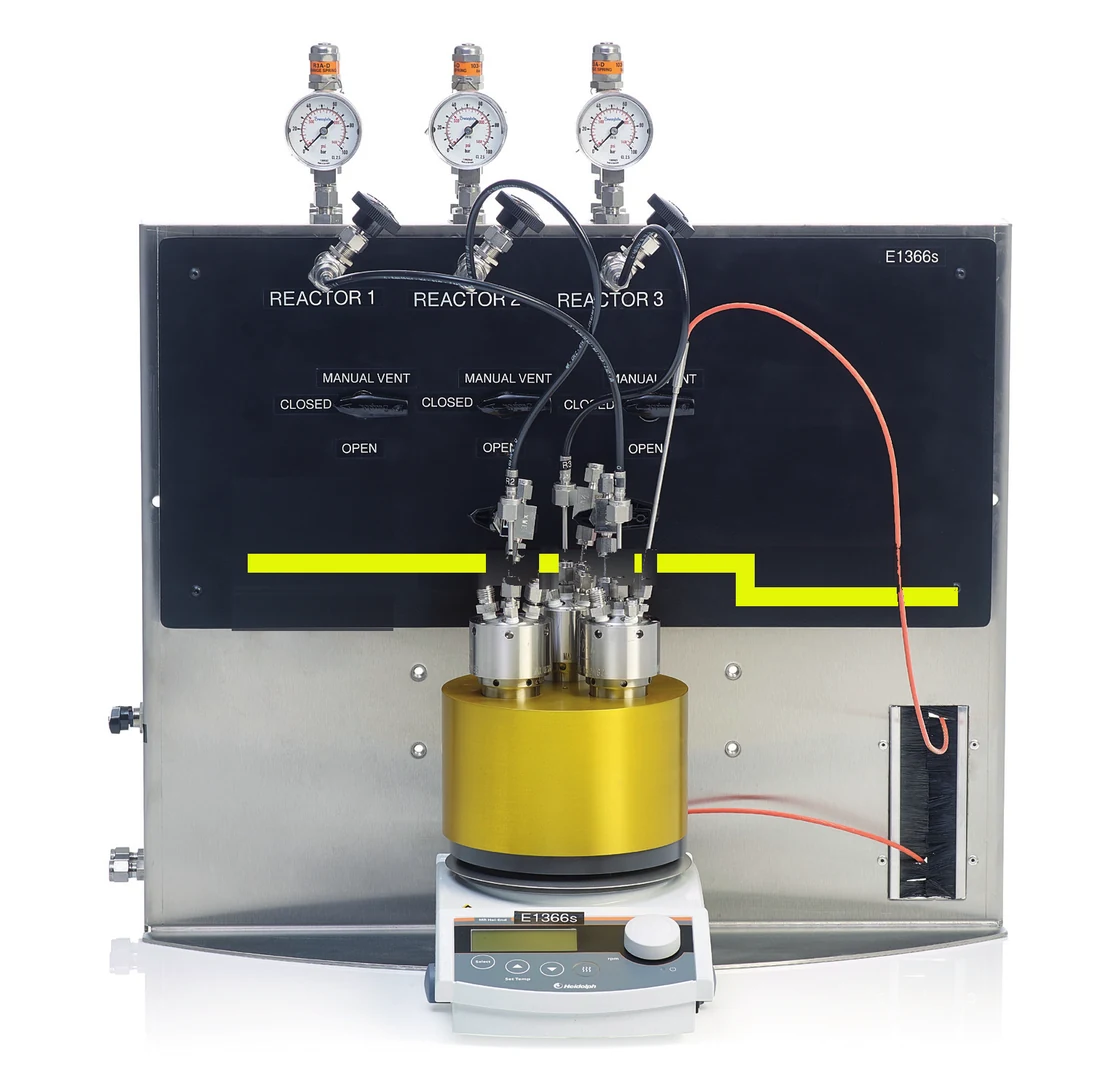
A digital stirring hotplate paired with a gas distribution back panel for inerting, reactive gas feed and venting. It also runs H.E.L’s small high-pressure reactors, and can be configured in parallel so one gas panel serves several hotplates at once.
Compare the CAT, DigiCAT 96 and DigiCAT platform side by side →
Shared across the range
- High-pressure catalytic screening with one or more gas feeds — most commonly hydrogenation — for catalyst selection and reaction optimization
- All vials in a CAT vessel run at the same temperature and pressure, so replicates and comparisons happen inside a single experiment
- CAT 7 and CAT 24 have a coolant-chilled lid to limit vapour crossover between vials — CAT 7 using PTFE plugs, CAT 24 using cold fingers
- CAT 18 and CAT 24 can also run on a PolyBLOCK 4 platform, and 4-zone ChemSCAN platforms take the CAT 18 and CAT 24 assemblies
- The DigiCAT bench platform pairs a digital stirring hotplate with a gas distribution back panel for inerting, reactive gas feed and venting
- One gas panel can serve several hotplates at once, and the platform also runs H.E.L’s Mini (16–50 mL) and Midi (75–300 mL) high-pressure reactors
- Vessel material in 316 stainless steel or Hastelloy C276, with vial format and cooled-head options specified to your chemistry
- On the DigiCAT 96 only: automatic, user-configurable reaction-detection and shutdown, a compact manifold for manual purge and pressurization, and hardware and software fail-safes — the CAT 7, 18 and 24 and the bench platform are manual systems
Specifications
| Specification | CAT 7 / 18 / 24 | DigiCAT 96 | DigiCAT platform |
|---|---|---|---|
| Format | Manual vial-based pressure vessel | High-throughput 96-vial plate (Zinsser) | Bench platform — hotplate + gas panel |
| Parallel reactions | 7, 18 or 24 vials | 96 (1 mL vials) | Drives CAT 7, CAT 18 and CAT 24 |
| Vial volume | 10 mL (7) · 2 mL (18) · 4 mL (24) | 1 mL | — |
| Sample volume | 2–6 mL (7) · 0.5–1 mL (18) · 1–2 mL (24) | — | — |
| Temperature | Up to 250 °C (300 °C if pressure ≤10 bar g) | Ambient to 200 °C | Hotplate 20–300 °C |
| Pressure | Up to 100 bar | Up to 100 bar | Purge, reactive feed and vent, with gauge and relief valve |
| Agitation | Magnetic hotplate | Magnetically stirred | 145 mm plate · 100–1400 rpm |
| Automation | Manual, or via the DigiCAT platform | Automated or manual | Manual, with optional PC control and data logging |
| Also runs | — | — | Mini HP reactors 16–50 mL (1 or 3) · Midi 75–300 mL |
| Materials | 316 stainless steel or Hastelloy C276 | ||
| Software | WinISO control, data logging and recipes | ||
Highlighted rows are where the options differ; a dash means the value does not apply to that item. Every system is configured to your requirements — final values confirmed on specification.
The ChemSCAN range — hydrogenation and catalyst screening with the kinetics measured
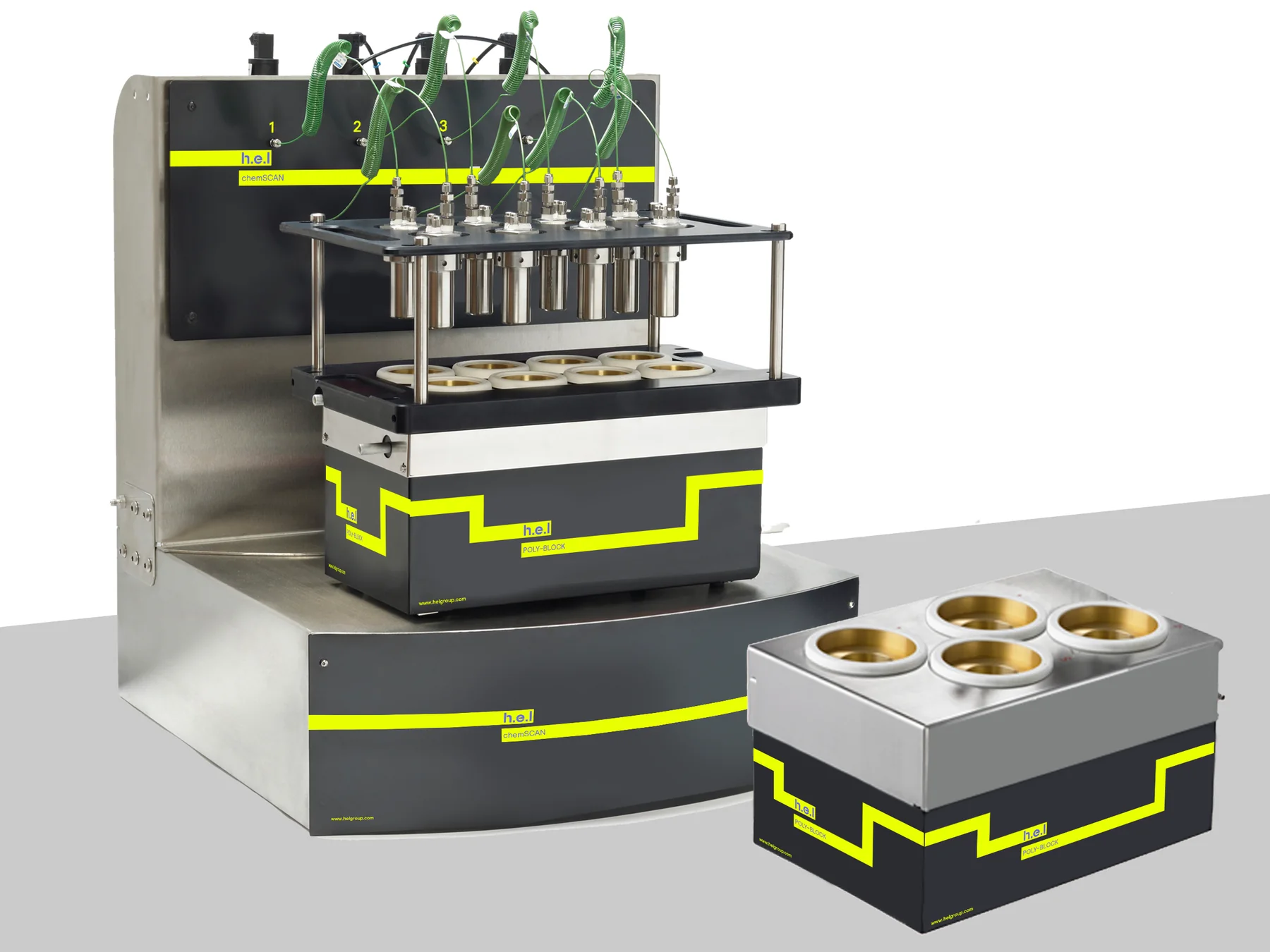
ChemSCAN is a bench-top platform for automated screening and development of heterogeneous (or homogeneous) catalytic parallel reactions at pressures up to 200 bar and temperatures up to 200 °C, with an optional sub-ambient range down to −40 °C. It controls pressure and temperature independently in each reactor while determining the amount of gas consumed — so hydrogenation, carbonylation and syngas chemistry are characterised, not just run. Every system is fully customisable to your requirements.
ChemSCAN SA
- Pressure controlManual, independent
- Gas feeds2, shared
- Best forBasic screens
All the features of the classic ChemSCAN, except that pressure is controlled manually rather than by computer-controlled solenoid valves. Two gas feeds, shared across the reactors — a lower-cost route into parallel screening, and upgradable.
Classic ChemSCAN
- Pressure controlAutomated, independent
- Gas feeds3, shared
- Best forOptimisation
Automated, independent pressure control across all reactors for reproducible parallel screening. Reactions start together and vent automatically once all are complete, with up to three gas feeds shared across the reactors.
ChemSCAN+
- Pressure controlAutomated, independent
- Gas feeds3, one set per reactor
- Best forDoE and advanced catalysis
Maximum flexibility with independent control of every reactor. Start, feed, vent and purge each reactor independently, with up to three dedicated gas feeds per reactor for genuinely independent experiments.
Compare the three ChemSCAN models side by side →
Shared across all three configurations
- Independent temperature control in each vessel — a difference of over 100 °C between reactors can be set in the same run, with optional sub-ambient operation to −40 °C
- Individual pressure control, so reactors can be set to different start pressures and tested at different pressures
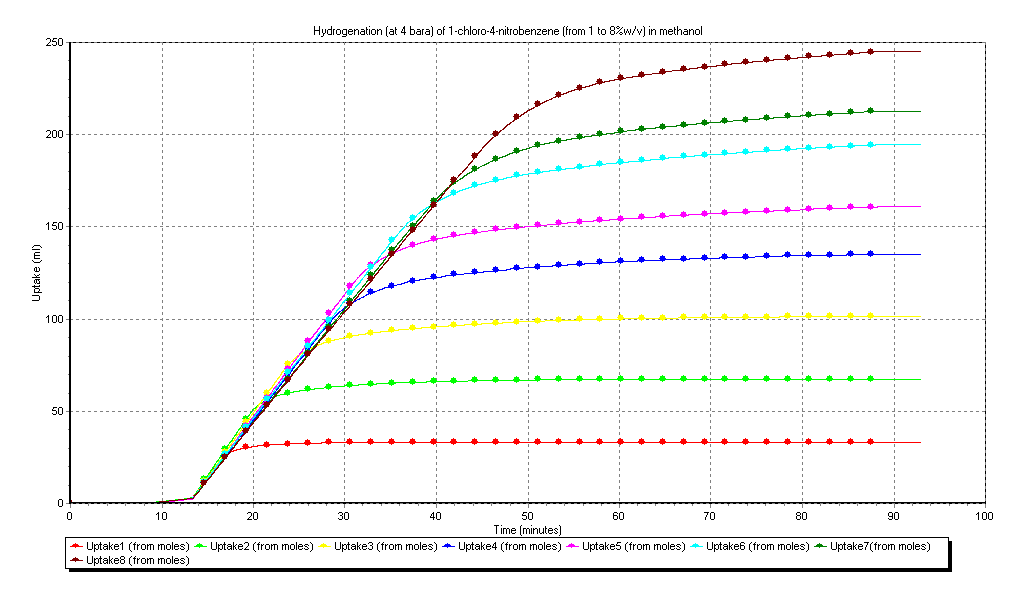
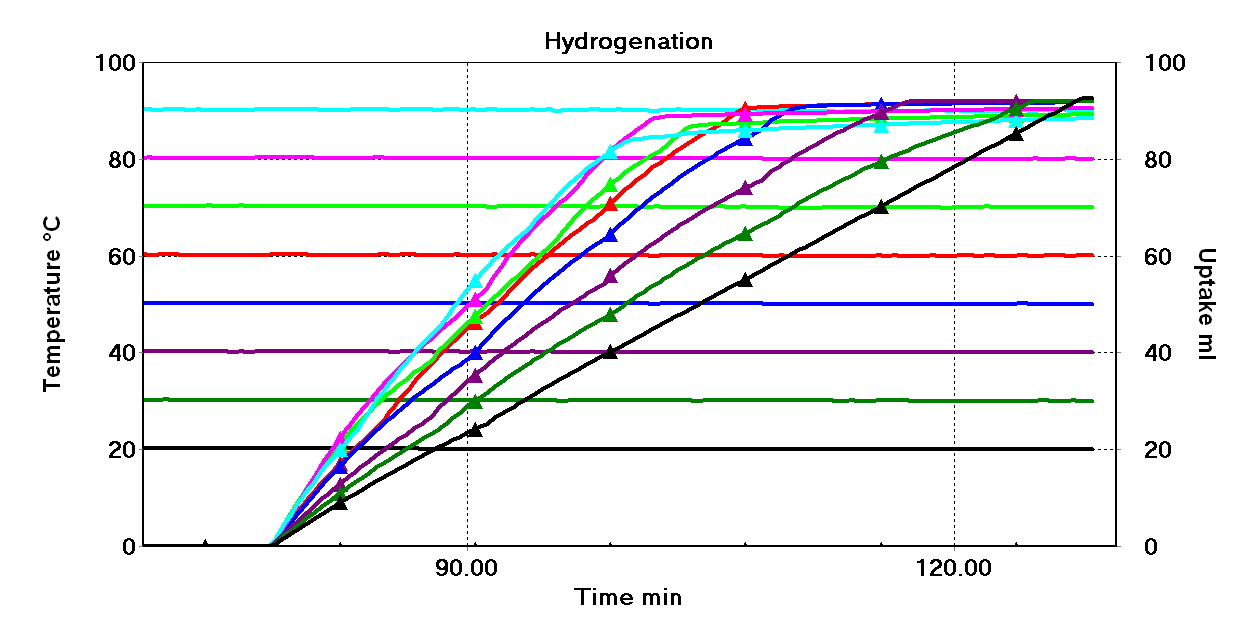
- On-line gas consumption calculated and displayed for every reactor — watch the kinetics as they happen rather than infer them afterwards
- Mixing good enough that gas uptake is mostly kinetically controlled, so results scale up with confidence across heterogeneous and homogeneous gas–liquid reactions
- Automated control sequences covering all inert purges as well as the reactive stages, with software control and data logging throughout
- Fully automated high-pressure liquid addition to 200 bar, accurate to around 0.05 mL or better
- Available in 4- and 8-reactor designs: the 8-reactor takes 16, 25 and 50 mL vessels, the 4-reactor accommodates 500 mL and smaller
- A predefined gas-uptake workflow for quick setup, plus a protocol builder for saved custom workflows — with interlocks and emergency pressure relief on every system
Download the ChemSCAN brochure →
Download the parallel process development brochure →
Specifications
| Specification | ChemSCAN SA | ChemSCAN | ChemSCAN+ |
|---|---|---|---|
| Automation | Semi-automatic — pressure profiled manually | Automatic — independent pressure control across all reactors | Fully automatic — every reactor independent |
| Gas feeds | 2, shared | 3, shared | 3, individual per reactor |
| Reactor operation | Each reactor independent | Reactors start together and vent automatically once all are complete | Start, feed, vent and purge each reactor on its own |
| Working volume | 3 – 400 mL (4-zone) · 3 – 40 mL (8-zone) | 3 – 400 mL (4-zone) · 3 – 40 mL (8-zone) | 2 – 400 mL (4-zone) · 2 – 40 mL (8-zone) |
| Temperature | Ambient to 200+ °C | Ambient to 200+ °C | 25 to 200 °C |
| Reactors | 4 or 8, independently controlled | ||
| Vessel volumes | 4-reactor: 16, 25, 50, 75, 125, 300 or 500 mL · 8-reactor: 16, 25 or 50 mL | ||
| Vessel material | 316 stainless steel or Hastelloy C276 | ||
| Vessel rating | 200 bar, 350 °C | ||
| Pressure | 1 – 100 bar, 200 bar optional | ||
| Sub-ambient | Down to −40 °C with a circulator | ||
| Agitation | 120 – 1500 rpm, magnetic or overhead | ||
| Liquid feed | Optional — 0.02 – 40 mL/min @ 100 bar, 0.01 – 20 mL/min @ 200 bar | ||
| Gas uptake sensitivity | 0.04 mmol, equal to a 0.1 bar pressure change | ||
| Sampling | Optional port on the reactor lid | ||
Highlighted rows are where the three configurations differ — everything else is common to all three. All three run up to 8 zones, and 4-zone platforms also take the CAT 18 and CAT 24 assemblies for 18 or 24 vials at 0.2 – 1.3 mL. Final values confirmed on specification.
FlowCAT — continuous-flow process development at high pressure
Once the catalyst is chosen, the process has to run continuously. FlowCAT is an automated continuous-flow high-pressure reactor system for process development, catalyst evaluation and reaction optimization, with precise control of temperature, pressure and gas and liquid feed rates for reproducible operation under demanding conditions. Its flexible, compact design supports continuous-flow development and the step into small-scale production. Every system is fully customisable to your requirements.
What it does
- A high-performance continuous-flow reactor system for developing and optimizing chemical processes under high pressure, typically configured with fixed-bed tubular reactors
- Supports both homogeneous and heterogeneous reactions, making it suitable for a wide range of applications
- Multiple process conditions explored sequentially within a single automated run — pre-programmed or adjusted in real time
- Rapid screening, yield optimization and catalyst evaluation without constant operator input
- A compact footprint with high levels of automation, easy to integrate into a laboratory, and capable of unattended operation
- Computer-controlled back-pressure regulation handles single and multiphase liquids and gases automatically
- Optional integration with GC-MS or FTIR probes for on-line evaluation of the reaction output
- Supports the transition from laboratory development to small-scale continuous production
Specifications
| Specification | FlowCAT |
|---|---|
| Reactor type | Tubular fixed-bed reactors in 316 stainless steel or Hastelloy; coiled pipe reactors in PTFE, stainless steel or Hastelloy |
| Tubular reactors | Length 18, 31, 44 or 60 cm · internal diameter 6, 12 or 18 mm |
| Tubular reactor volumes | 18 cm: 5.0 – 12.4 mL · 31 cm: 20.3 – 49.7 mL · 44 cm: 48.3 – 114.5 mL · 60 cm: up to 152.6 mL (depends on internal diameter; excludes fittings and end connections) |
| Coiled pipe reactors | 1.2 m × 1/8″ ID (approx. 2.9 mL) · 2.6 m × 1/16″ ID (approx. 0.66 mL), excluding fittings and end features |
| Temperature control | Ambient to 300 °C (tailored: sub-ambient, or up to 550 °C) |
| Pressure | Ambient to 100 bar (option to 200 bar) |
| Back-pressure regulation | Computer-controlled valve for single & multiphase liquids and gases |
| Reaction analytics | Optional integration with GC-MS or FTIR probes for on-line evaluation |
| Operation | Automated, with unattended running and real-time parameter adjustment |
| Software | WinISO — data logging, multi-step recipes, parameter control and feedback loops |
Reactor material and size, temperature and pressure range, and analytics are all configured to your process. Final values confirmed on specification.
Compare the catalysis range
From a first screen to a continuous process — one catalysis platform.
Screening, parallel optimisation and flow development all run on the same WinISO software, so methods and data carry straight through.
Configure it your way
Every catalysis system is specified around your chemistry — vessel material, volumes, pressure rating, gas handling and analytics are chosen for the reactions you actually run.
Vessels & materials
16 to 500 mL ChemSCAN vessels rated to 200 bar and 350 °C, CAT vials from 1 to 10 mL, and FlowCAT tubular reactors in 6, 12 or 18 mm bore and 18 to 60 cm long, plus PTFE or metal coiled pipe reactors — all in 316 stainless steel or Hastelloy C276.
Gas handling & feeds
Two or three shared gas feeds, or three dedicated feeds per reactor on the ChemSCAN+; automated purge and reactive stages; and high-pressure liquid addition to 200 bar accurate to about 0.05 mL.
Gas uptake & analytics
Real-time gas consumption per reactor down to 0.04 mmol on the ChemSCAN, an optional sampling port on the reactor lid, and optional GC-MS or FTIR integration on FlowCAT for on-line evaluation.
Cross-platform assemblies
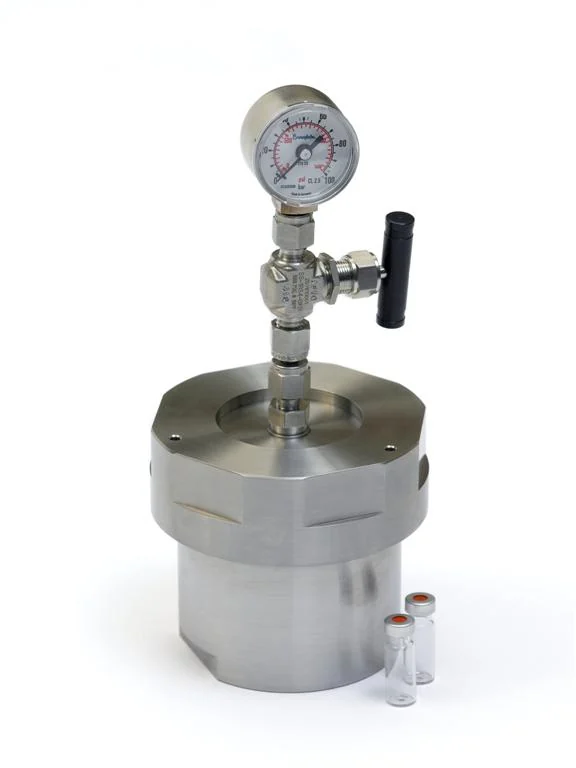
CAT 18 and CAT 24 run on 4-zone ChemSCAN platforms for 18 or 24 vials at 0.2 – 1.3 mL, so a screen started in the CAT blocks can move onto an automated platform without changing vessel format; the DigiCAT bench also drives Mini and Midi high-pressure reactors.
Frequently asked questions
Which catalysis system do I need?
What is the difference between the CAT range and ChemSCAN?
What is the difference between ChemSCAN SA, ChemSCAN and ChemSCAN+?
How many reactions can I run in parallel?
What pressures and temperatures are available?
What reactions are these systems used for?
Can ChemSCAN replace another manufacturer’s parallel screening system?
Selected publications
H.E.L catalysis systems feature in many peer-reviewed studies — these are just six. Subscription or purchase may be required for full access. View all publications →
Related reading
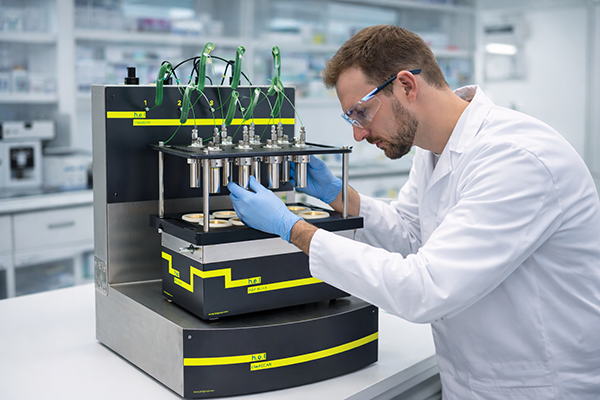 Catalysis Accelerated: How the H.E.L ChemSCAN is Revolutionizing High-Pressure ResearchRead article →
 Why Supported Catalyst Screening Systems Matter More Than Ever in 2026Read article →
 Hydrogenation: How We Can Make It SaferRead article →
 Emerging Trends in Flow Chemistry: Efficiency, Optimization and InnovationRead article →Exploring the Pitfalls of Flow Chemistry — Industry and Academic InsightRead article →
 How Can Automation and Parallel Systems Improve Chemical Synthesis Processes?Read article →
The catalysis range at a glance
CAT 7 / 18 / 24
Manual high-pressure screening — 7, 18 or 24 vials on a stirrer hotplate
Jump to section ↑DigiCAT 96
High-throughput 96-well screening, automated or manual
Jump to section ↑ChemSCAN range
SA, ChemSCAN and ChemSCAN+ — 4 or 8 automated reactors with real-time gas uptake
Jump to section ↑FlowCAT
Bench-top continuous-flow catalysis to 200 bar and 550 °C
Jump to section ↑Ready to accelerate your catalysis research?
Talk to a catalysis specialist about screening throughput, parallel optimisation and the step into continuous flow.
“These systems are used for the screening of catalysts and/or different reaction conditions in hydrogenation and hydroformylation reactions. We have been using one device with eight autoclaves during the last 8 years or so, and we are very satisfied with it… It is for this reason that we bought a second HP ChemSCAN.” — Leibniz-Institut für Katalyse (LIKAT Rostock)