
H.E.L FlowCAT
Continuous flow at 100 bar. One unattended run. Every condition.
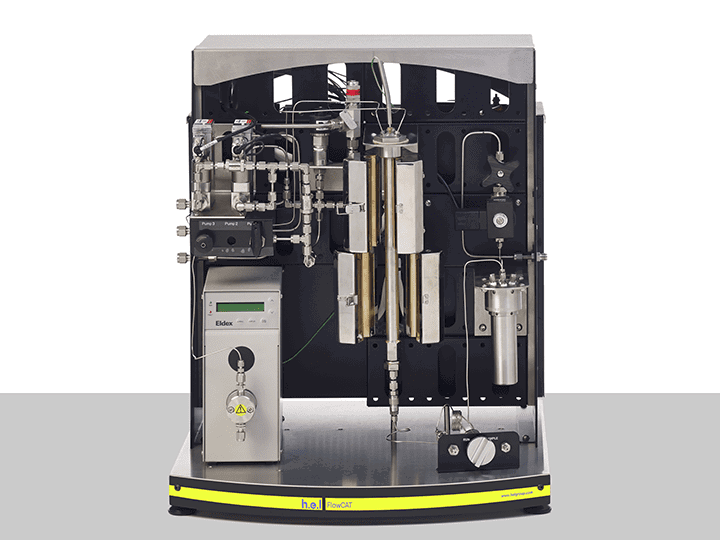
Testing a catalyst in flow one condition at a time keeps an operator at the rig for every change of temperature, pressure or feed rate. FlowCAT is an automated fixed-bed continuous-flow reactor to 100 bar and 300 °C as standard. Programme the conditions, start the run, and read the results in the morning.
Fixed-bed or coiled reactors · 100 bar standard, 200 bar option · configured to your process
Enquire
Tell us what you’re running in flow
Reaction, catalyst and rough throughput. A specialist will tell you whether FlowCAT fits — or if it does not.
The problem
One condition at a time ties an operator to the bench
Developing a continuous process means mapping temperature, pressure, flow rate and catalyst loading against yield. Done by hand, every point needs someone at the rig to change a setting, wait for steady state and take a sample, so a week gives a handful of points and no two runs are quite comparable.
FlowCAT runs the pump, the gas mass-flow controllers, the heating mantles and the back-pressure regulator from one recipe. Conditions step through unattended, a sample is taken at the end of each step, and you can edit the next step while the current one is running.
Proof
Data from FlowCAT runs
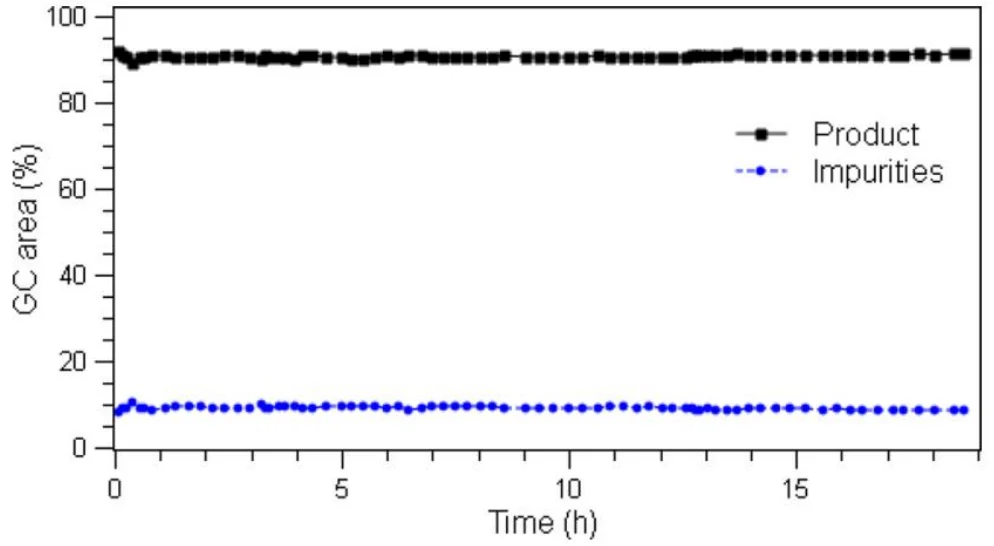
Every chart below comes from a FlowCAT: two from H.E.L application work and one from a published study by GSK.
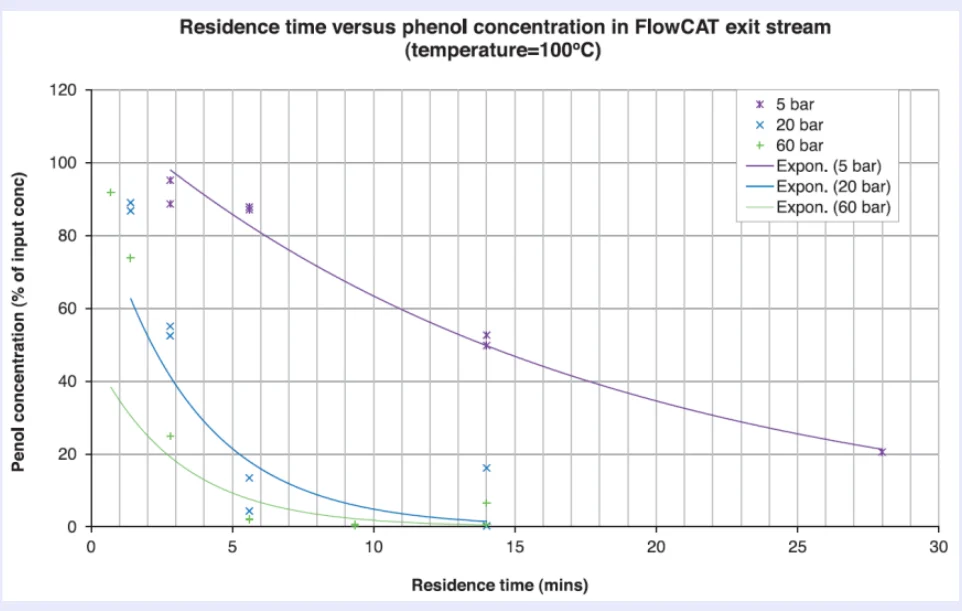
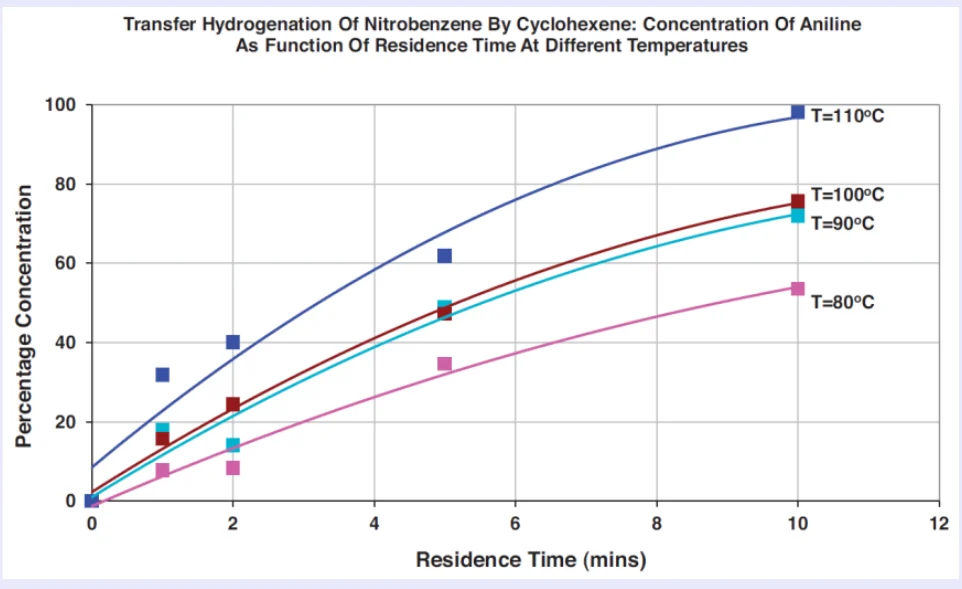
Tap any chart to enlarge.
“The H.E.L FlowCAT is a very robust, compact and flexible apparatus for high pressure heterogeneous catalytic processes. Its small footprint and versatility, along with reliable safety features, make it an excellent piece of equipment to use.”
University of Cambridge
Published FlowCAT work includes GSK (trickle-bed hydrogenation, 2020), Durham University (ethanol dehydrogenation, 2021) and Ni–Mo₂C hydrodeoxygenation of guaiacol (Energy & Fuels, 2026).
Why FlowCAT
The main points
Applications
What FlowCAT is used for
Yours not listed? If it is a gas, liquid or two-phase feed over a catalyst bed at pressure, it very likely runs — ask a specialist. See the full specifications on the FlowCAT product page.
The range
One platform, configured to the process
Standard FlowCAT
100 bar, 300 °C
Process development and catalyst evaluation
Feeds: one liquid, one reactive gas, one inert. Reactor: 18 cm tubular as standard, longer with extra mantles.
Extended FlowCAT
200 bar, higher temperature
Demanding chemistries
Options: more liquid and gas feeds, 31 to 60 cm reactors, sub-ambient or high-temperature operation.
Multi-reactor
Cascade or parallel
Several conditions or stages at once
Format: independently controlled units in cascade or parallel, with product recycling, drying and compression where needed.
Reactor material and size, temperature and pressure range, feeds and analytics are all configured to your process before order. Final values are confirmed on specification.
Contact
Talk to a catalysis specialist
Tell us what you’re running — reaction, catalyst, rough throughput — and a specialist will come back with whether FlowCAT suits it and the configuration it would take.
If it’s not the right tool, we’ll say so. For serious evaluations we can run your chemistry in our applications laboratory before you commit.
marketing@helgroup.com