
BTC-130
Fully customisable bench-top adiabatic safety testing — component & cell hazard screening
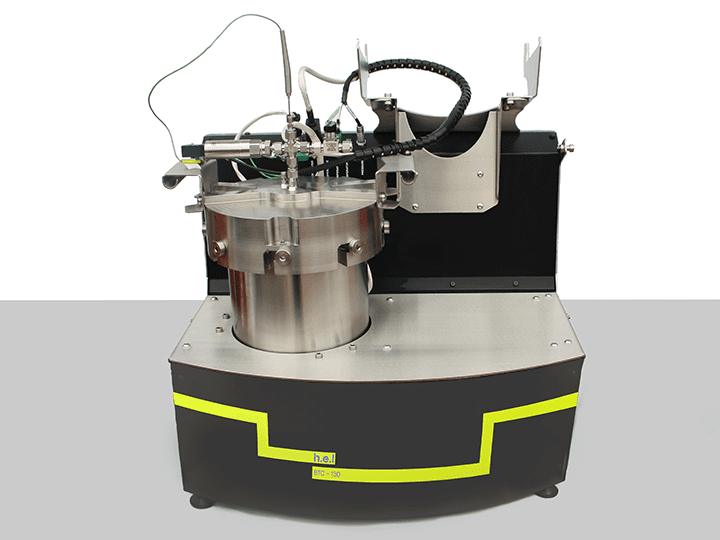
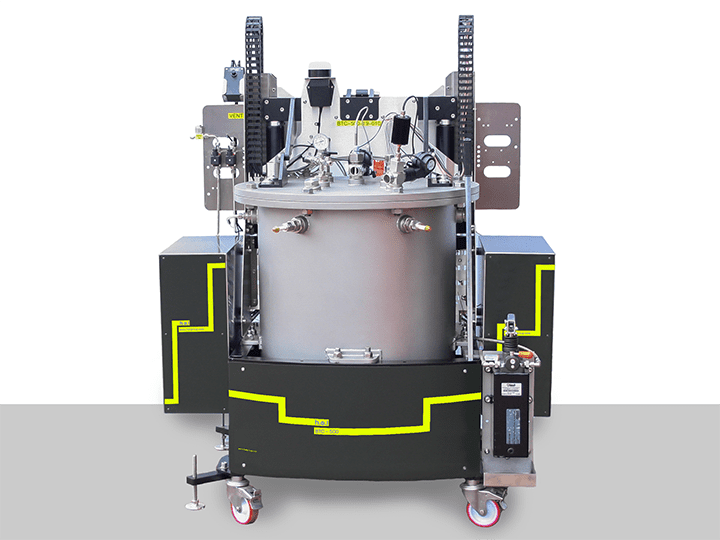
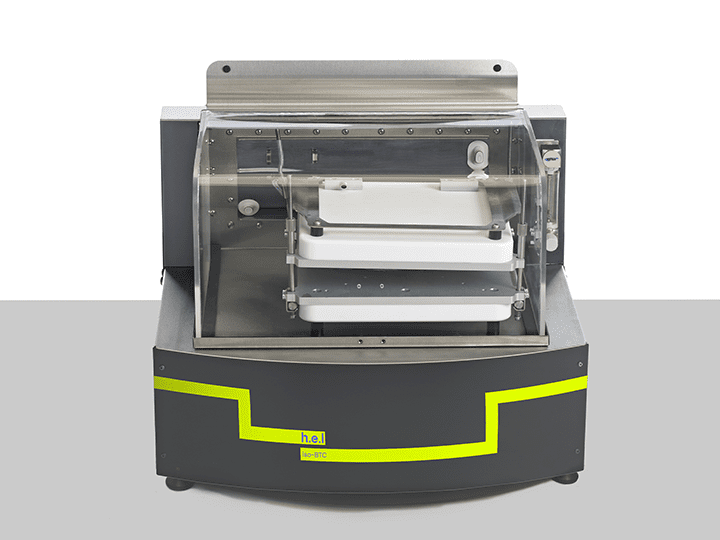
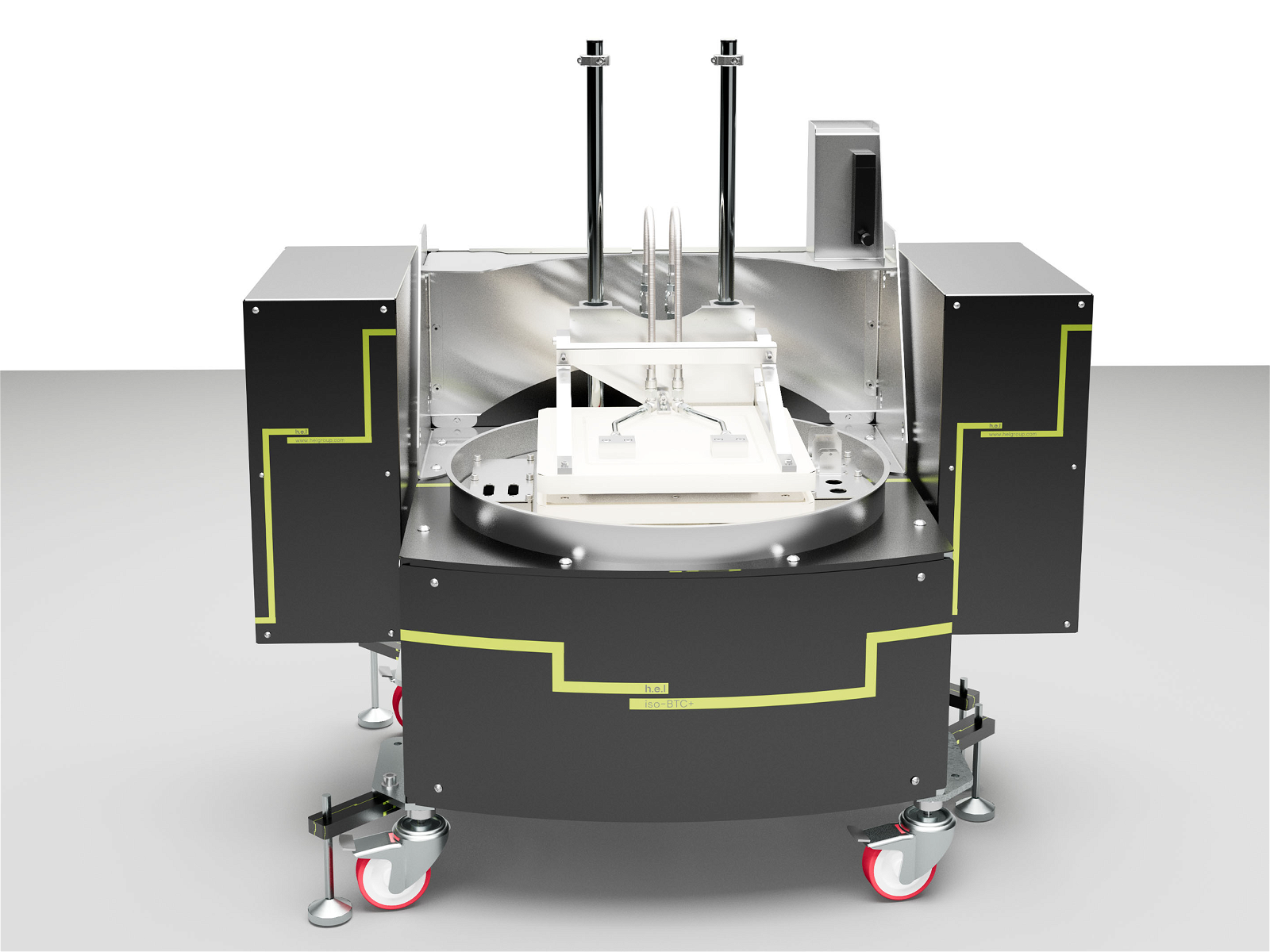
Screen the thermal stability of cell components, coin cells and small cells under adiabatic conditions — catching low self-heating, pressure rise and toxic-gas risks early in development. Every system is fully customisable to your requirements.
Why choose the BTC-130?
Catch hazards early
Assess individual component thermal stability under adiabatic conditions before full cell development.
Spot the critical indicators
Detects low self-heating temperatures, rapid pressure increases and toxic-gas production.
Built to take a blast
Robust 316 stainless-steel construction, engineered to withstand explosions.
Inform safe cell design
Turn early thermal data into confident, safe cell-development decisions.
What you can test
Standards & compliance
Key specifications
| Measurement type | Adiabatic calorimetry |
|---|---|
| Temperature range | Ambient to 500 °C |
| Test chamber | Ø130 mm × 200 mm high |
| Cell & sample sizes | Cell components, coin cells, small pouch & cylindrical cells |
| Data acquisition | Up to 10,000 Hz |
| Instrument size (W×D×H) | 700 × 600 × 800 mm |
Software
The BTC-130 runs on H.E.L’s WinISO software — a fully configurable workspace with multi-step recipes, real-time data display, automated safety monitoring and rapid data capture, so you can adapt experiments on the fly and export results for analysis.
Full specifications are in the specification book and brochure.
Frequently asked questions
What is the BTC-130 used for?
What can it test?
Why test components early?
Which standards does it support?
How robust is it?
Is it customisable to my testing needs?
Related reading
Explore the battery testing range
Ready to screen safely?
Talk to a battery specialist about component and cell hazard testing.