
Catalyst Screening
Fully customisable high-pressure catalyst screening — manual CAT to high-throughput DigiCAT
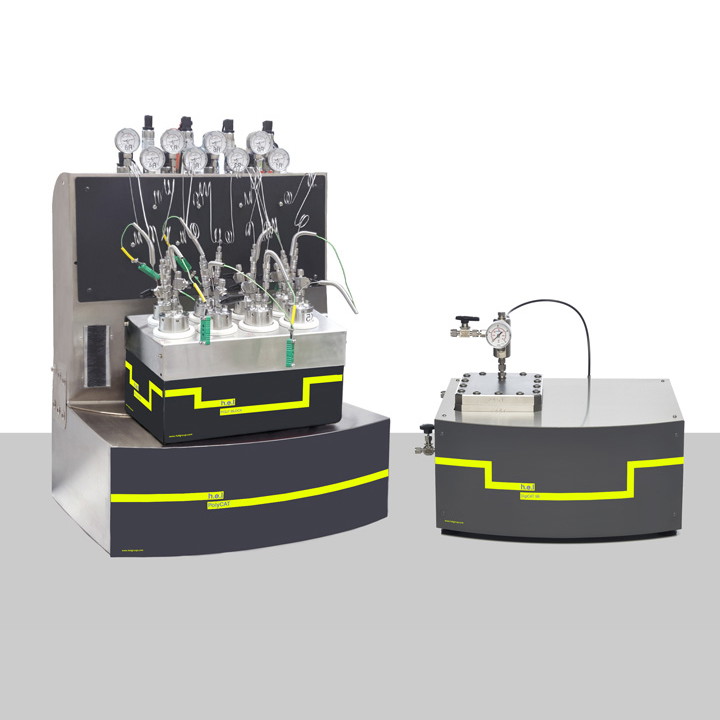
Across the CAT and DigiCAT ranges, users can select the level of throughput and automation required for their application. From simple manual screening to automated 96-well experimentation, these systems provide scalable solutions for catalyst development and process optimization.

The range
CAT 7, CAT 18 & CAT 24
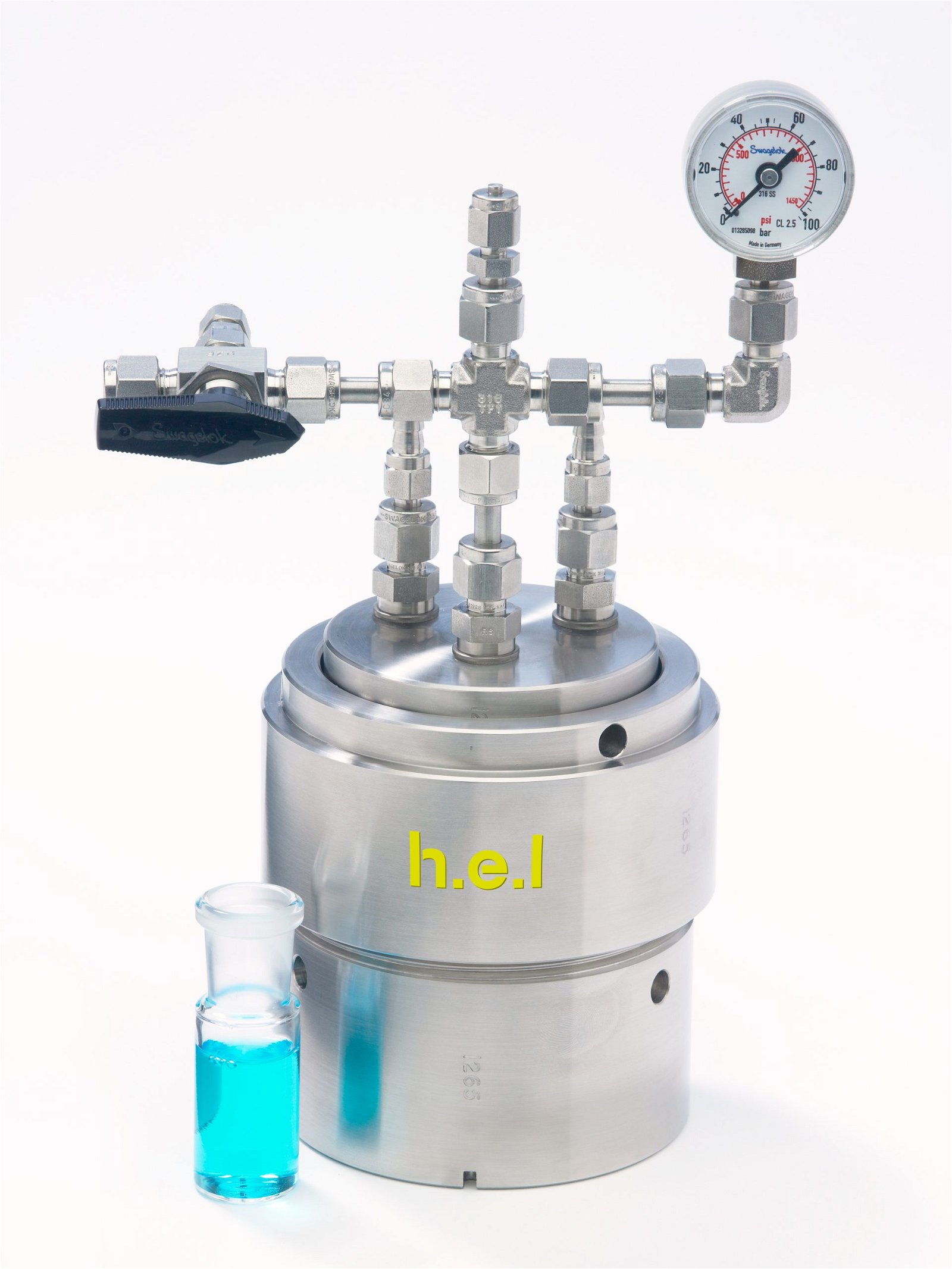
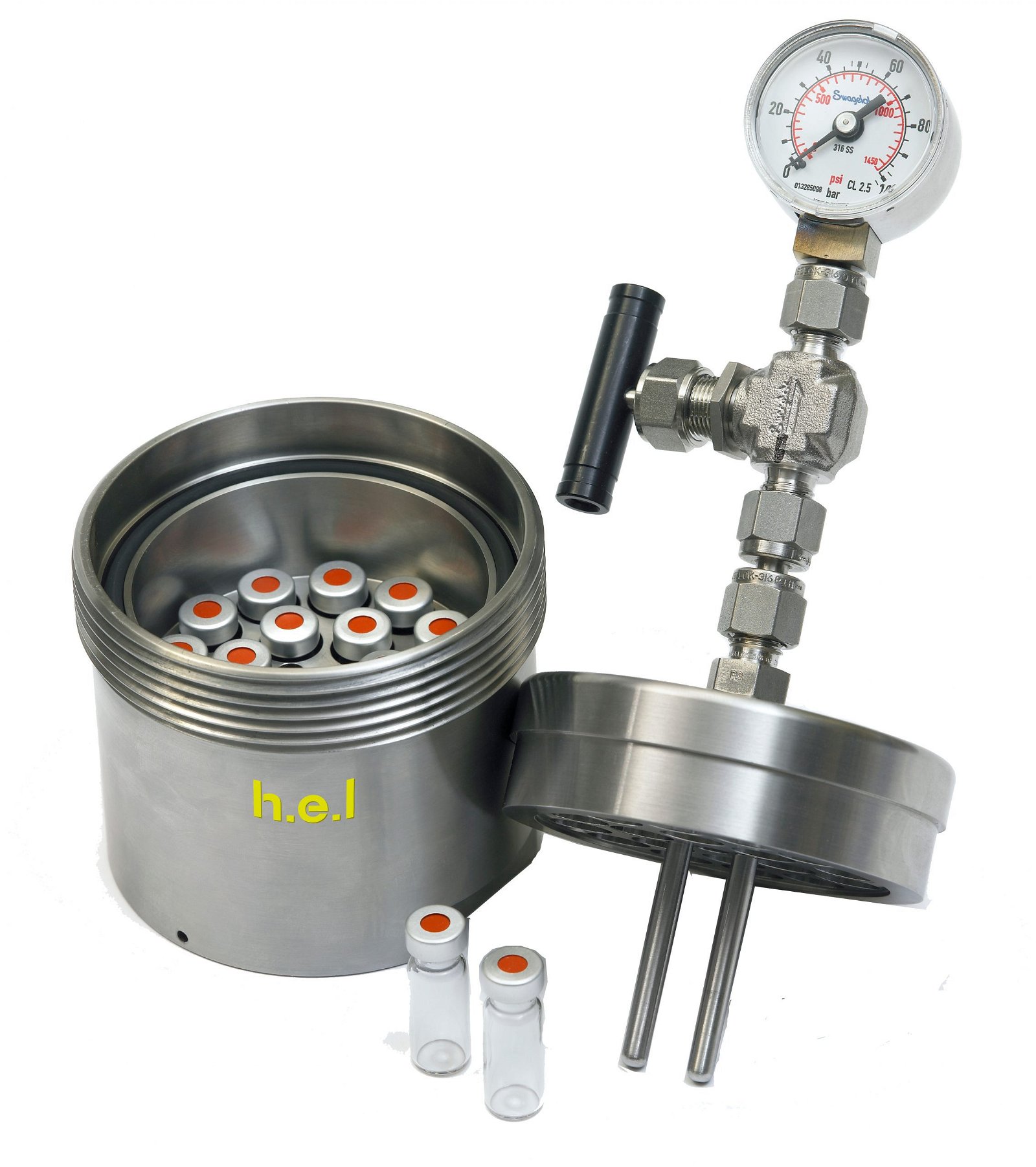
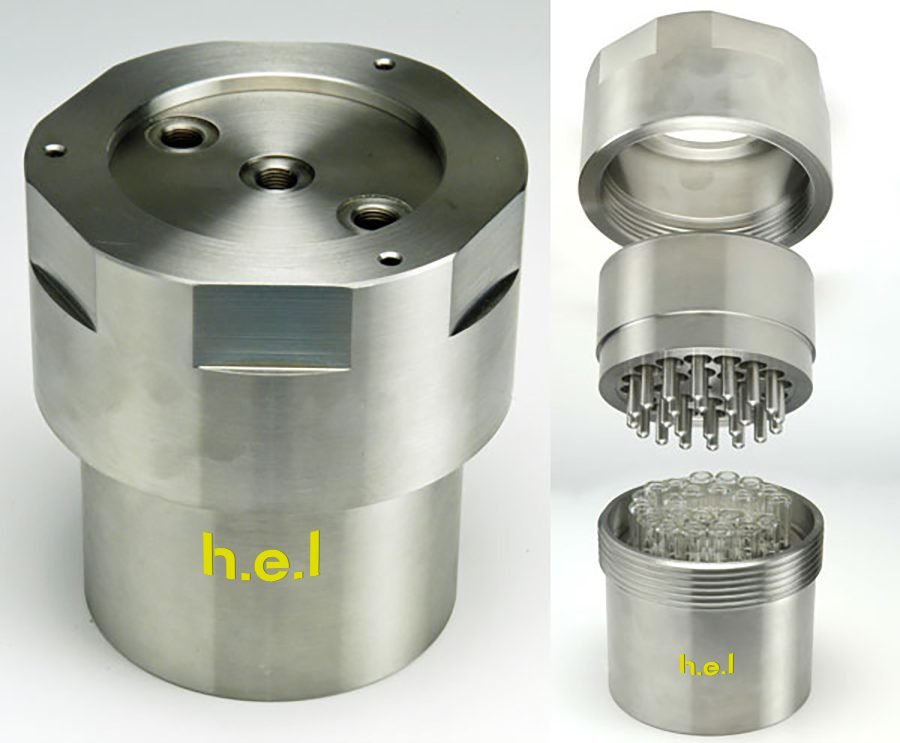
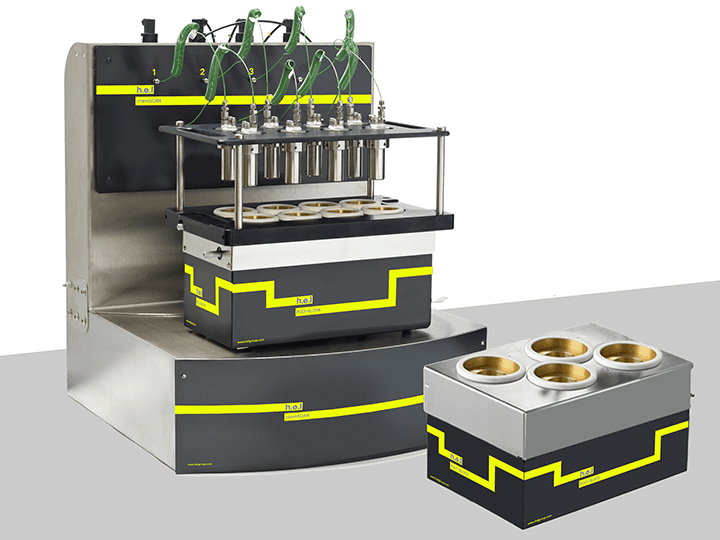
Manual high-pressure screening — a single pressure vessel holding 7, 18 or 24 glass vials, heated and stirred on a standard magnetic hotplate. All vials run at the same temperature and pressure, so replicates run within a single experiment. CAT 7 and CAT 24 have a coolant-chilled lid to limit vapour crossover between vials — CAT 7 using PTFE plugs, CAT 24 using cold fingers; CAT 18 has no cooled head. CAT 18 and CAT 24 can also run on a PolyBLOCK 4 platform.
- Parallel reactions7, 18 or 24 vials
- Vial volume10 mL (7) · 2 mL (18) · 4 mL (24)
- Sample volume2–6 mL (7) · 0.5–1 mL (18) · 1–2 mL (24)
- TemperatureUp to 250 °C (300 °C if pressure ≤10 bar g)
- PressureUp to 100 bar
- Materials316 stainless steel or Hastelloy C276
- AutomationManual, or via the DigiCAT platform
DigiCAT 96
High-throughput 96-well screening — a 96-well Zinsser block for 96 simultaneous reactions in a compact, high-specification format, ideal for early-stage development. Available fully automated or manual.
- Parallel reactions96 (1 mL vials)
- TemperatureAmbient to 200 °C
- PressureUp to 100 bar
- AutomationAutomated or manual
- SoftwareWinISO control
DigiCAT platform
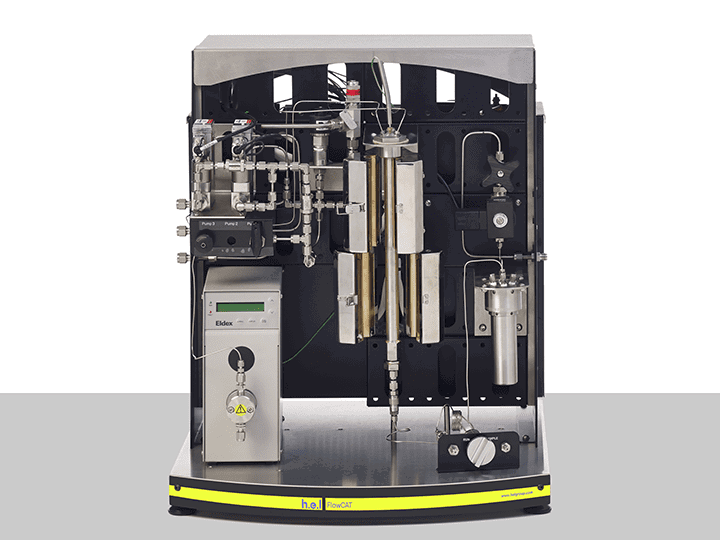
The bench platform that drives the CAT range — a digital stirring hotplate paired with a gas distribution back panel for inerting, reactive gas feed and venting. It also runs H.E.L’s small high-pressure reactors, and can be configured in parallel so one gas panel serves several hotplates at once.
- DrivesCAT 7, CAT 18, CAT 24
- Also runsMini HP reactors 16–50 mL (1 or 3) · Midi 75–300 mL
- Hotplate145 mm · 20–300 °C · 100–1400 rpm
- Gas panelPurge, reactive feed and vent, with gauge and relief valve
- AutomationManual, with optional PC control and data logging
Applications
Software, control & safety
The DigiCAT systems run on H.E.L’s WinISO software — data logging, multi-step recipes, parameter control and feedback loops — so every well runs to the same programmed conditions while you vary catalyst or reagents across the block. The DigiCAT bench platform adds optional PC control and data logging to the manual CAT reactors.
Automatic, user-configurable reaction-detection and shutdown procedures protect the operator, with a compact manifold for easy manual purge and pressurization, and hardware and software fail-safes on every system.
See our application notes for worked screening examples.
Frequently asked questions
What is the difference between CAT and DigiCAT?
How many reactions can I run in parallel?
What pressure and temperature can they reach?
Manual or automated — which do I need?
What reactions are they used for?
Are they customisable?
Selected publications
Subscription or purchase may be required for full access. View all publications →
Explore the catalysis range
Related reading
Ready to screen catalysts faster?
Talk to a specialist about the right level of automation and throughput for your work.
“Teva is using the H.E.L CAT 7 hydrogenation system… it can significantly reduce the time needed for selection of hydrogenation conditions… H.E.L CAT 7 was found to be a very useful choice for our R&D.” — Teva Czech Industries