
ChemSCAN
Automated parallel high-pressure catalyst screening — up to 8 reactor zones
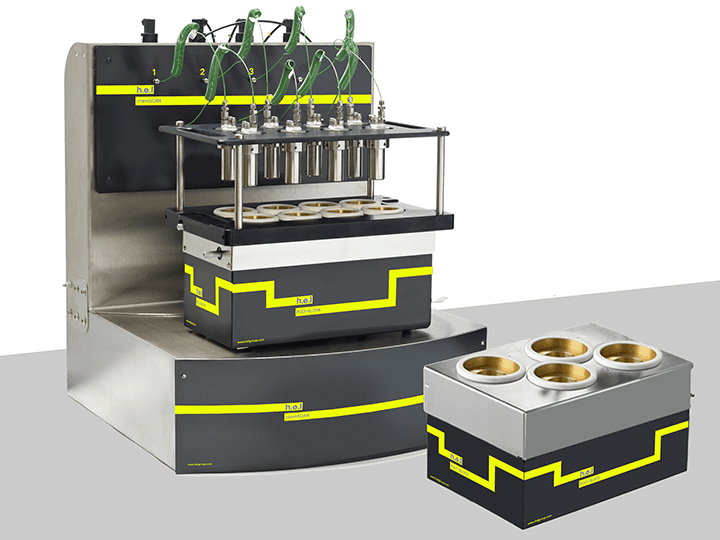
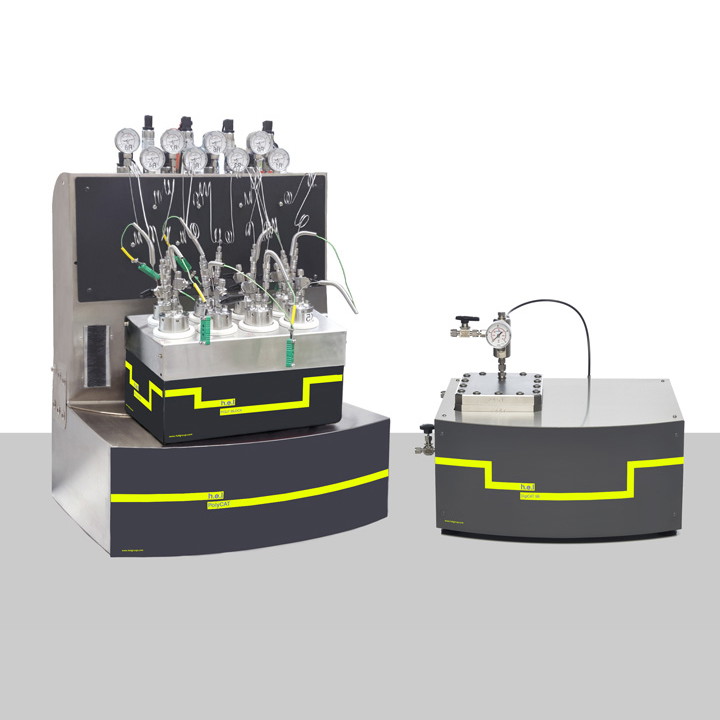
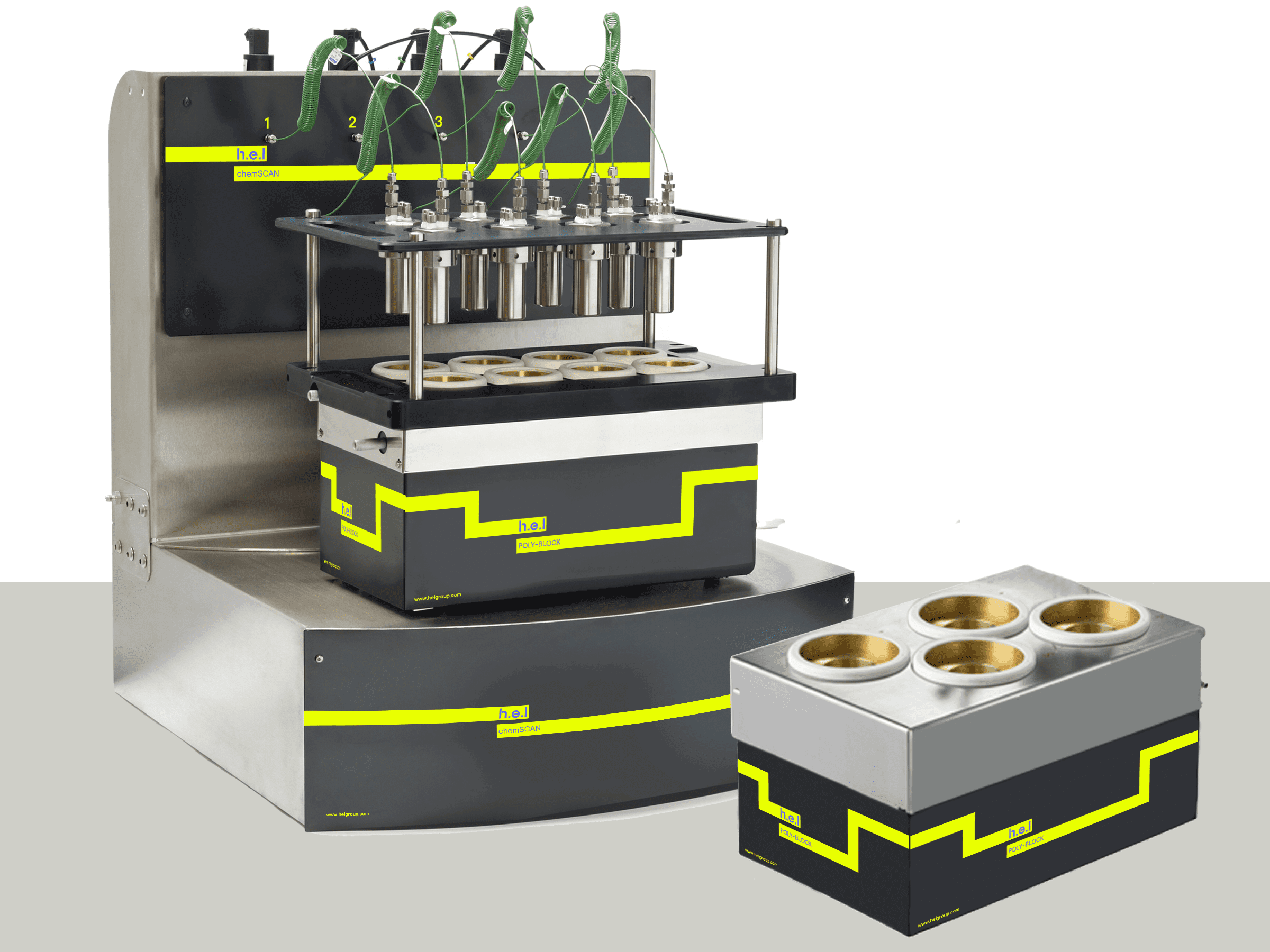
ChemSCAN is an automated parallel high-pressure reactor system designed for catalyst screening, reaction optimization and high-throughput experimentation. It enables up to eight independently controlled reactors with real-time gas-consumption measurement for each vessel. Its compact design and advanced automation support efficient catalytic research and rapid identification of optimal reaction conditions.
Overview
Real-Time Gas Uptake Measurement
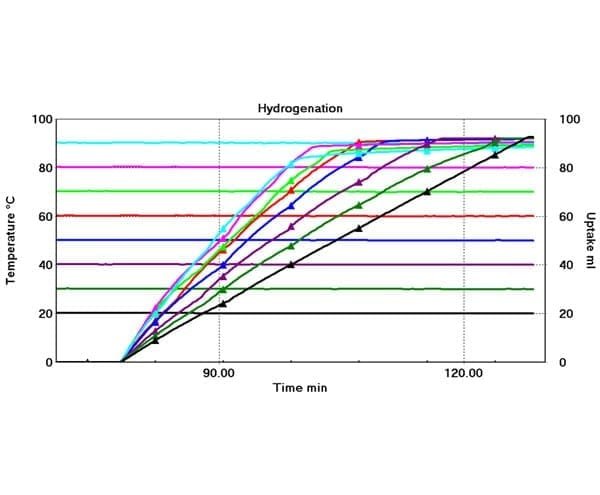
Each reactor provides real time measurement of gas consumption, enabling accurate monitoring of reaction kinetics. This is particularly valuable for reactions involving gases such as hydrogen, where understanding gas uptake is critical to evaluating catalyst performance and reaction efficiency.
Flexible Reaction Control
ChemSCAN enables precise control of key reaction parameters including temperature, pressure, catalyst loading, and concentration. This flexibility allows researchers to rapidly explore a wide experimental space and identify optimal reaction conditions with confidence.
High Throughput and Efficiency
By running multiple independent reactions in parallel within a single experiment, ChemSCAN significantly reduces development time. All experiments are initiated and monitored within one streamlined run, with data collected in a unified format for efficient comparison and analysis.
Compact and Automated Design
The system features a compact footprint and user friendly automation, making it easy to integrate into laboratory workflows. Its high specification design supports reliable operation for demanding high pressure catalytic reactions, improving productivity while maintaining safety and control.
Key specifications
| Typical applications | Catalyst screening (e.g. hydrogenation), process optimization, scale-up |
|---|---|
| Vessel material | 316 stainless steel and Hastelloy C276 |
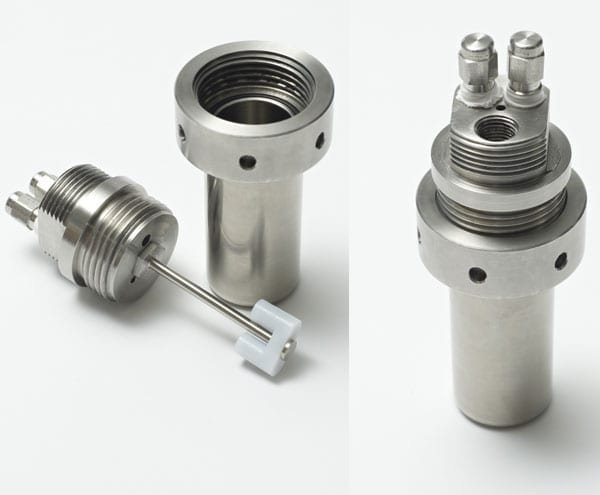
| Vessel volume options | 16, 25, 50, 75, 150, 300 or 500 mL — compatible with H.E.L CAT systems (CAT 18 & 24) |
| Working volume | 3 mL to 400 mL (reactor dependent) |
| Temperature control | −40 °C to 200 °C (sub-ambient depends on external circulator) |
| Pressure range | 100 bar standard, 200 bar optional |
| Agitation | Indirect magnetic stirrer bar (standard); suspended mechanical for small-scale / non-viscous samples; optional overhead direct for larger vessels |
Applications
Software, control & safety
ChemSCAN runs on a user-friendly interface designed for both new and experienced users, with real-time monitoring and automation via live sensor data and feedback control. A predefined gas-uptake workflow is included for quick setup and consistent analysis, and a flexible protocol builder lets you save custom workflows — from simple runs to complex sequences.
Automatic, user-configurable reaction-detection and shutdown procedures protect the operator, with a compact manifold for easy manual purge and pressurization. Automatic hardware and software fail-safes are installed on every system.
See our application notes for worked ChemSCAN examples.
Frequently asked questions
What is ChemSCAN used for?
Is it automated?
How many reactions can it run in parallel?
What pressure and temperature can it reach?
What volumes does it handle?
Is it customisable to my chemistry?
Selected publications
Subscription or purchase may be required for full access. View all publications →
Explore the catalysis range
Related reading
Ready to accelerate your catalysis research?
Talk to a catalysis specialist about your screening and process-development needs.
“…we are very satisfied… the handling and programming is quite easy. It is for this reason that we bought a second HP ChemSCAN.” — Leibniz-Institut für Katalyse (LIKAT Rostock), 8 years