
From Catalyst Screen to Pilot Scale
Screen catalysts and initiators in parallel, optimise conditions side by side, then scale to litres with the same control and the same data throughout. One integrated workflow, engineered around your polymerisation.
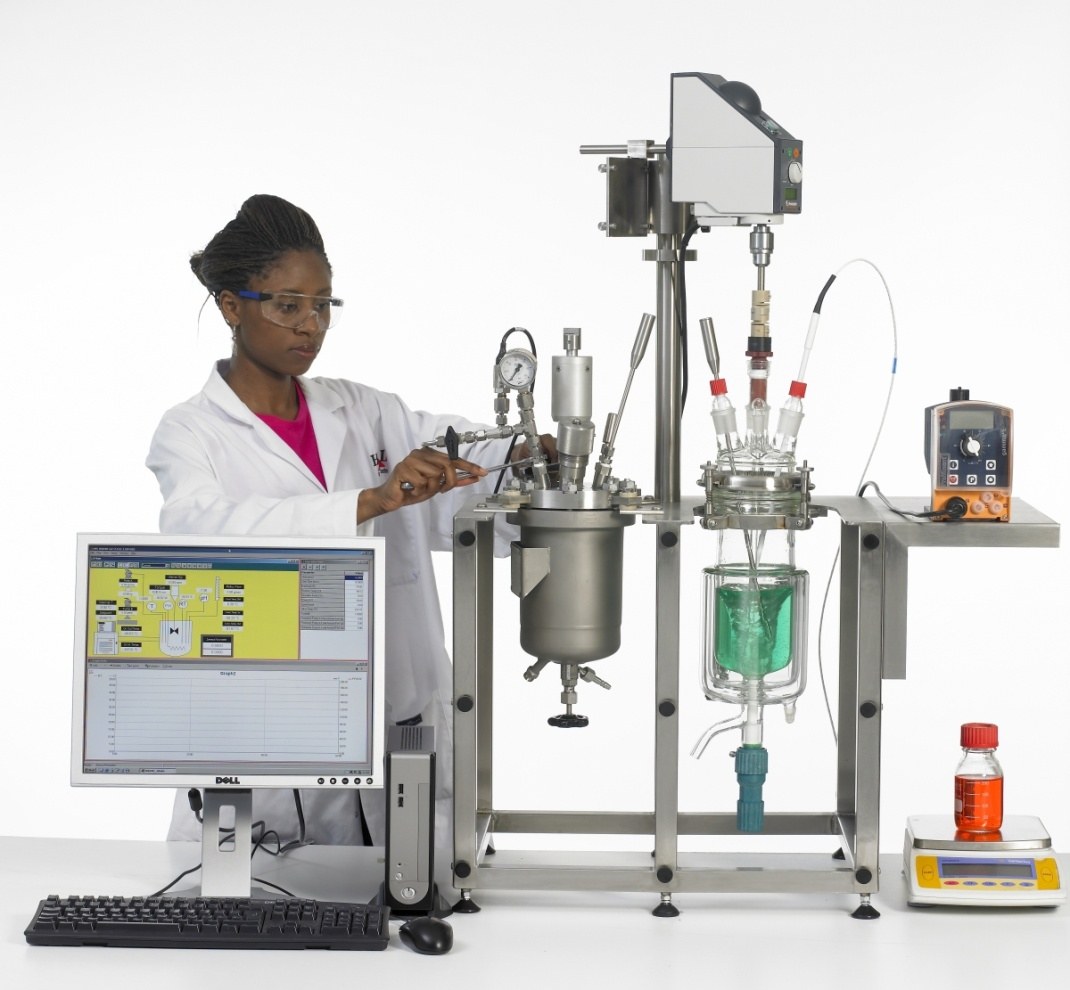
- 500 mL to 20 L — glass or glass-lined for vacuum condensation, metal for pressurised EO/PO
- Coriolis mass-flow and gravimetric feed control, so you know the mass that actually went in
- Class I Division 1 rated installations for volatile monomers
Talk to a polymer specialist
Choosing the right platform
Five platforms, one data environment
Polymer development is not a single path, and most teams need one or two of these rather than all five. What matters is matching the platform to the question in front of you. Because they share software, sensors and data handling, what you learn on one carries over to the next instead of being rebuilt — and every system is configured to the chemistry it will run. If the standard arrangement does not suit your polymerisation, we engineer one that does.
Screen catalysts and initiators in parallel
Run catalyst and initiator combinations side by side under controlled pressure and temperature rather than one after another. Real-time gas uptake shows activity and selectivity differences that sequential experiments hide.
Up to 8 parallel high-pressure zones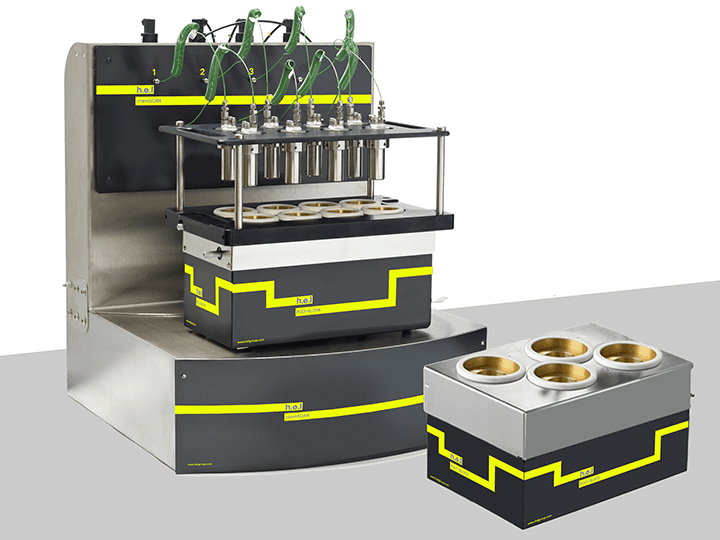
Optimise conditions side by side
Take lead candidates into parallel optimisation. Vary temperature, feed rate, monomer ratio and timing across independent zones at once, building the picture of your polymerisation window in a fraction of the runs.
4 or 8 zones · up to 500 mL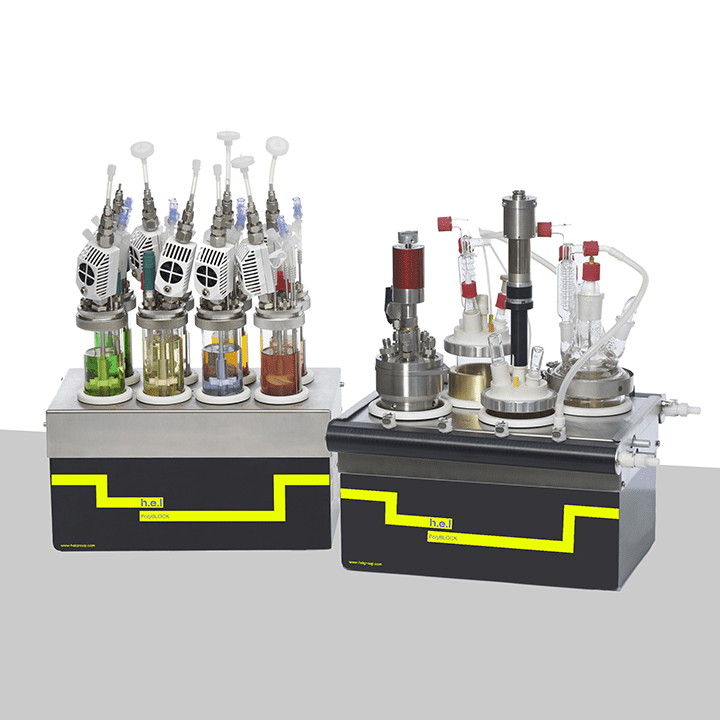
Explore continuous operation
For chemistries that suit continuous operation, examine residence time, temperature profile and pressure in flow. Configurations are engineered around the chemistry, from fixed-bed tubular arrangements to bespoke arrangements for more demanding media.
Continuous flow · high pressure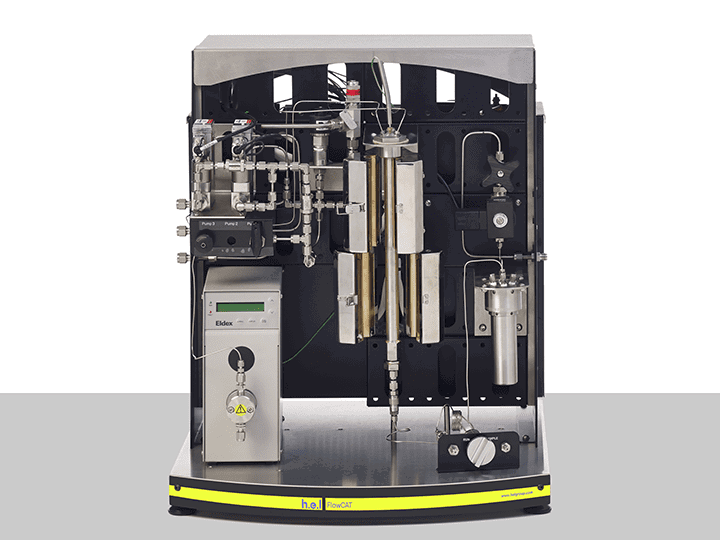
Automate the reaction
Automated, recipe-driven runs with precise feed control and full data capture on every reactor, independently controlled. Where the process starts behaving like a process rather than an experiment.
Up to 500 mL · 1 L custom available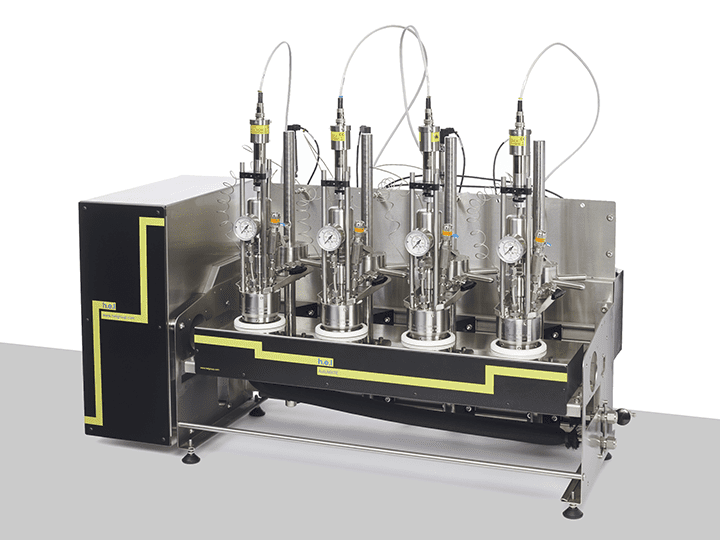
Scale to usable quantities
Produce enough polymer for real downstream characterisation and application trials. Coriolis mass-flow-controlled feeds for EO/PO, vacuum for condensation work, and Class I Division 1 configurations where the monomers demand it.
500 mL to 20 L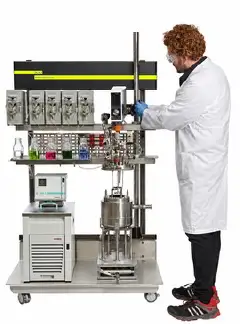
Scales shown are standard configurations. Custom vessels and bespoke arrangements are available across the range — screening blocks through to pilot-scale reactors.
Not sure which fits your polymerisation? Tell us the chemistry, the scale you need to reach and how you want to feed it — an application engineer will suggest a configuration.
Talk to a polymer specialistTwo chemistries, two sets of demands
Condensation and addition ask for different things
Most polymerisation work we are asked to support falls into one of two camps, and they stress a reactor platform in quite different places.
Condensation polymerisation
Chains build by joining units and releasing a small molecule, usually water or an alcohol. That byproduct has to be removed continuously or the reaction stalls short of the molecular weight you wanted. Control of vacuum and of the temperature profile is what drives it to completion.
- Multi-stage temperature ramp programming
- Vacuum control for continuous byproduct removal
- Stirrer torque tracked as a proxy for molecular weight
- Glass, glass-lined or stainless vessel options
- Multi-reactor configurations for parallel conditions
- Automated catalyst and additive dosing
Addition polymerisation
Chains grow by adding monomer one unit at a time, so the feed rate directly determines molecular weight and distribution. With EO and PO there is a safety dimension as well: both are highly reactive and the reaction is strongly exothermic, so knowing the delivered mass matters twice over.
- Coriolis mass-flow-controlled monomer feeds
- Gravimetric feed verification for batch records
- Vessel-pressure transfer for volatile monomers
- Real-time heat balance and reaction calorimetry
- High-pressure capability where the chemistry needs it
- Class I Division 1 rated installations available
The platforms
Built around your chemistry, not around a catalogue
H.E.L designs and builds automated reactor systems to specific process requirements — vessel material, feed strategy, agitation, area classification. The two platforms below are where polymerisation work usually sits.
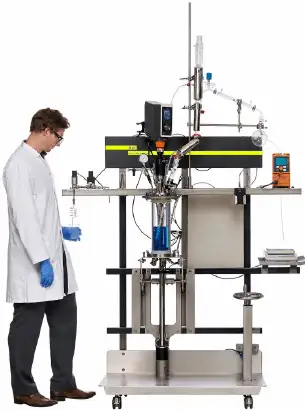
AutoLAB
The workhorse for polymer development, because it covers the scales at which you can make enough material to characterise properly. Automated, recipe-driven and able to run unattended overnight.
| Vessel types & volumes | Glass or metal, 500 mL to 20 L — glass/glass-lined for vacuum condensation work, metal for pressurised EO/PO |
| Temperature control | −50 to 250 °C standard (circulator dependent); options −90 to 350 °C |
| Pressure & vacuum | High-pressure configurations; vacuum for condensation work |
| Feeds | Coriolis MFC, gravimetric, pumps, vessel-pressure transfer |
| Agitation | Overhead, electric or air-driven drives |
| Area classification | Class I Division 1 available |
AutoMATE
For the stage before scale: running catalyst, initiator and condition studies side by side under independent control, rather than one after another.
| Reactors | Multiple, independently controlled (linear platform) |
| Vessel types & volumes | Glass, stainless or Hastelloy, up to 500 mL; 1 L custom reactors available |
| Temperature control | Ambient to 250 °C standard; options −40 to 350 °C |
| Independence | Individual mantles allow >100 °C between reactors |
| Feeds | Automated liquid and gas feeds; syringe pumps |
| Sensors | Temperature, pressure, pH, turbidity, conductivity |
Where the two platforms sit
AutoMATE covers screening up to 500 mL, with 1 L custom reactors available. AutoLAB runs from 500 mL to 20 L, where you make enough material to characterise properly.
What you get across every stage
Why polymer teams choose H.E.L
Automated and unattended operation
Run long polymerisation reactions overnight or over a weekend with full recipe control, automated feeds and safety interlocks. Your team spends its time on analysis rather than babysitting reactors.
Precise feed control at scale
Coriolis mass flow controllers deliver accurate monomer dosing for EO/PO and other volatile feeds, with gravimetric verification where the batch record demands it. The method is chosen around your chemistry.
Real-time process understanding
Every reaction is logged continuously — temperature, pressure, feed rates, stirrer torque and heat output. Process knowledge starts building from the first experiment and carries through to scale-up.
Bespoke engineering capability
H.E.L designs and builds reactor systems around specific polymerisation requirements, from glass-lined vessels to hazardous-area rated installations. Customisation is the starting point, not an extra.
Ready to accelerate your polymer development?
Our application engineers have specified systems for EO/PO addition, condensation, emulsion, suspension and solution polymerisation, from bench scale to hazardous-area pilot installations. Tell us the chemistry, the scale and the feed requirement, and we will suggest a configuration.
Email: sales@helgroup.com
Offices in the United Kingdom, United States, China and India — full contact details
Full specifications for AutoLAB and AutoMATE — vessel options, temperature and pressure ranges, feed and control systems.