
H.E.L ChemSCAN
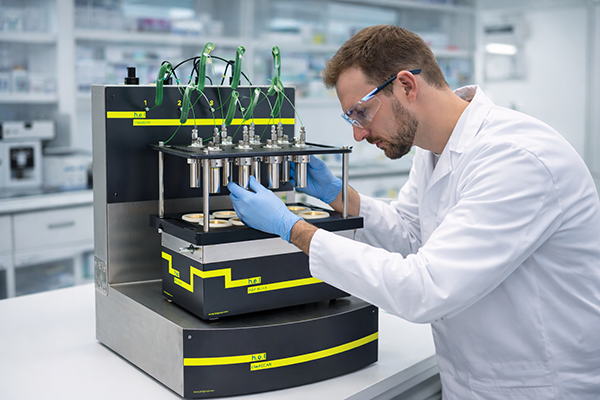
Up to eight reactions. One run. Real kinetics.
Screening one vessel at a time costs a day per variable, and run-to-run drift quietly contaminates the comparison. ChemSCAN runs up to eight reactions at once under identical conditions, with real-time gas uptake on every vessel.
Three platforms · 4 or 8 zones · configured to your chemistry
Enquire
Tell us what you’re screening
Reaction, rough scale and pressure. A specialist will tell you which ChemSCAN fits — or if it does not.
The problem
Sequential screening costs you the kinetics
Running hydrogenations one at a time means each variable costs another day, and run-to-run variation quietly contaminates the comparison. Endpoint analysis tells you what happened, not how — so loading, concentration and temperature effects get inferred rather than measured.
Up to eight vessels under identical conditions, each logging its own uptake curve, removes both problems at once. The comparison is genuinely like for like, and the rate data is in the trace.
Proof
Parallel catalyst screening data
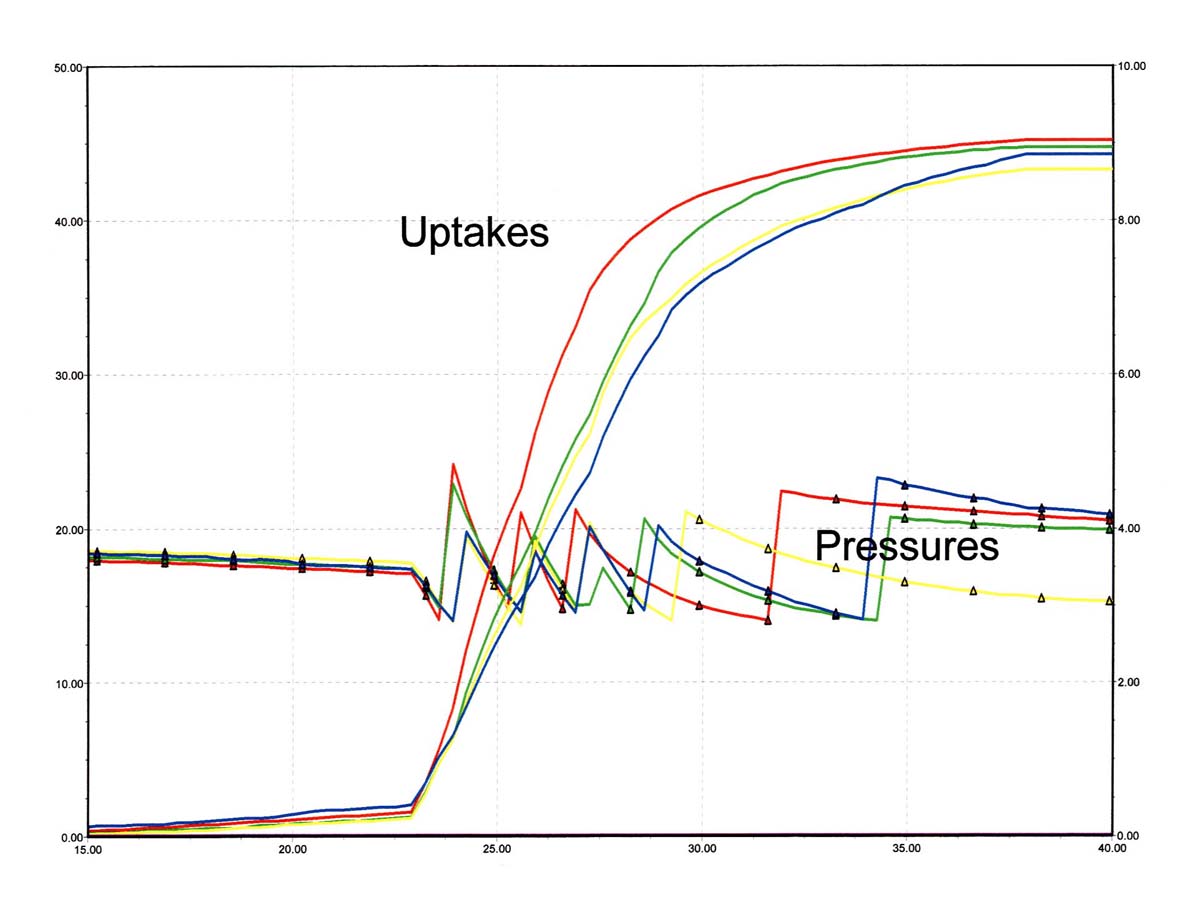
Every curve below comes from a single ChemSCAN experiment. That is the point of parallel screening — eight conditions in the time one would normally take.
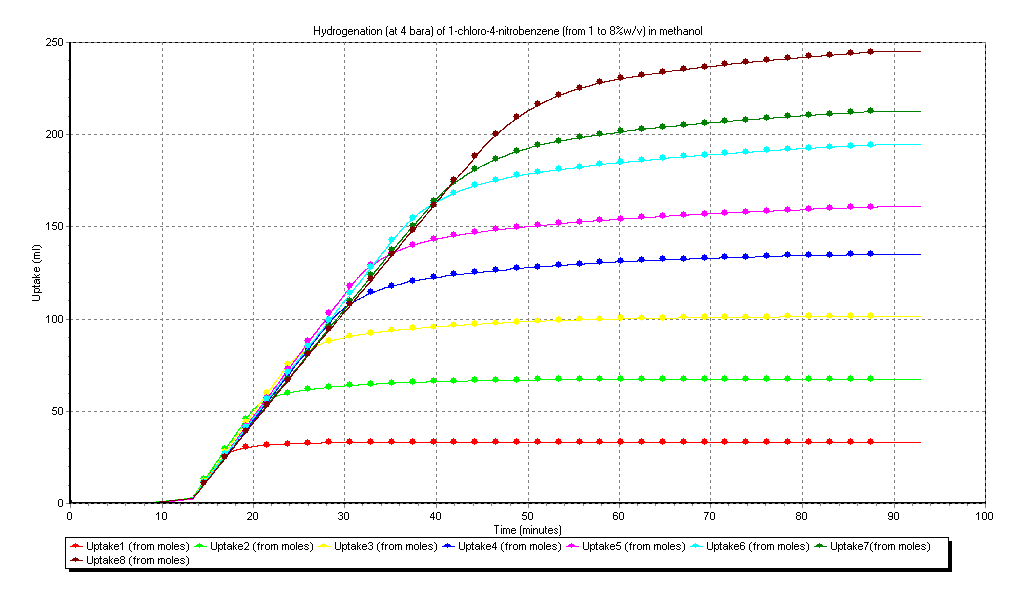
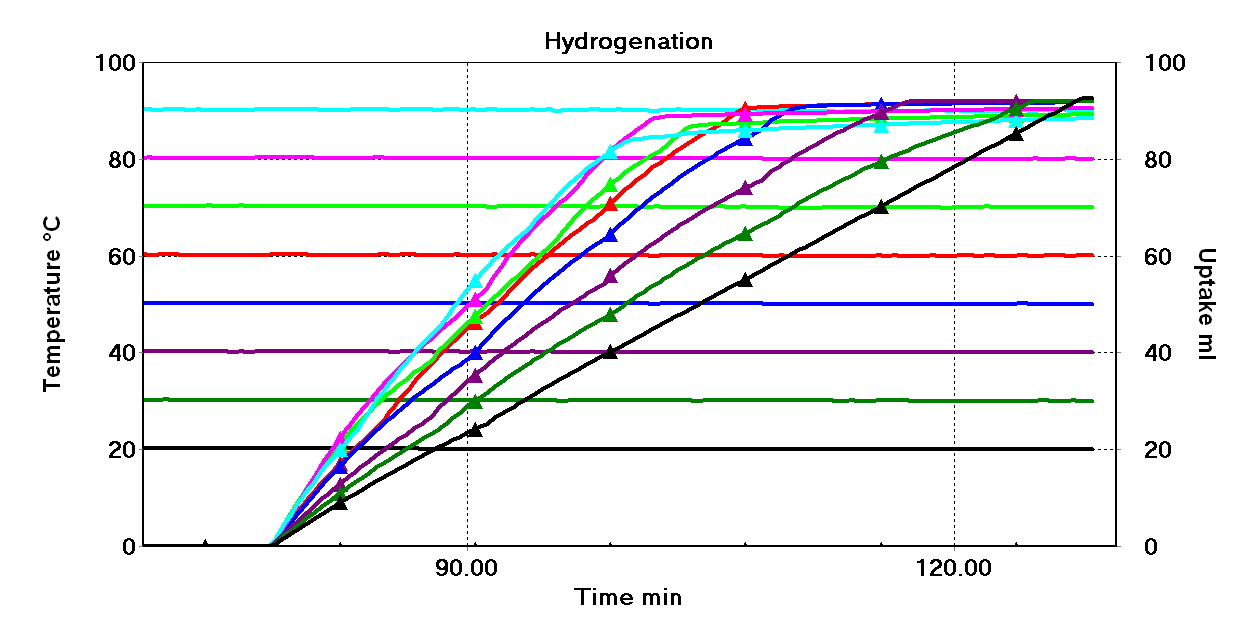
Tap any chart to enlarge.
“We have been using one device with eight autoclaves during the last 8 years or so, and we are very satisfied… It is for this reason that we bought a second HP ChemSCAN.”
Leibniz-Institut für Katalyse, Rostock — hydrogenation and hydroformylation screening
Published in Catal. Sci. Technol. (2024), EJOC (2018), ChemSusChem (2017).
Why ChemSCAN
The main points
Applications
Screening at pressure, in parallel
Yours not listed? If it needs controlled pressure, temperature and gas across parallel vessels, it very likely runs — ask a specialist. Full reaction list in the ChemSCAN product pages and brochure.
The range
Three platforms, each with 4 or 8 zones
ChemSCAN SA
Semi-automatic
Cost-effective basic screens
Gas: manual, at each reactor. Pressure: manual, independent.
ChemSCAN
Automatic
Process optimisation
Gas: shared across reactors, automated. Pressure: automated, independent profiling.
ChemSCAN+
Fully automatic
DoE and advanced catalysis
Gas: independent on every reactor, with independent vent and purge. Pressure: automated, independent profiling.
Vessels 16–500 mL in SS316 or Hastelloy; CAT vial blocks screen 18–24 vials at 0.2–1.3 mL for material-limited work. Every system is configured to your chemistry, laboratory and safety case before order.
Contact
Talk to a catalysis specialist
Tell us what you’re screening — reaction, rough scale, pressure — and a specialist will come back with whether ChemSCAN suits it and which configuration it would take.
If it’s not the right tool, we’ll say so. For serious evaluations we can run your chemistry in our applications laboratory before you commit.
Ask for the application notes and we’ll send the full hydrogenation set — 17 pages of real ChemSCAN runs — with the reply. The spec sheet is a free download above.
Prefer email? marketing@helgroup.com