
Parallel Synthesis Research Systems
For chemical discovery and process development: run four to eight independently controlled reactions side by side, at ambient pressure or up to 200 bar, on a compact bench-top footprint — instead of one reaction at a time.
Not sure which? Compare the range side by side ↓
Compact parallel synthesis
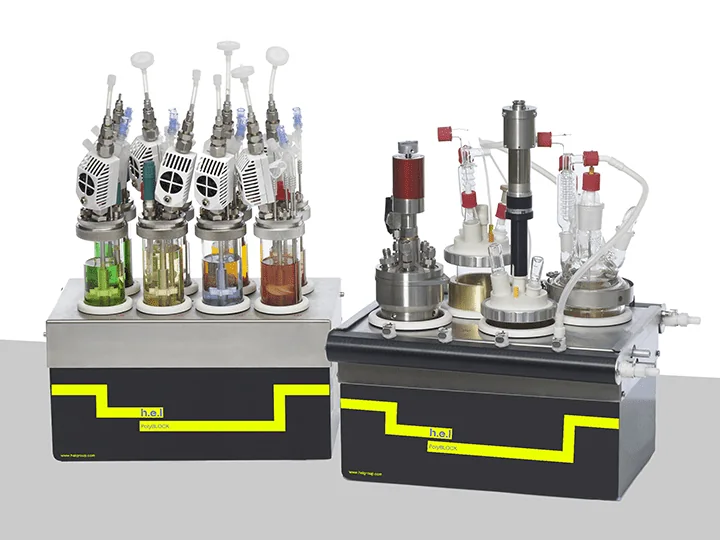
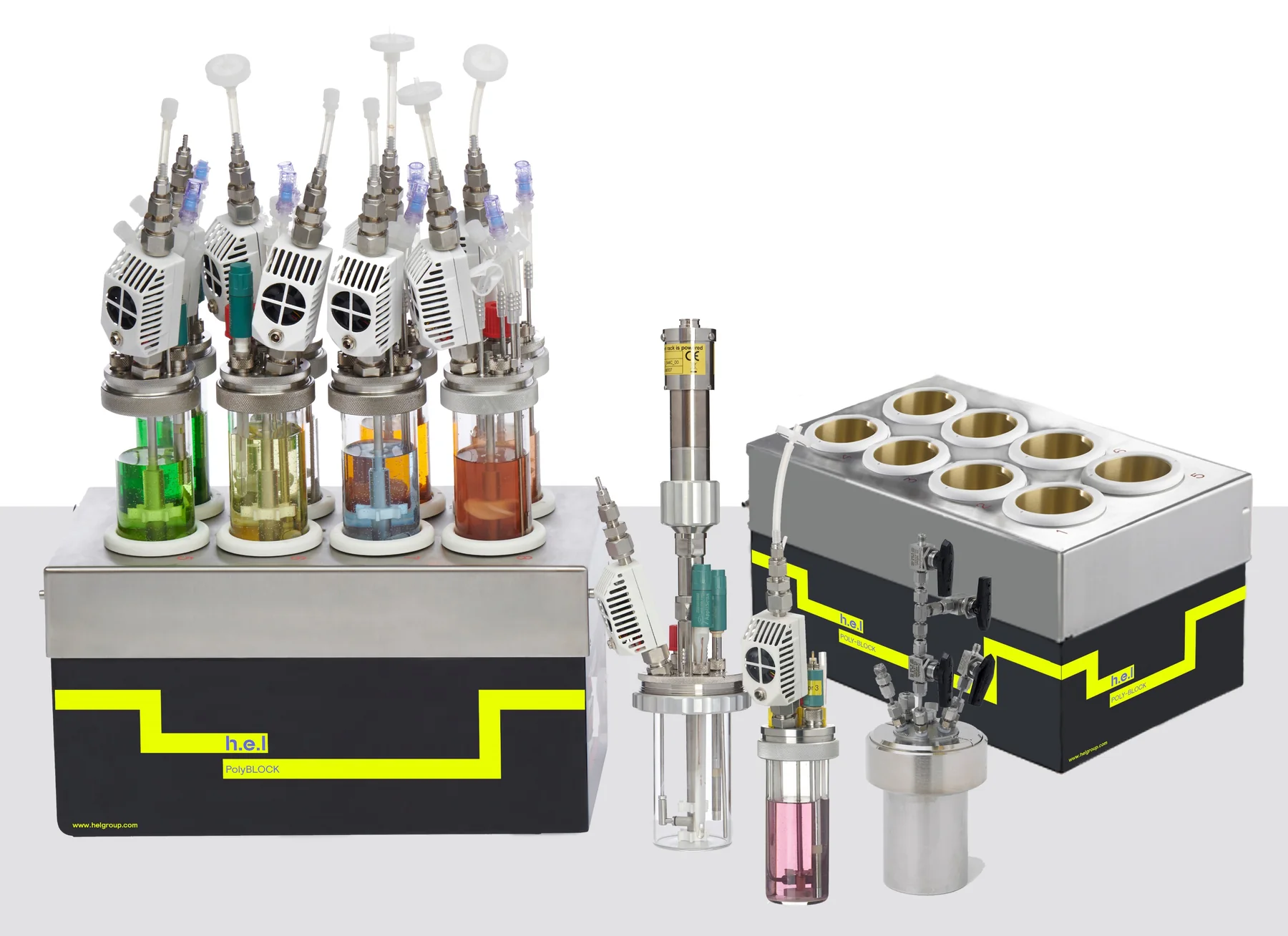
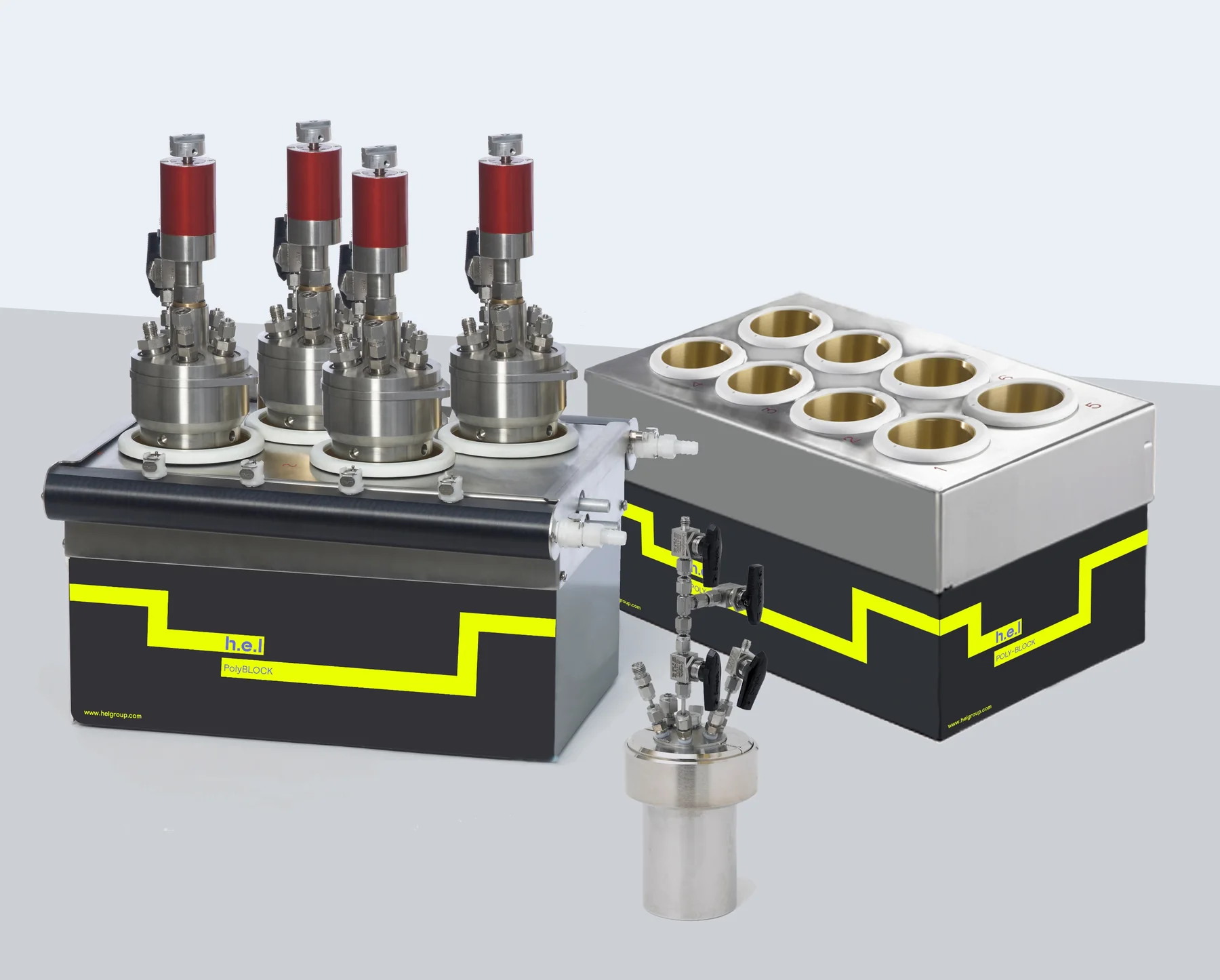
PolyBLOCK & PolyBLOCK High Pressure — bench-top, 4- or 8-reactor automated parallel synthesis, from glass vials at ambient pressure to stainless steel reactors at 200 bar.
Read more ↓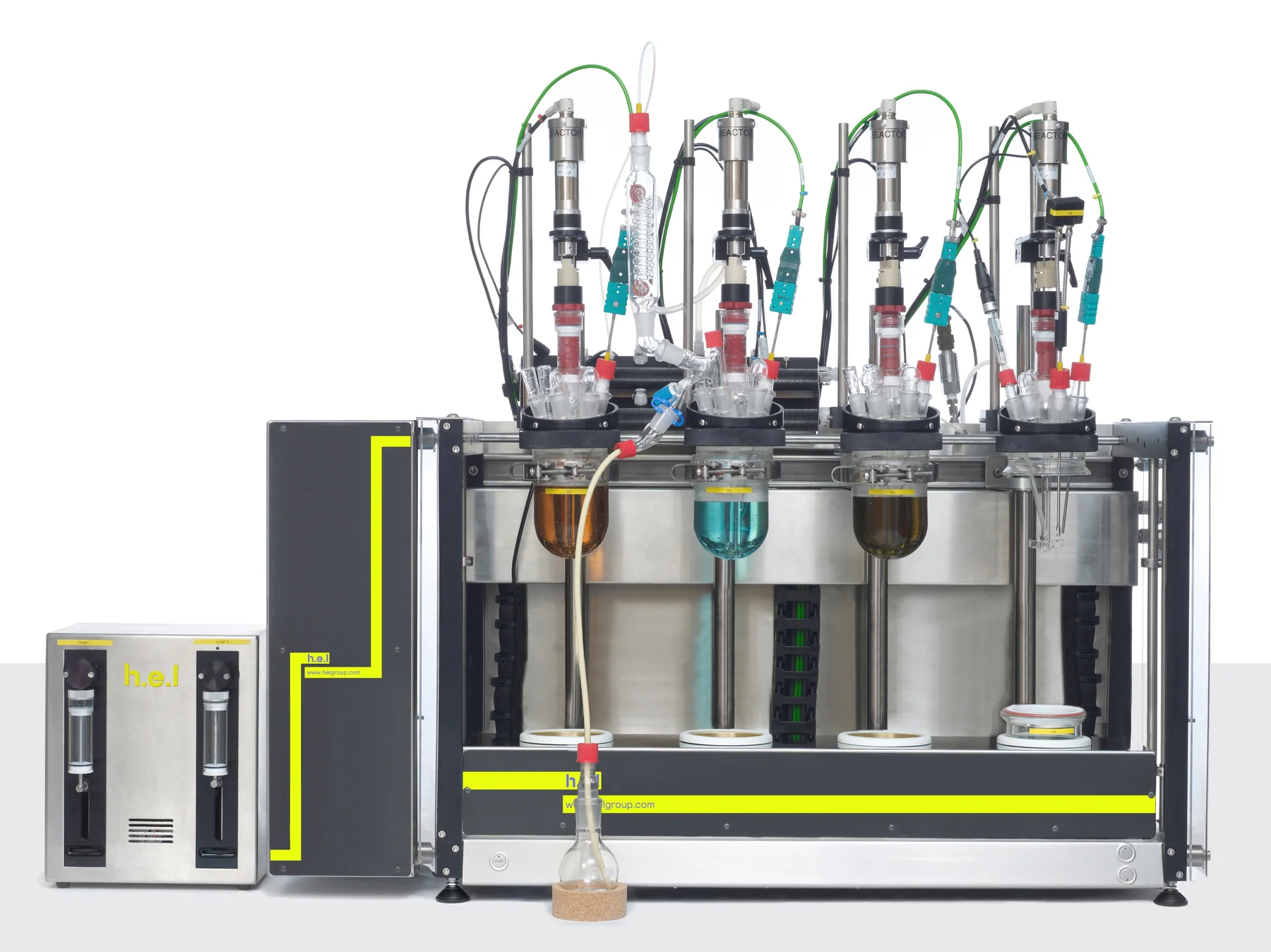
Linear parallel synthesis
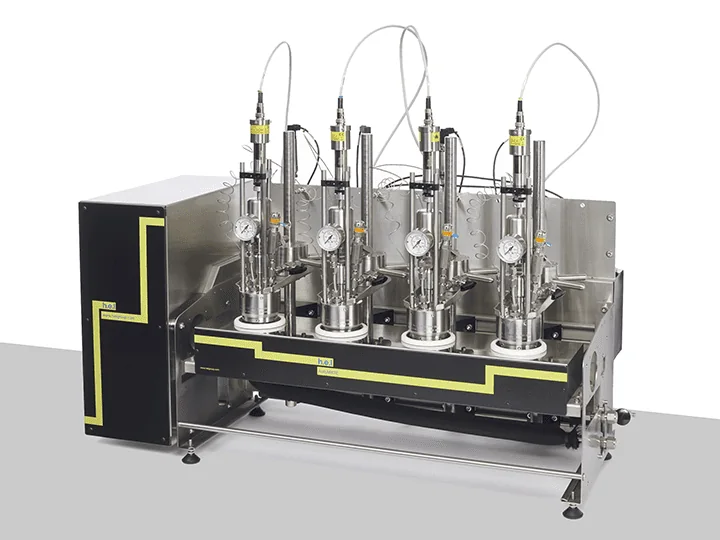
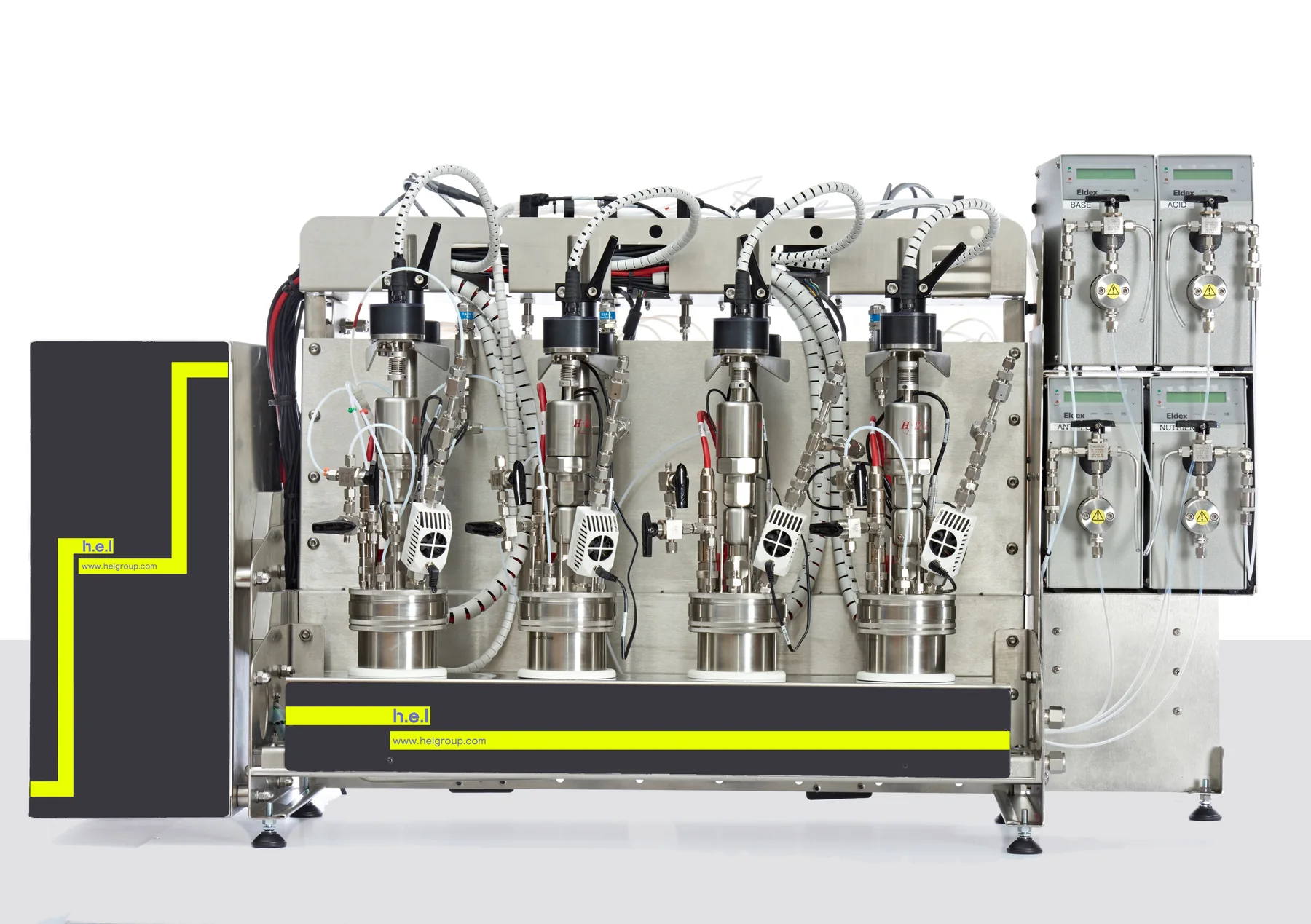
AutoMATE 4 & AutoMATE High Pressure — the linear platform for more demanding work: larger volumes, viscous materials, extended temperature range and easier access for multiple feeds.
Read more ↓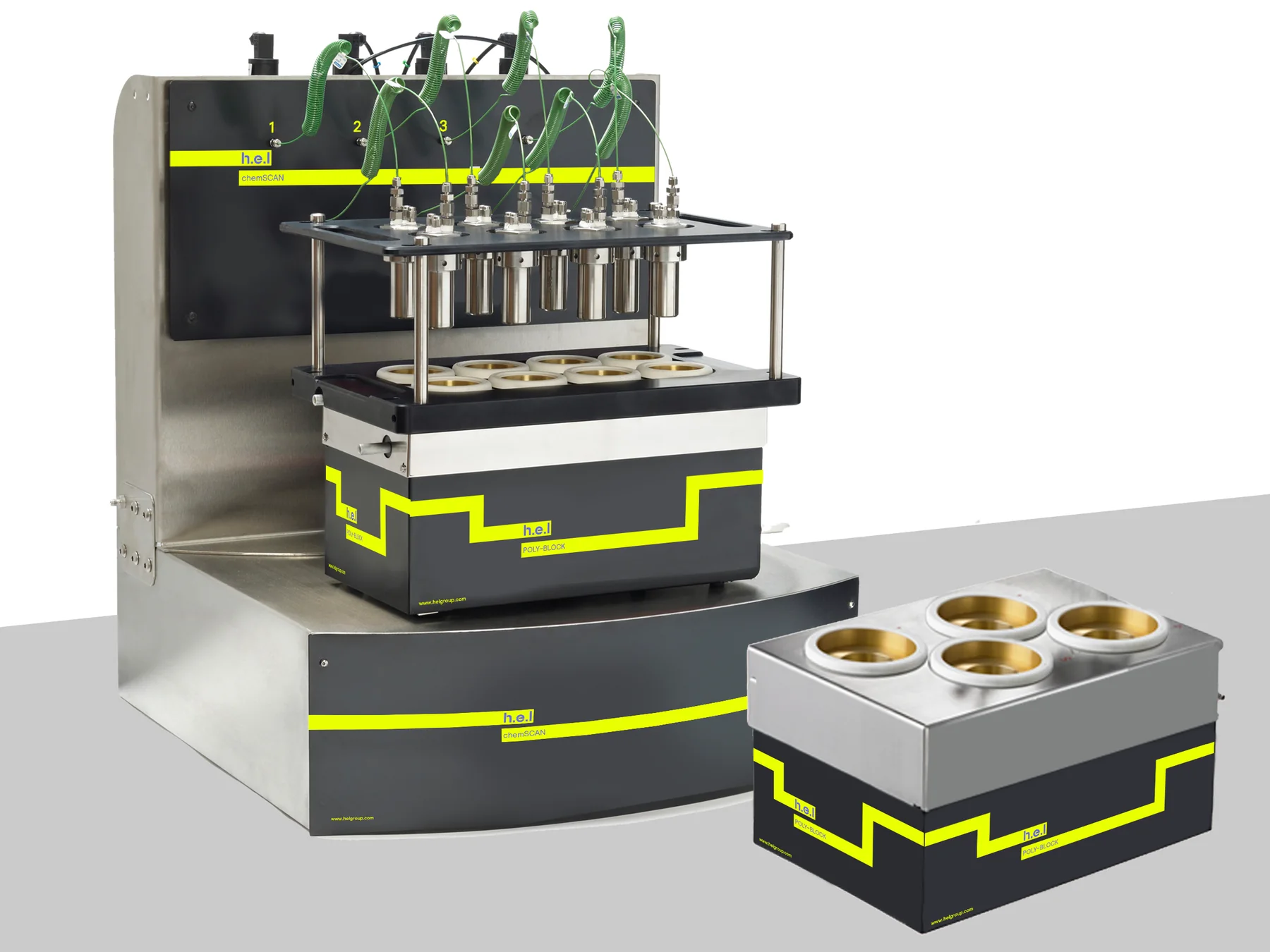
Parallel catalyst screening & hydrogenation
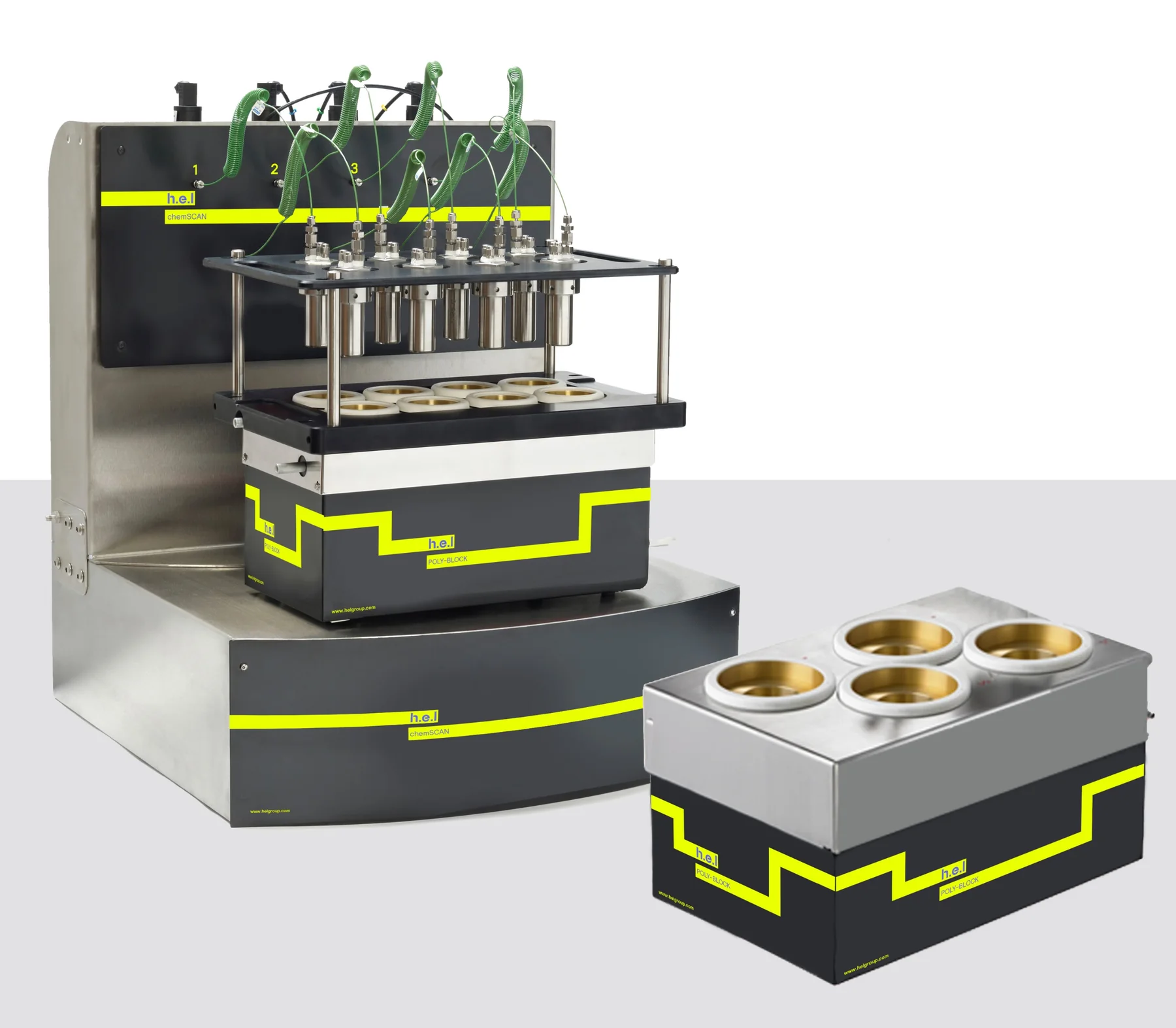
The ChemSCAN range — ChemSCAN SA, ChemSCAN and ChemSCAN+ — 4- or 8-zone parallel pressure reactors to 100 bar with real-time gas-uptake measurement.
Read more ↓The PolyBLOCK — automated parallel synthesis on a compact footprint
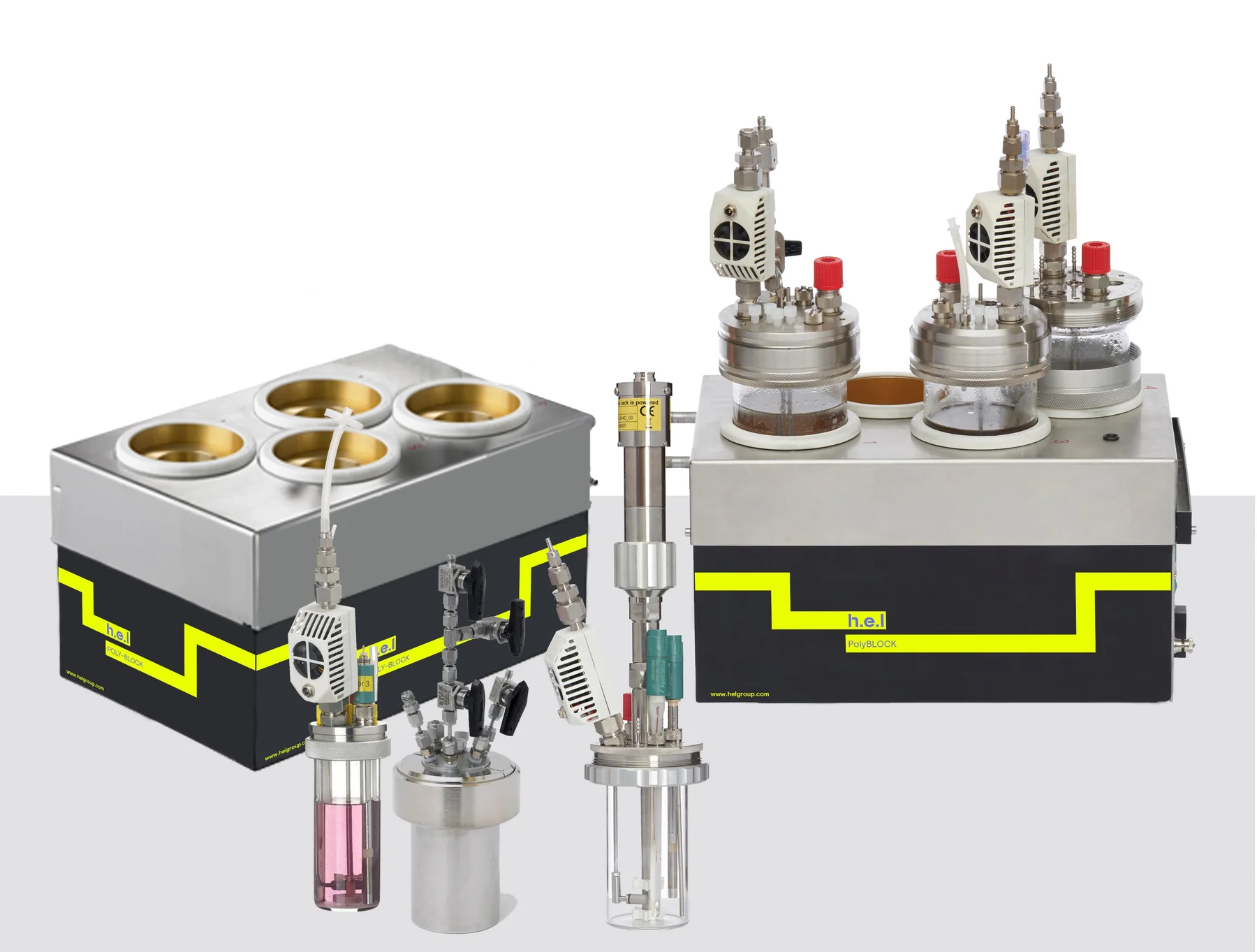
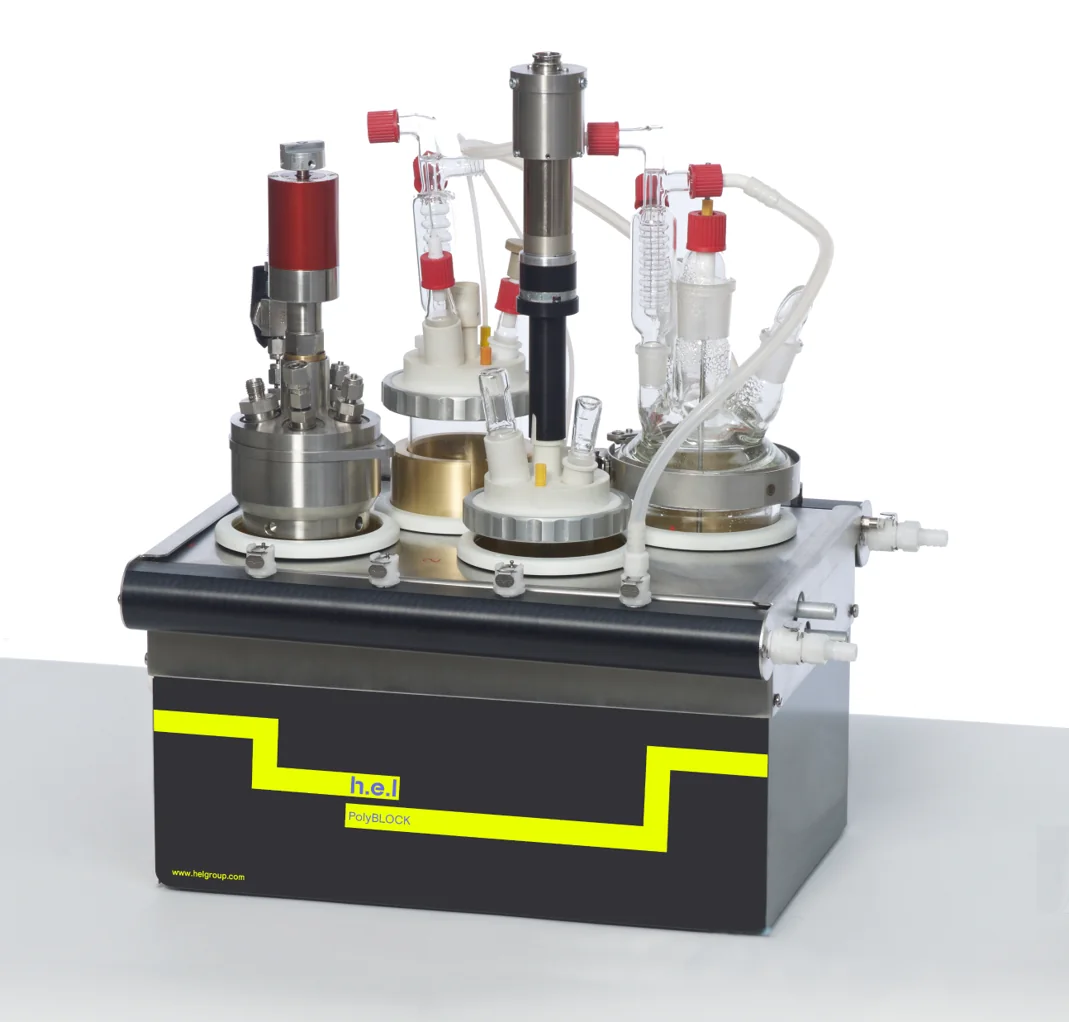
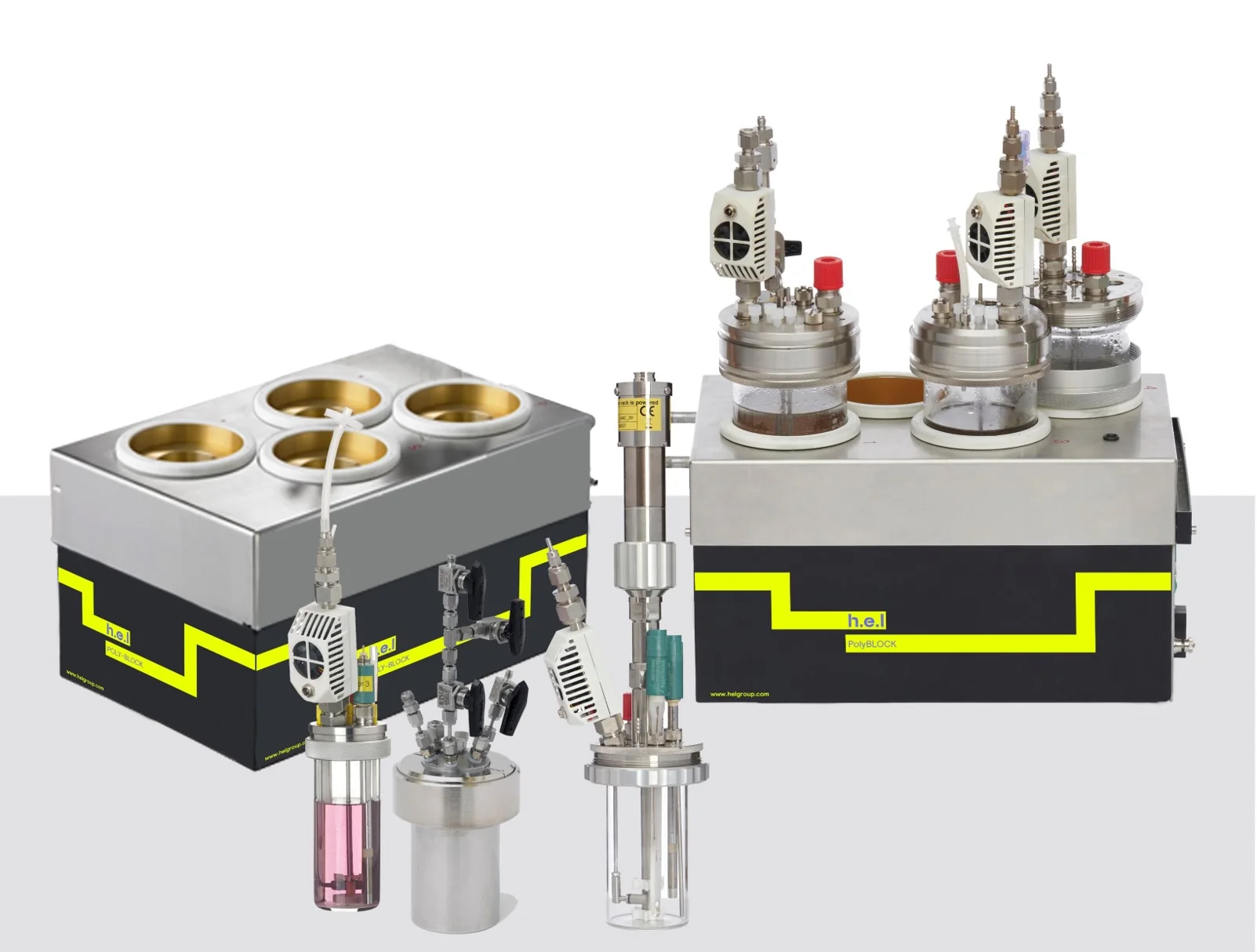
A bench-top, compact 8- and 4-reactor automated parallel synthesis platform. The PolyBLOCK is a highly versatile system for general chemical synthesis within R&D and process development — and the PolyBLOCK High Pressure takes the same four or eight independently controlled reaction zones to 200 bar.
PolyBLOCK
Four or eight independently controlled reaction zones for glass, stainless steel or Hastelloy vessels — from HPLC vials to 500 ml. Ideal when bench space is limited: process screening, optimisation and DoE campaigns on a 350 × 200 mm footprint.
PolyBLOCK High Pressure
The high-pressure, bench-top, compact 4- or 8-reactor automated parallel synthesis platform. Independently controlled reaction zones designed for high-pressure applications such as hydrogenation, with gas-consumption rate calculation for catalyst screening.
Traditional hotplate
- Heats to temperature
- Exotherms undetected
- One reaction at a time
- No record of what actually happened
PolyBLOCK
- Software-controlled heating and cooling*
- Create a plan with sequences of ramp and hold steps
- Temperature recorded throughout the experiment
- Exotherms detectable — in every zone, in parallel
Shared across both configurations
- Four or eight independently controlled reaction zones — each with its own temperature, stirring and sequence
- Software-controlled heating and cooling*: build plans with sequences of ramp and hold steps, record temperature throughout, detect exotherms
- Ambient to 200 °C without an external circulator; low-temperature option typically down to −40 °C
- Individual mantles allow more than 100 °C between zones; temperature accuracy within ±0.1 °C
- Magnetic stirrer bar as standard; suspended mechanical or overhead direct agitation as options
- Automated liquid and gas feeds, plus volumetric syringe pumps (high and low pressure)
- Sampling by active pumps, dip tubes, automated level control or multisampling
- WinISO control software — data logging, multi-step recipes, parameter control and feedback loops
- Automatic, user-configurable shutdown if a safety condition is exceeded; hardware and software fail-safes on every system
Specifications
| Specification | PolyBLOCK | PolyBLOCK High Pressure |
|---|---|---|
| Platform type | Compact parallel — bench-top, ideal when bench space is limited or for specific applications | |
| Independently controlled reactors | 4 (PolyBLOCK 4) · 8 (PolyBLOCK 8) | 4 or 8 |
| Maximum reactor volume | 500 ml (4-reactor) · 200 ml (8-reactor) | 500 ml (4-reactor) · 50 ml (8-reactor) |
| Reactor types | Glass, stainless steel or Hastelloy — from HPLC vials to 500 ml | Stainless steel or Hastelloy high-pressure reactors, 16 ml to 500 ml |
| Pressure range | Glass: vacuum 0.05 bara to 1.1 bara | 0 to 200 bar |
| Temperature range | Ambient to 200 °C (software limited, without external circulator); optional low-temperature circulator, typically down to −40 °C | |
| Temperature accuracy | Within ±0.1 °C | |
| Stirring | Magnetic stirrer bar (standard); suspended mechanical or overhead direct agitation (options) | |
| Sensors (standard) | Reactor temperature, zone temperature, stirrer speed | Reactor pressure, reactor temperature, zone temperature, stirrer speed |
| Sensors (optional) | pH, turbidity, redox, conductivity, dissolved oxygen; third-party probes (in-situ FTIR, particle sizing, Raman) | Direct gas flow (volumetric and mass) measurement; third-party probes |
| Application-specific options | Solubility / crystallisation monitoring (MSZW determination); online calorimetry* | Catalyst screening with gas-consumption rate calculation; high-pressure online calorimetry* |
| Typical applications | General chemical synthesis, process screening and optimisation, DoE campaigns, bespoke applications | High-pressure synthesis (e.g. hydrogenation), high-pressure process screening and optimisation, DoE campaigns |
| Sampling | Active pumps, dip tubes, automated level control or multisampling | |
| Reagent addition | Automated liquid & gas feeds, plus volumetric syringe pumps (high & low pressure) | |
| Software | WinISO — data logging, multi-step recipes, parameter control and feedback loops | |
| Safety | Automatic, user-configurable shutdown procedures; hardware and software fail-safes | |
Highlighted rows are where the two platforms differ — everything else is common to both. * Requires the WinISO software platform. Temperature range measured in the reactor.
The AutoMATE — linear parallel synthesis for more demanding chemistry
A bench-top, linear 4-reactor automated parallel synthesis platform. The AutoMATE 4 is a highly versatile platform for general chemical synthesis within R&D and process development, and more bespoke applications — and the AutoMATE High Pressure brings the same linear layout to 200 bar, with gas manifolds and high-pressure pumps to automate the process.
AutoMATE 4
Four independently controlled reactors in a line, each with overhead agitation and room for multiple feeds, probes and sampling. Larger volumes, viscous materials and an extended temperature range — for the applications a compact block cannot reach.
AutoMATE High Pressure
The high-pressure, bench-top, linear 4-reactor automated parallel synthesis platform. Independently controlled reaction zones designed for high-pressure applications; gas manifolds and high-pressure pumps can be added to automate the process.
Shared across both configurations
- As with PolyBLOCK, but more configurable for more demanding situations — larger volumes, very viscous materials, extended temperature range, greater accessibility for multiple feeds, and sampling and sensor options
- Four independently controlled reactors on a linear platform — every reactor easy to reach, easy to fit with feeds and probes
- Ambient to 250 °C without an external circulator; options down to −40 °C and up to 350 °C; individual mantles allow more than 100 °C between reactors
- Overhead agitation as standard for viscous systems; suspended agitation as an option
- Automated liquid and gas feeds, plus volumetric syringe pumps (high and low pressure)
- Sampling by active pumps, dip tubes, automated level control or multisampling
- Quick-connect condensing and inerting — condensers removable without cooling-liquid spillage
- WinISO control software — data logging, multi-step recipes, parameter control and feedback loops
- Expandable functionality — the AutoMATE is also the base of the AutoMATE Custom (see Custom parallel systems below)
Specifications
| Specification | AutoMATE 4 | AutoMATE High Pressure |
|---|---|---|
| Platform type | Linear parallel — ideal for more complex applications; expandable functionality | |
| Independently controlled reactors | 4 | |
| Maximum reactor volume | 500 ml; optional 1 L custom reactors | 500 ml |
| Reactor types | Glass, stainless steel or Hastelloy, up to 500 ml | Stainless steel or Hastelloy high-pressure reactors, 16 ml to 500 ml |
| Pressure range | Glass: vacuum 0.05 bara to 1.1 bara | 0 to 200 bar |
| Temperature range | Ambient to 250 °C (software limited, without external circulator); options: low-temperature circulator typically down to −40 °C, high temperature up to 350 °C | |
| Temperature accuracy | Within ±0.1 °C | |
| Stirring | Overhead agitation (standard, for viscous systems); optional suspended agitation | |
| Sensors (standard) | Reactor temperature, zone temperature, stirrer speed | Reactor pressure, reactor temperature, zone temperature, stirrer speed |
| Sensors (optional) | pH, turbidity, redox, conductivity, dissolved oxygen; third-party probes (in-situ FTIR, particle sizing, Raman) | Direct gas flow (volumetric and mass) measurement; third-party probes |
| Application-specific options | Solubility / crystallisation monitoring (MSZW determination); online calorimetry* | Catalyst screening with gas-consumption rate calculation; high-pressure online calorimetry* |
| Typical applications | General chemical synthesis, process screening and optimisation, DoE campaigns — where volume, viscosity, temperature or feed access exceed a compact block | High-pressure synthesis (e.g. hydrogenation), high-pressure process screening and optimisation, DoE campaigns |
| Sampling | Active pumps, dip tubes, automated level control or multisampling | |
| Reagent addition | Automated liquid & gas feeds, plus volumetric syringe pumps (high & low pressure) | |
| Software | WinISO — data logging, multi-step recipes, parameter control and feedback loops | |
| Safety | Automatic, user-configurable shutdown procedures; hardware and software fail-safes | |
Highlighted rows are where the two platforms differ — everything else is common to both. * Requires the WinISO software platform. Temperature range measured in the reactor.
The ChemSCAN range — parallel pressure reactors with real-time gas uptake
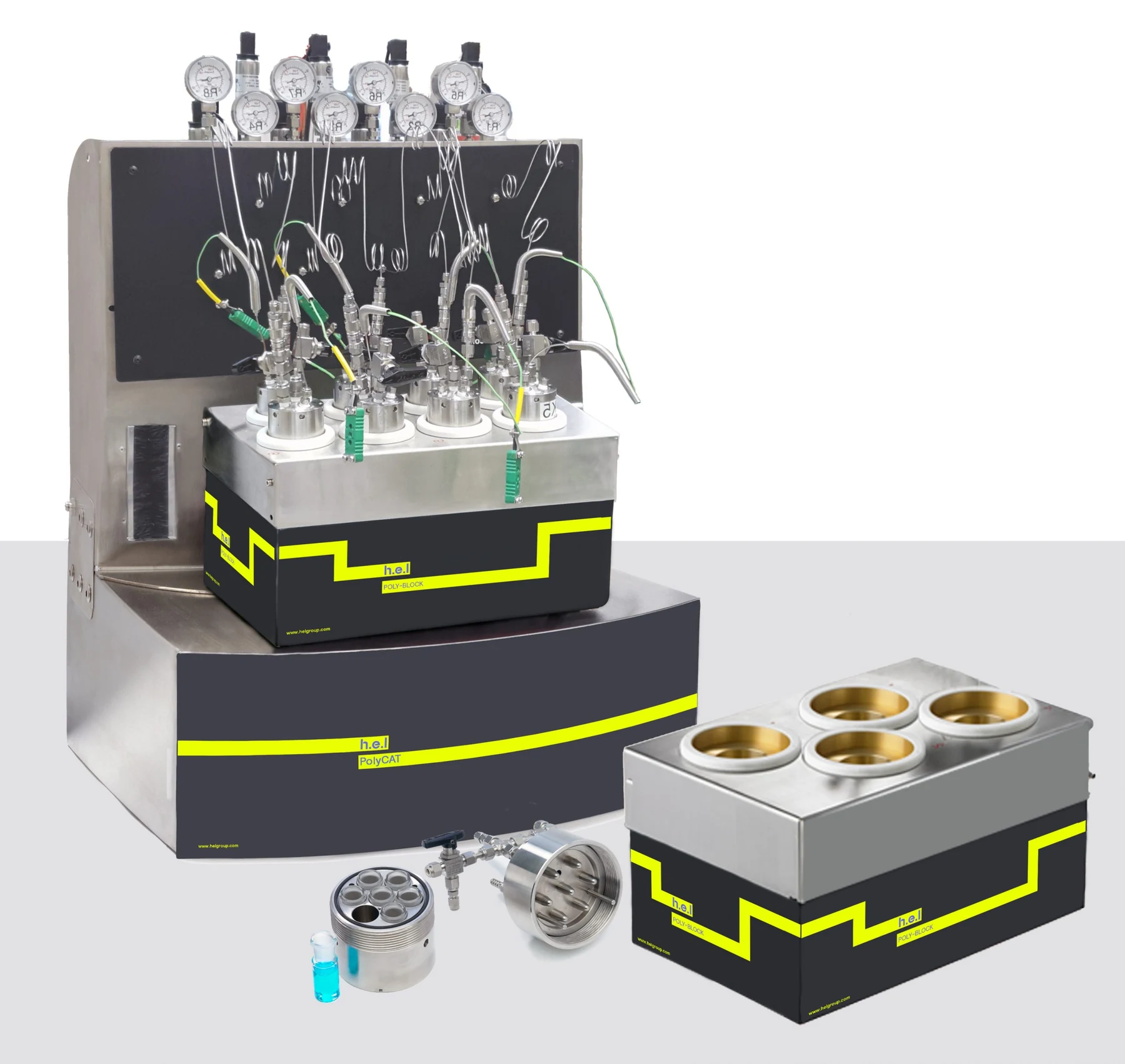
Screen catalysts, ligands, solvents and conditions in four or eight pressure reactors at once, with independent temperature and pressure control and gas-uptake measurement on every reactor. Three configurations cover manual, automated and fully independent gas control — all on the same 4- or 8-zone block.
ChemSCAN SA
- Pressure controlManual, independent
- Gas feeds2, shared
- Best forBasic screens
The entry point: manual gas control with the same reactors, block and software. Upgradable to the full ChemSCAN as your screening programme grows.
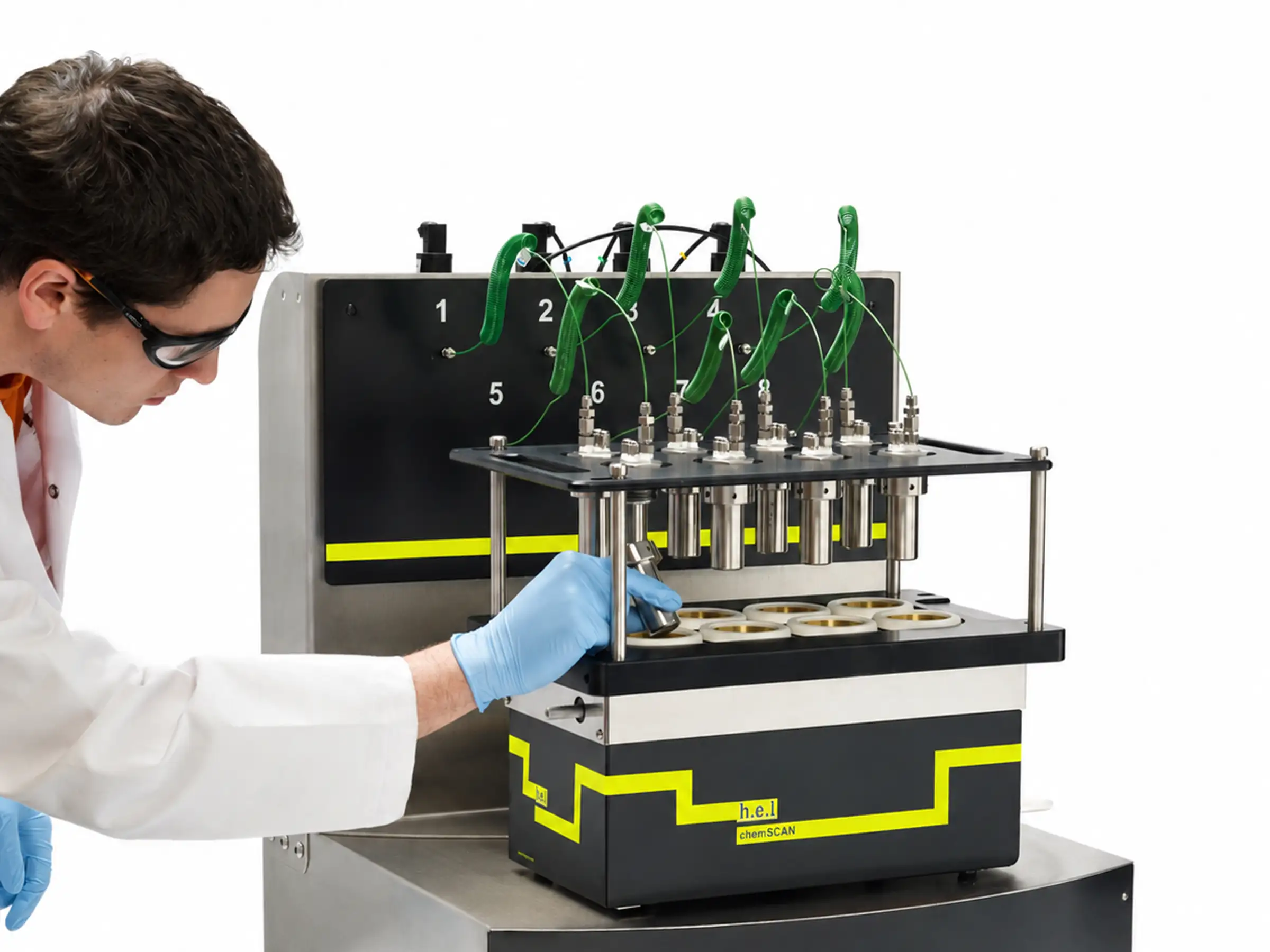
ChemSCAN
- Pressure controlAutomated, independent
- Gas feeds3, shared
- Best forOptimisation
Automated gas control with real-time gas-uptake calculation on every reactor — the classic platform for hydrogenation, carbonylation and catalyst screening under pressure.
ChemSCAN+
- Pressure controlAutomated, independent
- Gas feeds3, one set per reactor
- Best forDoE and advanced catalysis
Fully independent: each reactor has its own dedicated gas feeds and control, so every zone can run a different gas, pressure and profile — from 2 mL working volume.
Compare the three ChemSCAN models side by side →
Shared across the range
- Four or eight independently controlled reaction zones — each with its own temperature, pressure and stirring
- Real-time gas uptake per reactor: rank catalysts and read reaction kinetics from the pressure trace, without sampling
- Stainless steel or Hastelloy vessels from 16 mL to 500 mL, rated to 200 bar and 350 °C
- Operate from 1 to 100 bar as standard (200 bar optional), ambient to 200 °C
- Magnetic agitation to 1500 rpm; direct overhead agitation available on the 4-zone
- Options: additional gas feeds, high-pressure liquid feeds with multiway valves for parallel dosing, manual sampling loops
- Upgrade path: move to the AutoMATE platform for a linear layout, easier access and individual gas manifolds per reactor
- Same WinISO control software as the PolyBLOCK and AutoMATE — one interface across the parallel range
Specifications
| Specification | ChemSCAN SA | ChemSCAN | ChemSCAN+ |
|---|---|---|---|
| Automation | Semi-automatic — manual gas control; upgradable | Automatic gas control with real-time gas-uptake calculation | Automatic — independent gas control per reactor |
| Gas feeds | 2, shared across the reactors | 3, shared across the reactors | 3, dedicated per reactor |
| Working volume | 3 – 400 mL (4-zone) · 3 – 40 mL (8-zone) | 3 – 400 mL (4-zone) · 3 – 40 mL (8-zone) | 2 – 400 mL (4-zone) · 2 – 40 mL (8-zone) |
| Temperature | Ambient to 200+ °C; down to −40 °C option | Ambient to 200+ °C; down to −40 °C option | 25 to 200 °C; down to −40 °C option |
| Reactors | 4 or 8, independently controlled | ||
| Vessel volumes | 4-zone: 16, 25, 50, 75, 125, 300 or 500 mL · 8-zone: 16, 25 or 50 mL | ||
| Vessel material & rating | 316 stainless steel or Hastelloy C276 — 200 bar, 350 °C | ||
| Operating pressure | 1 – 100 bar (200 bar optional) | ||
| Agitation | 120 – 1500 rpm, magnetic; direct overhead agitation on the 4-zone | ||
| Gas uptake sensitivity | 0.04 mmol — equal to a 0.1 bar pressure change | ||
| High-pressure liquid feed | Optional — 0.02 – 40 mL/min at 100 bar, 0.01 – 20 mL/min at 200 bar; multiway valves for parallel feeds | ||
| Sampling | Optional port on the reactor lid; manual sampling loops | ||
| Software | WinISO — recipes, logging, feedback control, gas-uptake kinetics | ||
Highlighted rows are where the three configurations differ — everything else is common to the range. Final values confirmed on specification.
Parallel hydrogenation — from catalyst screening to scale-up, under pressure
Hydrogenation is where parallel pressure reactors pay for themselves. Each reactor’s gas-uptake trace gives you conversion and kinetics in real time, so a single run ranks catalysts, loadings, solvents and pressures side by side — without sampling and without waiting for offline analysis.
- Screen on the ChemSCAN: 4 or 8 reactors at up to 100 bar of hydrogen, with gas uptake resolved to 0.04 mmol per reactor
- Optimise on the PolyBLOCK High Pressure or AutoMATE High Pressure: the winning conditions at up to 500 mL and 200 bar, with gas-consumption rate calculation
- Stay safe: pressure and temperature interlocks with automatic, user-configurable shutdown on every reactor
- Go bespoke: dedicated multi-reactor hydrogenation rigs with individual gas manifolds and high-pressure dosing are built to order
Why parallel screening is changing selective hydrogenation →
Application note: hydrogenations at different catalyst loadings →
Custom parallel systems — when the standard configuration isn’t enough
H.E.L Group has a well-established history of developing bespoke, automated reactor solutions for the chemical and pharmaceutical R&D community. The AutoMATE Custom is based on the linear parallel platform and is designed to specific, individual application and process requirements — with expandable functionality as your research evolves.
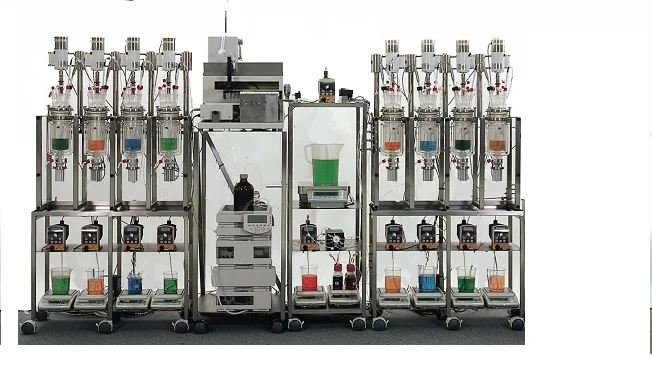
Multi-reactor process development
- Eight 2-litre reactors, operated independently or as a single system
- Automated washing between runs
- Robotic sampling with on-line HPLC
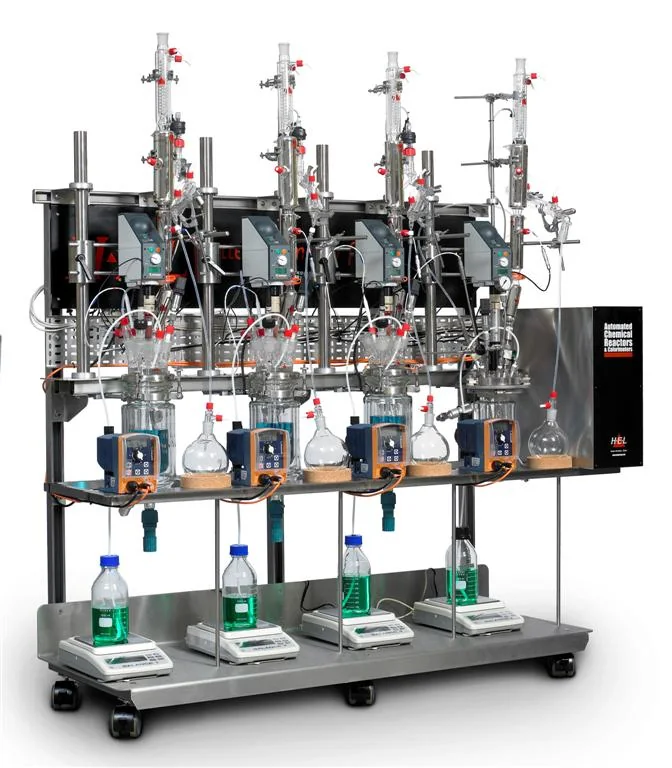
Parallel crystallisation development
- Multiple reactors with independent temperature control
- In-situ FTIR and turbidity monitoring
- Automated dosing, reflux and distillation options
Mix and match
Interchangeable vessels for quick exchange between applications: combine high- and low-pressure reactor options, alternative materials (Hastelloy C22, titanium, zirconium), and adaptor inserts for tubes, flasks and reactors.
Customisable chemistry
Reactor system control built around your requirements — automated sampling, liquid and gas dosing, process monitoring, reflux and distillation — with third-party probes and application modules such as gas uptake, online calorimetry and MSZW determination.
Beyond the bench
Define the system you want: go larger with bespoke floor-standing options, or combine parallel reactors with other bench-scale reactors on a multi-reactor stand.
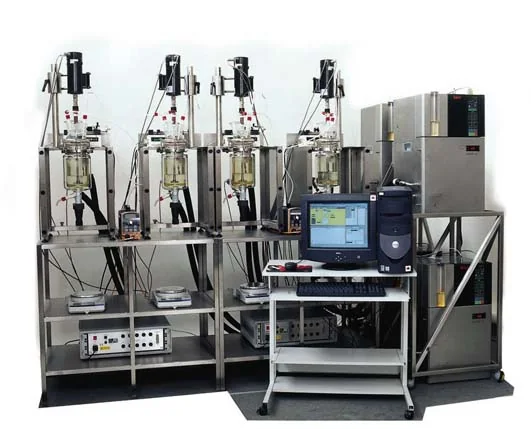
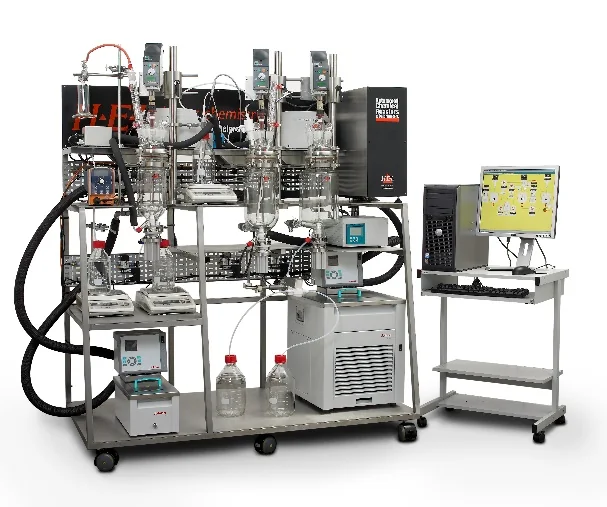
Compare the parallel range
From four vials to eight 2-litre reactors — one control platform.
Every parallel system runs on the same WinISO software, so recipes, data and know-how move with you from screening to process development.
Configure it your way
Every parallel system is specified around your chemistry — vessels, feeds, probes and application modules are chosen for your process, not the other way round.
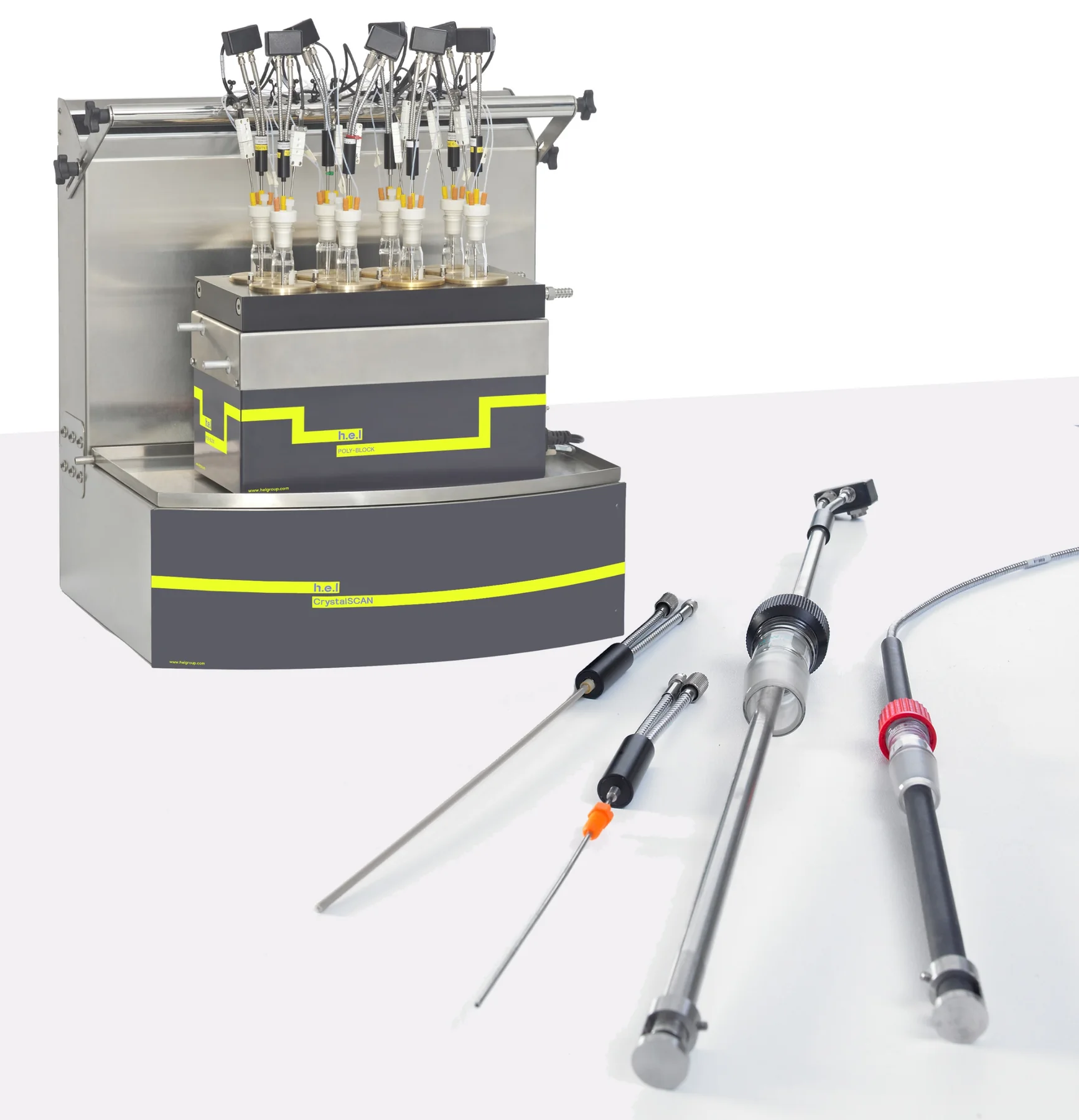
CrystalEYES crystallisation monitoring
Turbidity probes that detect dissolution and nucleation points in each reactor — meta-stable zone width from a parallel run.
View CrystalEYES →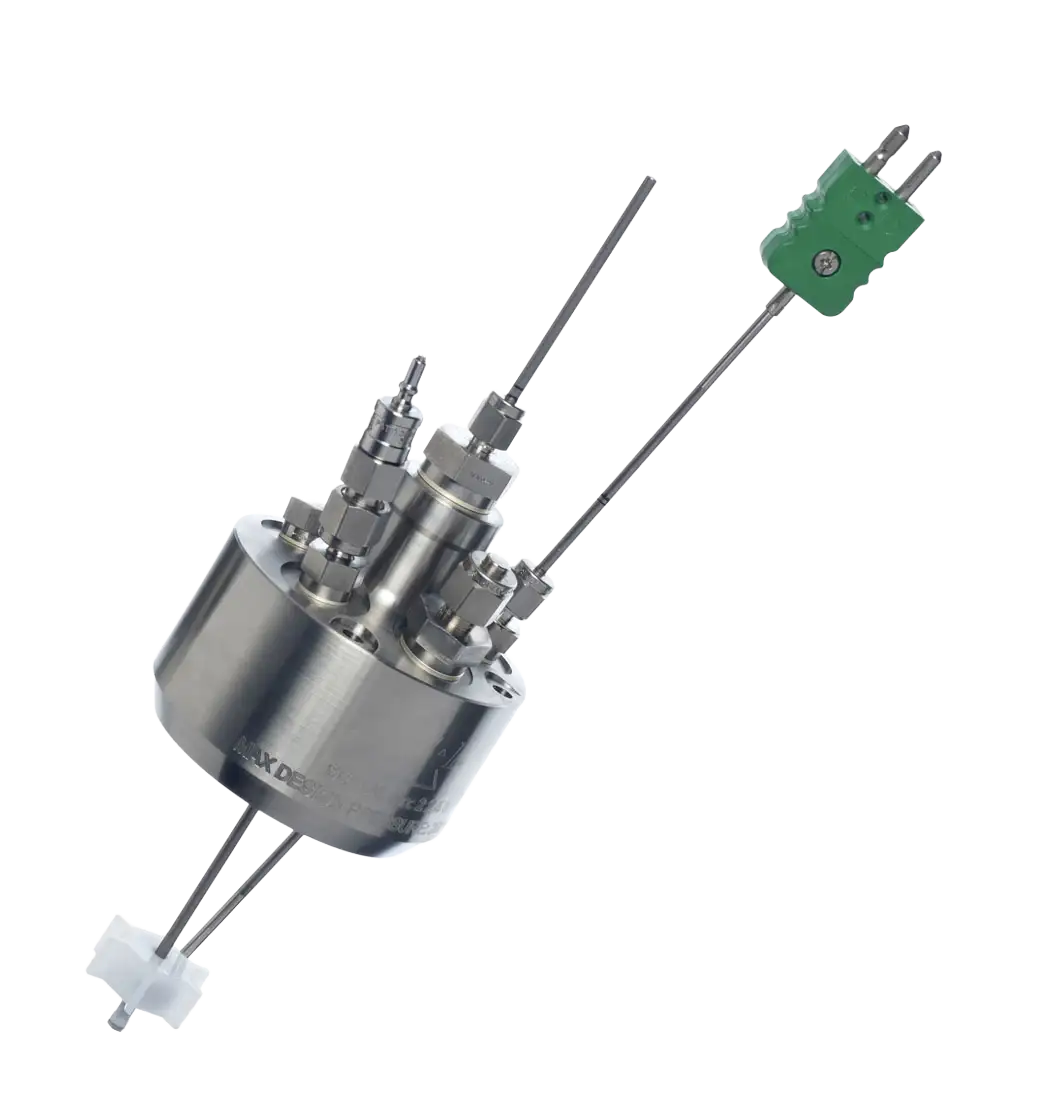
Gas & liquid feeds
Automated gas feeds, high- and low-pressure syringe pumps, and multiway valves for parallel liquid dosing — per reactor.
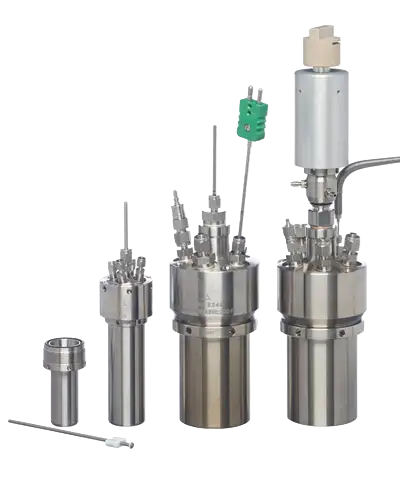
Vessels, sensors & sampling
Glass, stainless or Hastelloy vessels from vials to 500 ml; pH, turbidity, redox, DO and third-party probes (FTIR, Raman, particle sizing); automated sampling.
Application modules
Online calorimetry for reaction enthalpy and kinetics, gas consumption or evolution measurement, MSZW determination — added to any platform.
Selected publications
Subscription or purchase may be required for full access.
Related reading
 How can automation and parallel systems improve chemical synthesis processes?Read article →
 How Automated DoE Accelerates Chemical Process OptimizationRead article →
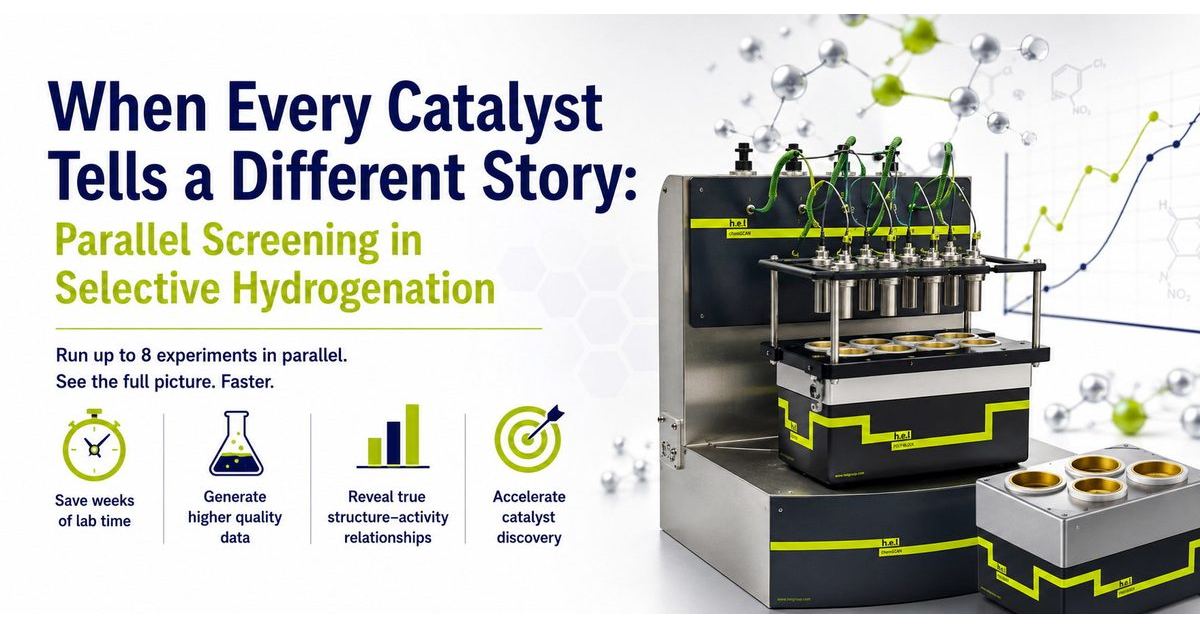 Why Parallel Screening Is Changing Selective HydrogenationRead article →
 Agitation – The Secret of Small Reactor Scale-upRead article →
 Hydrogenation: How we can make it saferRead article →
 Getting started with the PolyBLOCKRead article →
The parallel range at a glance
PolyBLOCK
Compact automated parallel synthesis platform
Jump to section ↑AutoMATE
Linear automated parallel synthesis platform
Jump to section ↑ChemSCAN
Parallel catalyst screening and development platform
Jump to section ↑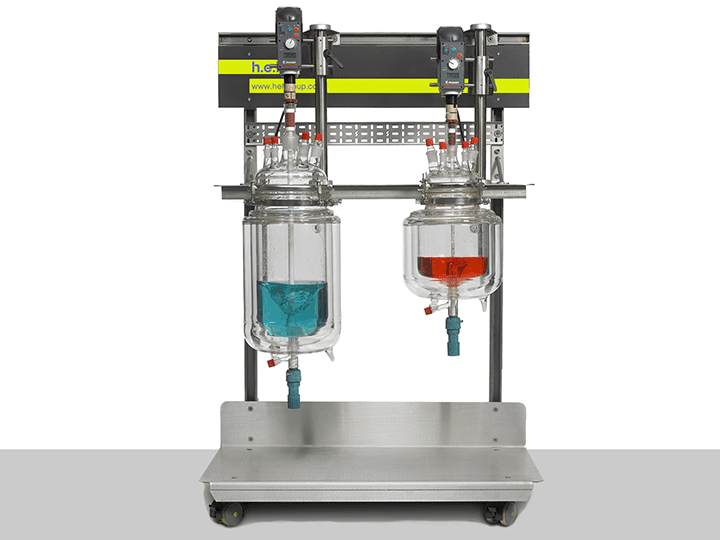
AutoLAB
Automated bench-scale reactors for scale-up — the next step after parallel
View →Frequently asked questions
Which parallel synthesis platform is right for my chemistry?
Is the system customisable to my process?
How many reactions can I run in parallel?
What reactor volumes are available?
Can I run high-pressure reactions such as hydrogenation in parallel?
What does the control software do?
How is this different from running reactions on a hotplate?
Ready to run your chemistry in parallel?
Talk to a specialist about configuring a parallel synthesis system around your application.