
AutoMATE
Fully customisable linear, automated parallel synthesis platform
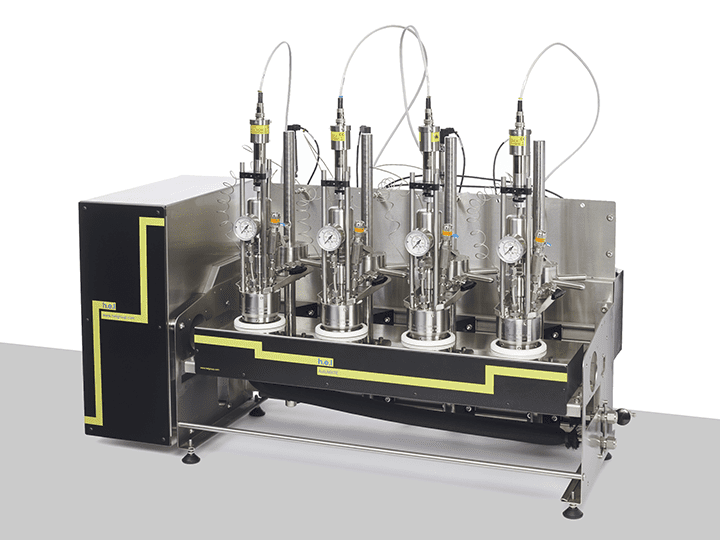
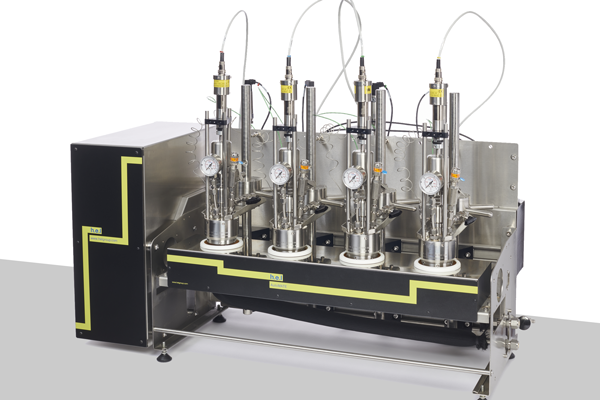
AutoMATE is a linear automated parallel synthesis platform designed for chemical synthesis, process development, and design of experiment screening. It features independently controlled reactors with flexible configurations to support a wide range of applications, including catalyst screening and crystallization studies. With advanced automation and an extended temperature range, AutoMATE enables precise, scalable, and efficient experimentation.
Overview
Automated Parallel Synthesis Platform
Auto-MATE is a flexible automated reactor system designed for parallel synthesis and process optimization. Its linear platform supports multiple independently controlled reactors, making it ideal for design of experiment studies and complex chemical processes. Compared to more compact systems, Auto-MATE is suited to demanding applications requiring greater flexibility, higher performance, and easier customization.
Flexible Reactor Configuration
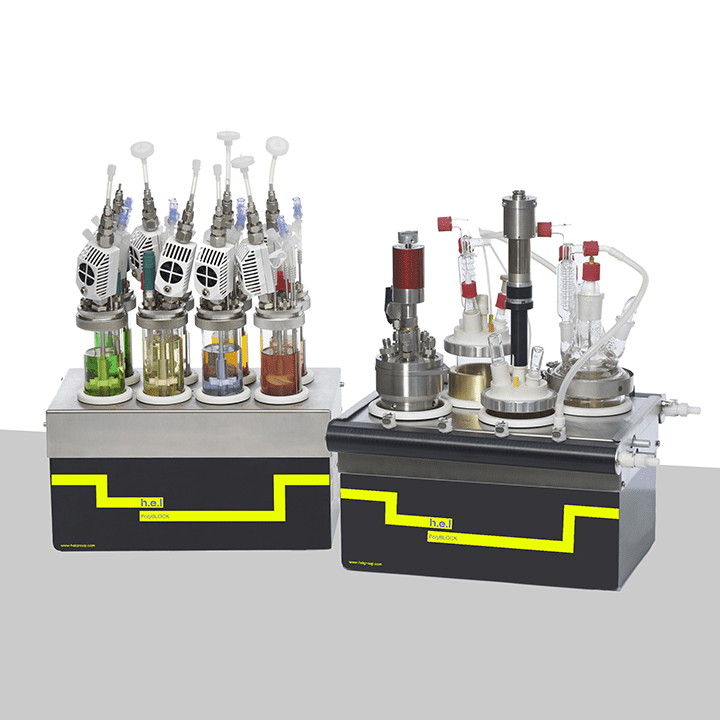
The system supports a wide range of reactor types, including glass and metal vessels with volumes up to 500 mL. It can be integrated with catalyst screening reactor blocks, enabling efficient evaluation of catalytic reactions. Compatibility with high pressure, vacuum, and continuous sampling systems ensures adaptability across different chemistries and processes.
Enhanced Functionality and Integration
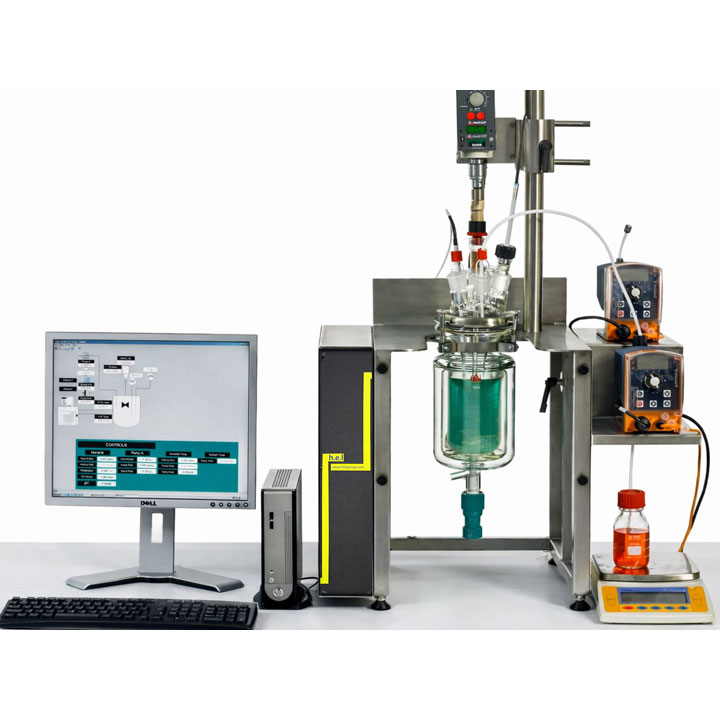
Auto-MATE supports a wide range of additional modules, including liquid dosing and sampling, gas feed control, reflux and inerting options, and online calorimetry. Integration with analytical tools such as FTIR, Raman, and particle sizing probes enables deeper process insight and real time monitoring.
Scalable and Customizable Design
The modular design of Auto-MATE allows for easy expansion and customization to meet evolving research needs. This makes it a powerful solution for laboratories seeking a scalable automated platform for chemical synthesis and process development.
Key specifications
| Reactors | Multiple, independently controlled (linear platform) |
|---|---|
| Vessel types | Glass, stainless steel or Hastelloy, up to 500 mL |
| Temperature control | Ambient to 250 °C standard; options −40 to 350 °C; individual mantles, >100 °C between reactors |
| Stirring | Overhead agitation (standard, for viscous systems); optional suspended agitation |
| Pressure & vacuum | High-pressure and vacuum systems available |
| Catalyst screening | Integrates with catalyst screening reactor blocks |
| Online calorimetry | Available |
| Sampling | Active pumps, dip tubes, automated level control or multisampling |
| Reagent addition | Automated liquid & gas feeds, plus volumetric syringe pumps (high & low pressure) |
| Sensors | Temperature, pressure, pH, turbidity, conductivity; third-party probes (in-situ FTIR, particle sizing, Raman) |
| Condenser options | Quick-connect condensing & inerting for larger reactors (condensers removable without cooling-liquid spillage); reflux & inerting block with adapters for vials, tubes and reactors |
Applications
Software, control & safety
AutoMATE is controlled by advanced software enabling automated workflows with multi-step recipes, real-time data logging and feedback control — consistent, repeatable experiments and more efficient process development.
Configurable reaction-detection and automatic shutdown procedures, with integrated hardware and software safeguards, ensure safe operation even under demanding conditions.
See our application notes for worked AutoMATE examples.
Watch the AutoMATE in action
A full walkthrough from our application specialists — no form, no sign-up.
Prefer YouTube? Watch on our channel →
Frequently asked questions
What is AutoMATE used for?
How is it different from PolyBLOCK?
What temperature range does it cover?
What vessels and volumes?
Can it run high-pressure work or calorimetry?
Is it customisable to my process?
Selected publications
Subscription or purchase may be required for full access. View all publications →
Explore the chemical synthesis range
Related reading
Ready for demanding parallel synthesis?
Talk to a specialist about AutoMATE for DOE, catalyst screening and scale-up.
“We chose H.E.L’s AutoMATE II batch-reactor array — professional advice, reactors built to specification, and thorough on-site training. The associated software is very intuitive and user-friendly, and any issues were resolved quickly by the very helpful team at H.E.L.” — Queen’s University, Belfast
Ambient Pressure PolyBLOCK & AutoMATE Brochure