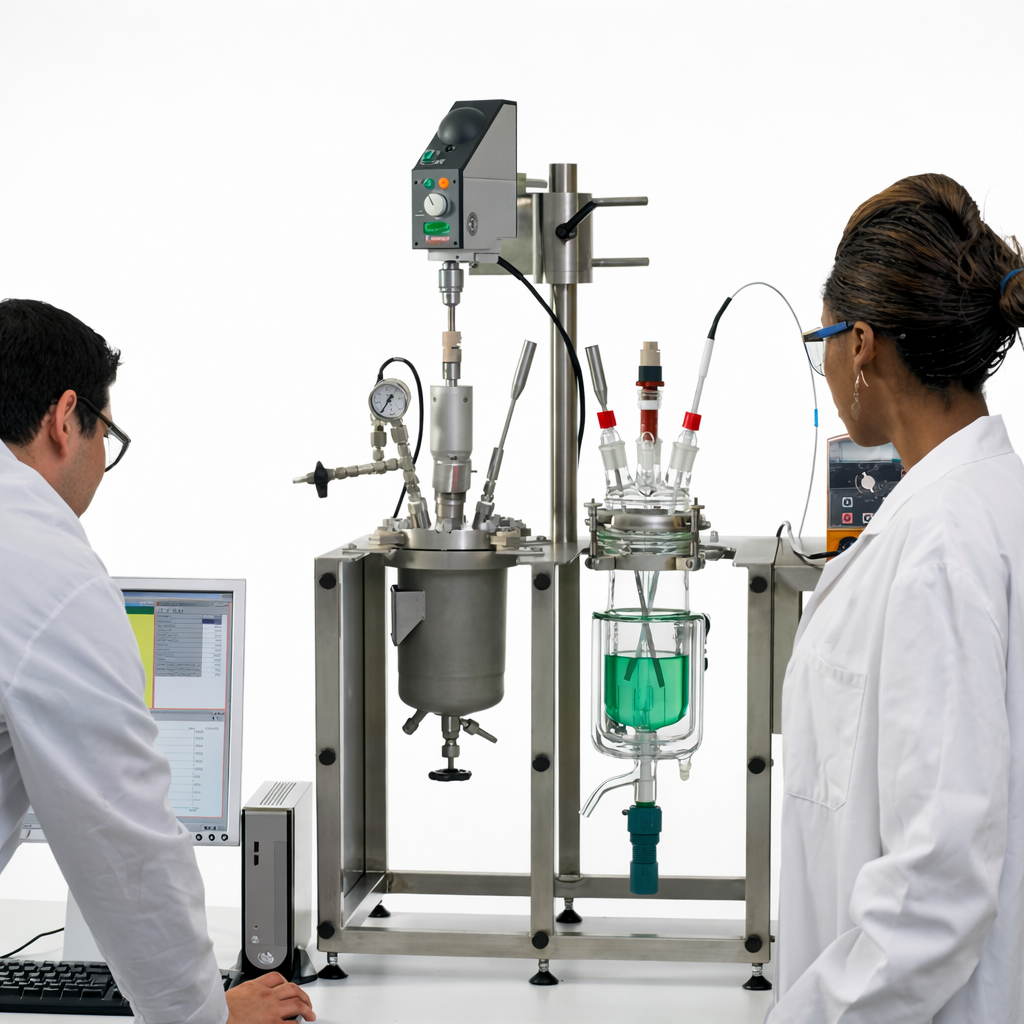
My experience with H.E.L dates since 2005. During these years H.E.L was the provider of the most important lab equipment with the help of which I developed many different API pharmaceutical processes in the companies l worked for including Merck, Pfizer, and Theravance. The versatility of the automated lab reactors (AutoLAB), the ease of use of and the accuracy of the TSu and Simular systems, as w...
Theravance Inc – USA
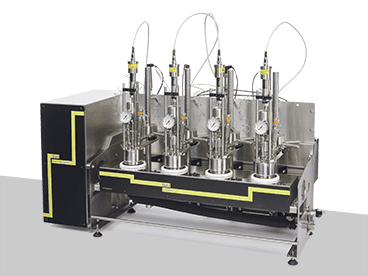
With the polyblock 4 system significant time savings have been achieved compared to using conventional laboratory reactors while at the same time obtaining more information on the process studied. The system has given reproducible process control making it very useful in DOE experiments on a precise recrystallisation where variations due to operational error had to be minimised. Also with the flex...
Almac Group – United Kingdom
A versatile time saving tool for QBD & DOE study for all kind of chemistry, crystallization, & even integrated with Calorimetric study. H.E.L motto “Better Chemistry – Faster” matches with output of instrument giving better control over chemistry & faster result. Thanks for making our work simple.
Cipla – India
We purchased a PolyBLOCK 4 zone system in November and the system was delivered on time and to our specification. The PolyBLOCK has increased throughput by allowing us to easily and efficiently run multiple reactions. Our system has proven to be very reliable and we utilize it on a daily basis. We are very satisfied with our purchase of the PolyBLOCK 4 and the advice and technical support offered...
Secant Medical – USA
PolyBlock PB4 is ideal and best suited for Pharmaceutical application in terms of flexibility, upgradability for various applications like pH monitoring and control, solubility and MSZW for crystallisation , high pressure Hydrogenation , Online Real Time calorimetry, reflux & inerting , PAT tools in future , overhead motor stirring , extended temperature range -80 to 250 ( depends on the chiller b...
Dr D.Y. Patil, Institute of Pharmaceutical Sciences – India
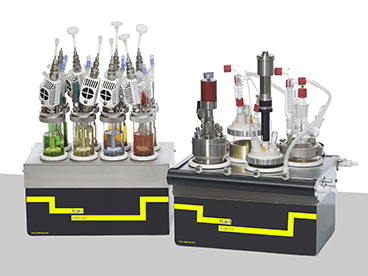
The PolyBLOCK 4 is simple to use for all chemists and biochemists in our company. It allows us to carry out more reactions at a time, under very good temperature control. We also operate the PolyBlock overnight under pre-programmed procedures, to save a lot of precious time. We use different sizes of glassware in the same block, which allows us to investigate our chemistry at small scale, and then...
BioCompatibles UK Ltd – United Kingdom
H.E.L has supplied us with high pressure reactors with automation which are working well and on the basis of this we are willing to recommend H.E.L for such systems.
Watson Pharma – PVT
We received the ordered parallel high pressure system, everything is working well. Training and instructions were good and we are very satisfied.
Fraunhofer Institut Chemische Technologie – Germany
My role within the Green Chemistry Centre at the University of York (UK) is as Clean Synthesis Technology Platform Leader. Through this role I am currently supervising work being undertaken studying the application of heterogeneous catalysts and high-pressure gases for the conversion of biomass derivable compounds. As such our group has recently purchased three high-pressure reactors from H.E.L Lt...
University of York – York, England
Relevant Publications for Chemical Synthesis
Published research and studies supporting our technology
Thermal hazard assessment of cyclohexane-type liquid crystal monomer from the Grignard cross-coupling reaction by different calorimeters
ReactNMR and ReactIR as Reaction Monitoring and Mechanistic Elucidation Tools: The NCS Mediated Cascade Reaction of α-Thioamides to α-Thio-β-chloroacrylamides
Use of isoperibolic reaction calorimeter for the study of reaction kinetics of acetic anhydride hydrolysis reaction: Effect of acetic anhydride and water ratio
Determination of the onset of crystallization of N1-2-(thiazolyl) sulfanilamide (sulfathiazole) by UV-Vis and calorimetry using an automated reaction platform
Scale-Up of a Vilsmeier Formylation Reaction: Use of HEL Auto-MATE and Simulation Techniques for Rapid and Safe Transfer to Pilot Plant from Laboratory
Use of reaction calorimetry in thermal risk assessment studies and safe design of batch reactions that can lead to a runaway: application on hydrogen peroxide
Study of System Thermodynamics and the Feasibility of Chiral Resolution of the Polymorphic System of Malic Acid Enantiomers and Its Partial Solid Solutions
In-Process ATR-FTIR Spectroscopy for Closed-Loop Supersaturation Control of a Batch Crystallizer Producing Monosodium Glutamate Crystals of Defined Size
Real-Time Measurement of the Growth Rates of Individual Crystal Facets Using Imaging and Image Analysis: A Feasibility Study on Needle-shaped Crystals of L-Glutamic Acid
In Situ Measurement of Solution Concentration during the Batch Cooling Crystallization of l-Glutamic Acid using ATR-FTIR Spectroscopy Coupled with Chemometrics
Synopsis:
In this journal, the in-situ measurement of solution supersaturation associated with the batch cooling crystallisation of L-glutamic acid (LGA) at 500 mL and 20
Crystal Polymorphs and Transformations of 2-Iodo-4-nitroaniline
Synopsis:
This journal discusses the full crystal structural characterization of the crystal polymorphs of 2-iodo-4-nitroaniline. The HEL AutoLAB jacketed crystalliser wa
Cellulose-TiO2 nanocomposite with enhanced UV–Vis light absorption
Synopsis:
This paper reports the successful preparation of TiO2/N-cellulose nanocomposite in the (cyclohexyl)hexyldimethylammonium acetate–dimethyl sulfoxide solution.
Reduction of CO2 by adsorption and reaction on surface of TiO2-nitrogen modified photocatalyst
Synopsis:
This journal discusses the synthesis of a TiO2/N-100 photocatalyst by hydrothermal reaction of amorphous anatase TiO2 and NH4OH at 100 °C. The preparation of t
Demonstrating the Influence of Solvent Choice and Crystallization Conditions on Phenacetin Crystal Habit and Particle Size Distribution
Synopsis:
In this paper, phenacetin was used as a model pharmaceutical compound to investigate the impact of solvent choice and crystallisation conditions on the crystal
Methyl tetra-O-acetyl-α-d-glucopyranuronate: crystal structure and influence on the crystallisation of the β anomer
Synopsis:
In this journal, methyl tetra-O-acetyl-β-d-glucopyranuronate and methyl tetra-O-acetyl-α-d-glucopyranuronate were isolated as crystalline solids and their cry
Measuring the Particle Packing of L-Glutamic Acid Crystals through X-ray Computed Tomography for Understanding Powder Flow and Consolidation Behavior
Synopsis:
This paper presents the morphology of free-flowed and gravity consolidated crystal powder beds of the alpha and beta polymorphic forms of L-glutamic acid, toget
Nucleation kinetics of paracetamol–ethanol solutions from metastable zone widths
Synopsis:
In this study, metastable zone width (MSZW) experiments were conducted in order to estimate the nucleation kinetics of the system a cooling crystallisation of p
Use of food-grade proteases to recover umami protein–peptide mixtures from rice middlings
Synopsis:
This report investigates the effects of enzymatic hydrolysis of food-grade exo and endo-proteases, Umamizyme and Flavourzyme, on the sensory characteristics and
One-pot combination of enzyme and Pd nanoparticle catalysis for the synthesis of enantiomerically pure 1,2-amino alcohols
Synopsis:
This journal reports the one-pot combination of alcohol dehydrogenase-catalysed asymmetric reduction of 2-azido ketones and Pd nanoparticle-catalysed hydrogenat
Synthesis, characterization and performance of bifunctional catalysts for the synthesis of menthol from citronellal
Synopsis:
This paper describes the synthesis of a series of bifunctional catalysts (1 wt% Pt/W-TUD-1 and 1 wt% Pt/WO3/TUD-1) with different tungsten loadings (5-30 wt% WO
Influence of Process Parameters on the Heterogeneous Nucleation of Active Pharmaceutical Ingredients onto Excipients
Synopsis:
In this work, acetaminophen (AAP), α/β-lactose (α/β-Lac), and methanol (MeOH) were selected as the model active pharmaceutical ingredient (API), excipient,
Formation mechanism of aroma compounds in a glutathione-glucose reaction with fat or oxidized fat
Synopsis:
In this journal, glutathione (GSH) and glucose with or without chicken fat/oxidized chicken fat were thermally reacted for generation of stewed meat-like aroma.
Enantioselective Synthesis of a γ-Secretase Modulator via Vinylogous Dynamic Kinetic Resolution
Synopsis:
This paper describes two new efficient asymmetric routes to form γ-secretase modulator BMS-932481, under investigation for Alzheimer’s disease. The key step
Tailoring morphology and bulk density of magnesium ethoxide particles by adding n-hexane and silicone oil
Synopsis:
In this work, the preparation of magnesium ethoxide (Mg(OEt)2) particles was tailored, using the inert substances silicone oil and n-hexane to control the solve
Rapid synthesis of sodium-rich Prussian white for Sodium-ion battery via a bottom-up approach
Synopsis:
This journal proposes a bottom-up approach to afford rapid and productive preparation of NaxMn[Fe(CN)6]y (MnHCF) with the low defect and high sodium content, by
Structural analysis of metastable pharmaceutical loratadine form II, by 3D electron diffraction and DFT+D energy minimisation
Synopsis:
This article reports the determination of the crystal structure of the metastable form II of loratadine using a combination of low-resolution 3D electron diffra
Scale-Up of a Vilsmeier Formylation Reaction: Use of HEL Auto-MATE and Simulation Techniques for Rapid and Safe Transfer to Pilot Plant from Laboratory
Synopsis:
The journal describes the application of reaction calorimetry and process modelling to allow for rapid and safe scale-up of a Vilsmeier formylation reaction, wh
Isothermal reaction calorimetry as a tool for kinetic analysis
Synopsis:
This paper reviews the most important reaction calorimetric principles and their application in commercial or scientific devices, giving examples of various rea
Achieving pH and Qr oscillations in a palladium-catalysed phenylacetylene oxidative carbonylation reaction using an automated reactor system
Synopsis:
This experimental shows evidence for oscillations in both pH and heat output (Qr) during a palladium-catalysed phenylacetylene oxidative carbonylation reaction
Kinetics Estimation and Single and Multi-Objective Optimization of a Seeded, Anti-Solvent, Isothermal Batch Crystallizer
Synopsis:
This journal estimates the nucleation and growth kinetic parameters of paracetamol in an isopropanol-water antisolvent batch crystalliser, by nonlinear regressi
Autonomous reorganization of the oscillatory phase in the PdI2 catalyzed phenylacetylene carbonylation reaction
Synopsis:
The PdI2 catalyzed oxidative carbonylation of phenylacetylene has been shown to produce pH oscillations over the temperature range 0-40 °C under semi-batch con
Critical Assessment of Pharmaceutical Processes A Rationale for Changing the Synthetic Route
Synopsis:
This review was written as an analysis of the issues in creating a synthetic route for the pharmaceutical industry. It groups these issues into 6 categories: Sa
Concentration and Separation of Heavy Rare-Earth Metals at Stripping Stage
Synopsis:
This work investigates the separation and concentration processes of heavy rare-earth metals (HREM) yttrium, ytterbium, erbium, and dysprosium during stripping
The Scale-up Challenge in Small Reactors
After initial screening, the ideal chemical and bio research involves development in multiple reactors in parallel, operating independently without compromi…
Optimizing chemical processes is a fundamental step in developing efficient, scalable, and economically viable manufacturing routes. Whether in fine chemicals, pharmaceuticals, or specialty sector…
Collaboration with ICT Mumbai will focus on advancing process safety and chemical synthesis in India
London, UK, 12 March 2025: H.E.L Group (H.E.L), a global developer and manufacturer of innovativ…
The growing demand for efficiency in chemical synthesis within industrial processes like drug discovery has led to an increased interest in automation. High-throughput screening automation can play a …
Picture this. You are placidly sleeping in your home in a quiet town, and you are suddenly woken up by a distant explosion. Minutes later, the sky darkens, and a toxic cloud comes your way. Sadly,…
Plastics are everywhere, from bags to means of transport. They are a pervasive element in our lives, and that is one of the main issues. To meet the market needs, over 460 million metric tons of pla…
Why Choose Us?
Trusted by industry and academia, we deliver robust, practical solutions for real-world process safety challenges.
Parallel Reaction Platforms
Run up to 8 independent experiments simultaneously with precise control of temperature, pressure, stirring, and dosing.
Wide Operating Conditions
Handle challenging chemistries with reactors rated from –40 °C to 350 °C and up to 200 bar pressure.
Scalable Platforms for R&D
Compact PolyBLOCK systems and versatile AutoMATE units adapt to both small-scale screening and more complex process development.
Flexible Reactor Options
Choose from interchangeable vials, tubes, and high-pressure vessels, compatible with diverse synthesis workflows.
Integrated Process Analytics
Seamlessly combine PAT tools (pH, turbidity, FTIR, GC-MS, calorimetry) for real-time monitoring and richer data.
Advanced Automation
Program complex dosing steps, automate control loops, and capture high-quality datasets to accelerate process optimization.