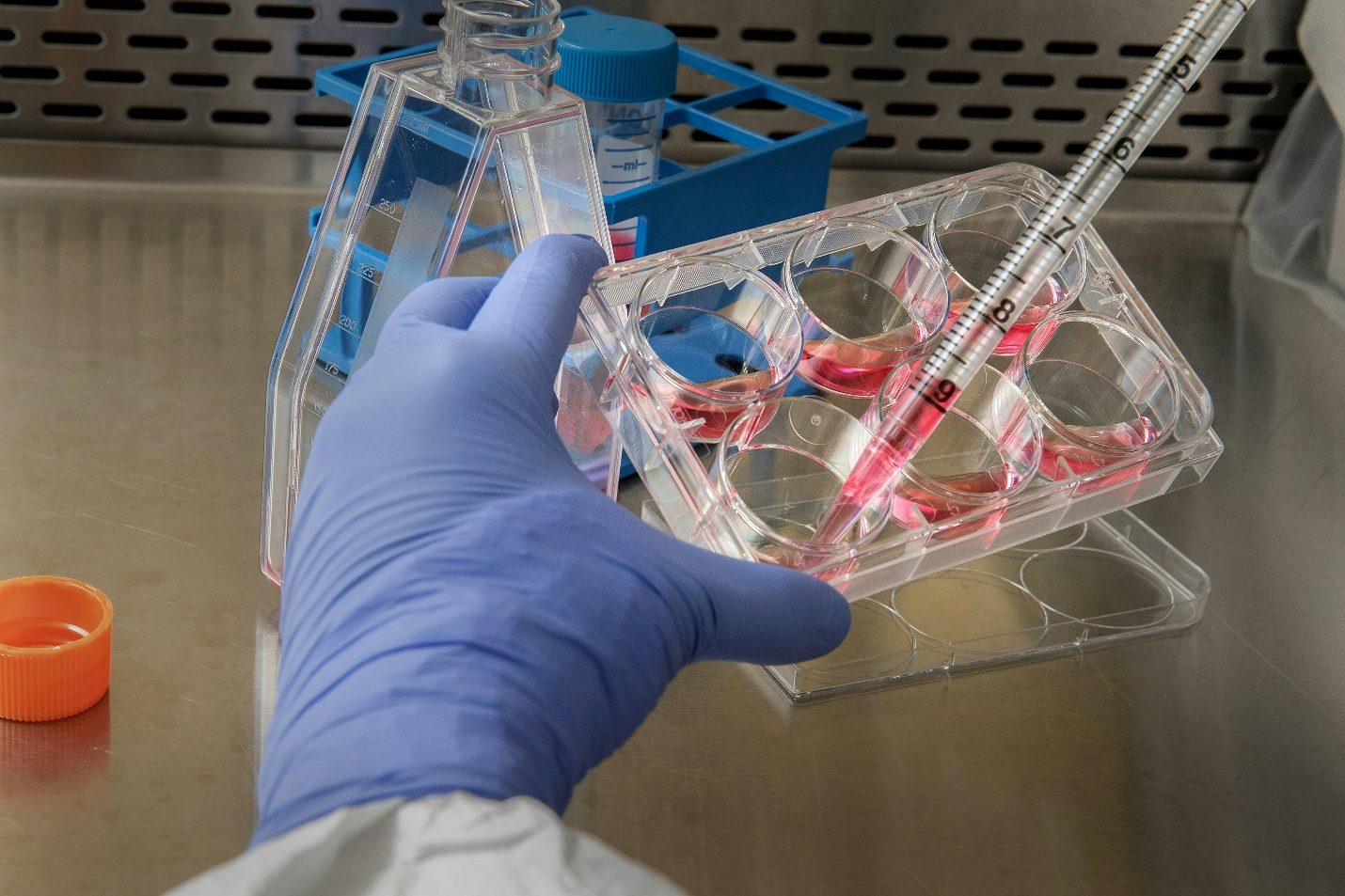
For the past several years, most of the conversation about the future of meat has boiled down to one question: can we grow meat without raising an animal?
Cultivated meat gets the headlines for exactly that reason. But there’s another branch of food biotech working a quieter angle on the same problem. Instead of growing meat, researchers are asking whether we can make the individual proteins that make meat, dairy, and eggs appealing in the first place… and then engineer them to work even better.
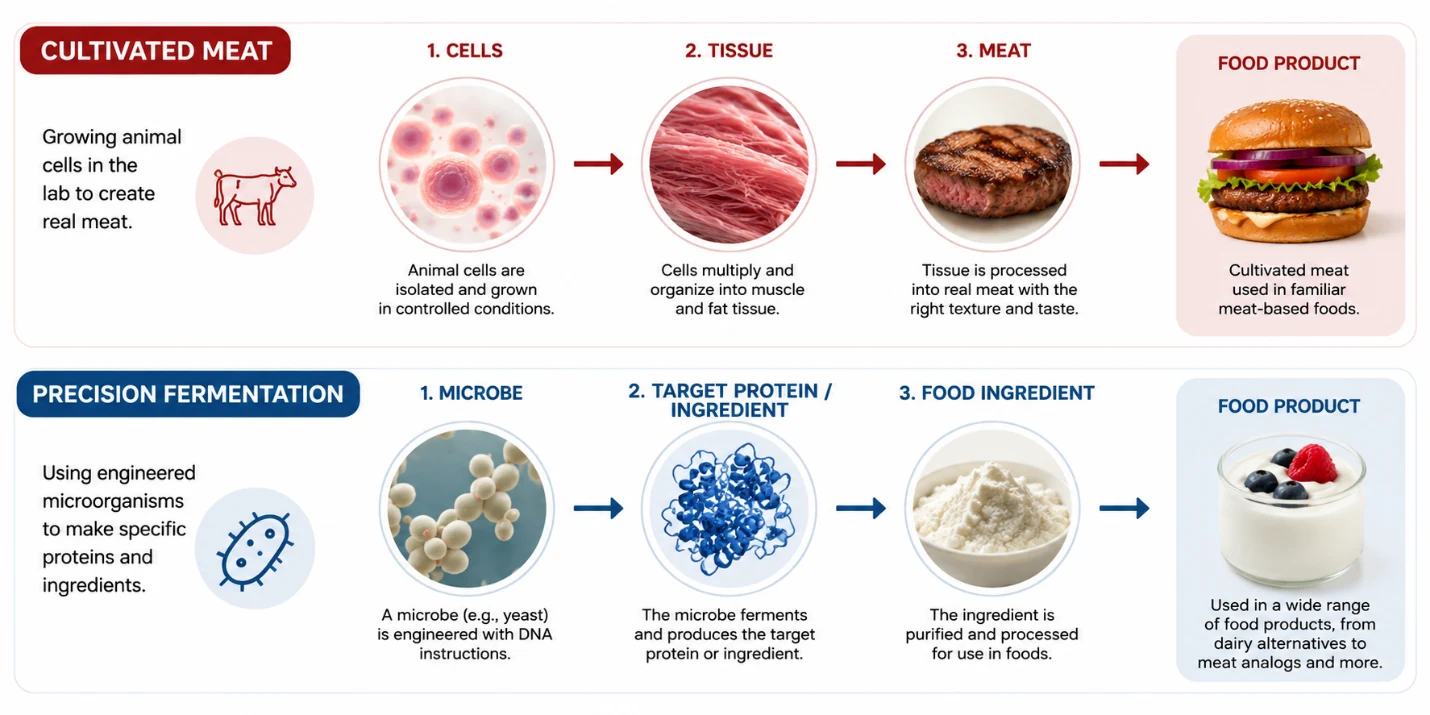
That’s precision fermentation, in short. Rather than trying to recreate an entire animal product, it uses yeast, bacteria, or fungi as small-scale biological factories. Give them the right genetic instructions, and they’ll produce specific proteins, fats, enzymes, flavors, and other ingredients on demand.
It might end up being one of the more consequential developments in alternative proteins; not because it replaces cultivated meat, but because it’s solving a different problem entirely.
The problem isn’t just “protein”
Plant-based meat proved that people are open to alternatives. What it also proved is that recreating the actual experience of eating meat is genuinely hard.
Meat isn’t just protein. Its flavor, texture, color, aroma, juiciness, and cooking behavior all come from a fairly complicated mix of proteins, fats, pigments, minerals, and other molecules. Some of which are hard to get out of a plant no matter how you process it.
That’s where precision fermentation gets interesting. Instead of asking a plant to act like an animal product, you can produce the specific molecules responsible for the property you actually want. Heme is the classic example: the iron-containing molecule behind meat’s color and much of its flavor. But there’s just as much work going into proteins naturally found in milk or eggs, which can deliver familiar functionality without an animal anywhere in the process.
The point usually isn’t to build a complete meat replacement. It’s to build better ingredients for the foods trying to replace it.
It’s closer to programming than substitution
One of the more interesting things about precision fermentation is that researchers aren’t stuck copying what nature already made. They can modify it.
An organism can be engineered to produce a given protein, and that protein can then be tuned for stability, solubility, flavor, nutritional profile, or whatever functionality the product actually needs. So, the question shifts from “how do we make exactly what an animal makes?” to something more open-ended: what protein would make this food work better?
That’s a much bigger design space. Teams can explore different host organisms, metabolic pathways, feedstocks, and fermentation conditions, then layer genetic engineering on top of process optimization to push productivity up and cost down. A 2026 review of precision fermentation lays out just how far this extends… well past proteins into lipids, carbohydrates, vitamins, and other functional ingredients3.
So, the technology isn’t just producing animal-free versions of familiar molecules anymore. It’s turning into a platform for designing new ones.
The real challenge is making enough of it
Proving a microbe can produce a protein in the lab and producing enough of that protein to matter in the global food system are two very different problems. Something that performs beautifully at flask scale can still be far too expensive to manufacture at any meaningful volume.
Food proteins are needed in much larger quantities, and at much lower prices, than pharmaceutical proteins, so a production process that’s perfectly reasonable for a high-value therapeutic often makes no economic sense for an everyday food ingredient. That’s pushed a lot of the field’s attention toward titers, yields, productivity, feedstock cost, and downstream processing. The Good Food Institute points to better strains, higher titers and yields, and cheaper feedstocks as some of the highest-priority levers for fermentation-derived proteins4.
And the work doesn’t stop when fermentation ends; the protein still has to be recovered and processed. A recent review in Annual Review of Food Science and Technology notes that the purification methods built for pharma are often too costly for bulk food proteins, which is pushing researchers toward cheaper strategies built around functionality rather than pharmaceutical-grade purity2. It sounds like a minor distinction on paper. At food-production scale, it isn’t.
Small experiments doing a big job
Before any process can turn out kilograms, let alone tonnes, of protein, researchers first have to understand how the organism behaves under tightly controlled conditions. How much oxygen does it need? How does agitation affect growth? What happens as nutrients run low? Which temperature gives the best balance of growth and protein output? How does the feeding strategy influence yield over the course of fermentation?
And maybe the harder question underneath all of those: which combination of conditions produces the most robust and economically viable overall process?
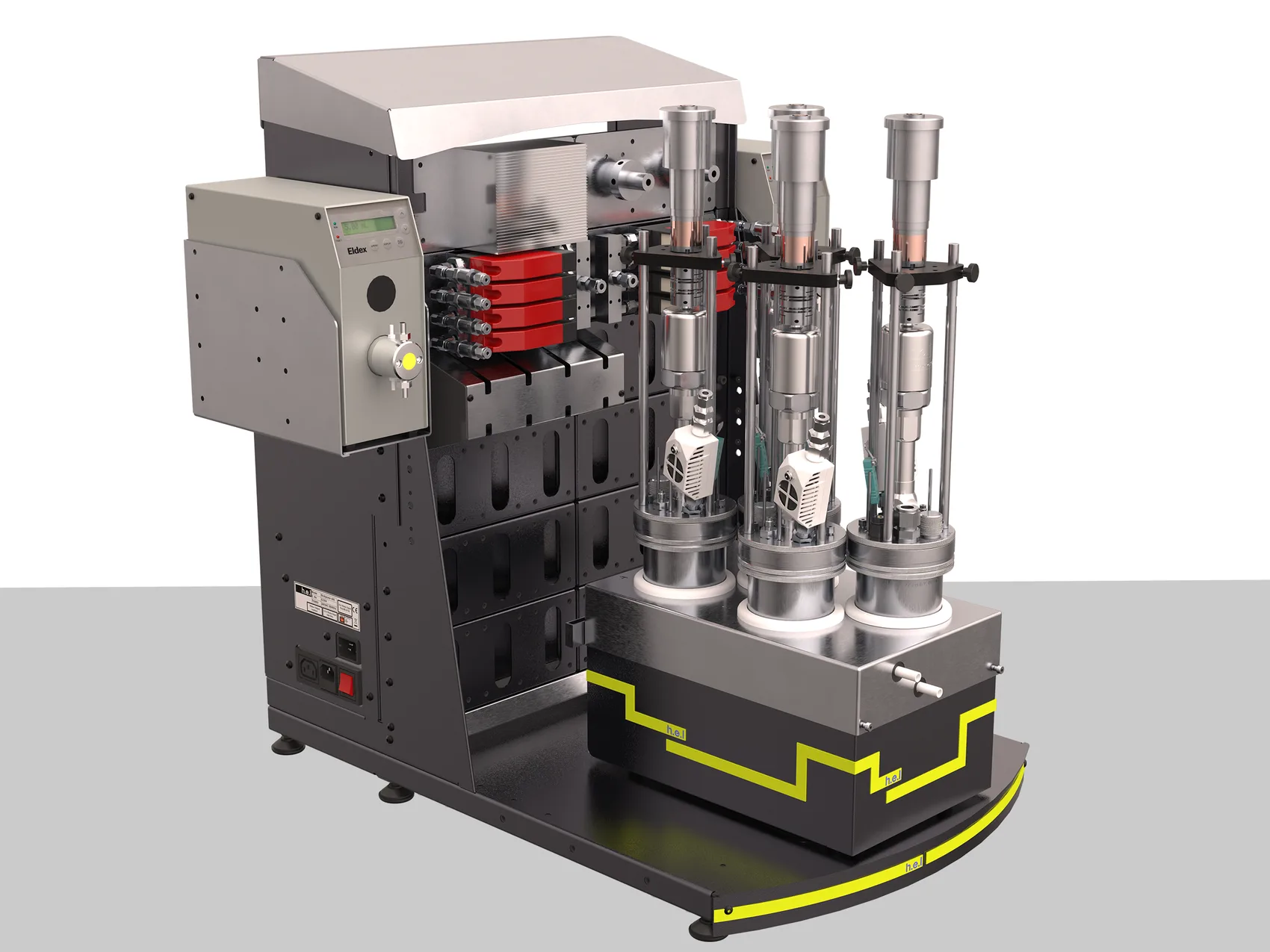
Working through that experimental space one bioreactor at a time can quickly become a bottleneck. Comparing multiple strains, media, feed strategies, temperatures, and agitation rates in parallel allows researchers to explore more of the process design space at an earlier stage. With consistent monitoring and control across each experiment, teams can identify promising conditions faster and generate the process data needed to make better decisions about optimization and scale up.
The industry is getting more practical
There’s a broader shift happening in alternative proteins right now, and it’s a healthy one: the conversation is moving away from “is this scientifically possible” and toward “can this actually work at commercial scale.”
2025 was a mixed year for the sector with new products, facilities, partnerships, and regulatory progress alongside real funding pressure and a handful of high-profile closures4. The industry’s attention is settling on the fundamentals: cost, taste, texture, manufacturing capacity, scale. Precision fermentation isn’t exempt from any of that. Getting to commodity-scale volumes may well require fermentation infrastructure well beyond what’s historically served specialty biotech products. A 2026 perspective in Nature Food names capital intensity, downstream processing, feedstock costs, and sheer production scale as some of the field’s more immediate economic hurdles1.
None of that makes the science less interesting. It just makes process development matter more.
What comes after “alternative meat”?
The future of alternative proteins probably isn’t going to be one technology winning out. There’s room for plant-based foods, cultivated meat, biomass fermentation, precision fermentation, and combinations of all of them working together.
A plant-based burger might lean on a fermentation-derived protein for better texture. A cultivated meat product might eventually incorporate purpose-built ingredients of its own. A dairy alternative could use fermentation-derived milk proteins to get functionality that plants just can’t replicate on their own. And there’s plenty of room for entirely new foods that don’t try to imitate an animal product at all.
That might be the most interesting part of precision fermentation; it’s not really about building a substitute. It’s about handing food scientists a new set of biological building blocks. The question isn’t just whether we can make food without animals anymore. It’s whether biotechnology can help design better ingredients from scratch. As that question moves from the lab toward commercial production, being able to develop, test, and optimize fermentation processes quickly becomes a real part of the answer.
Where bioprocess development fits
Precision fermentation starts with biology, but the products that actually make it to market depend on process development. Finding the right organism is only the first step. Researchers then need to understand how that organism responds to changes in factors such as temperature, pH, dissolved oxygen, agitation, nutrient availability, and feeding strategy, and determine which combination delivers the right balance of growth, productivity, yield and process robustness.
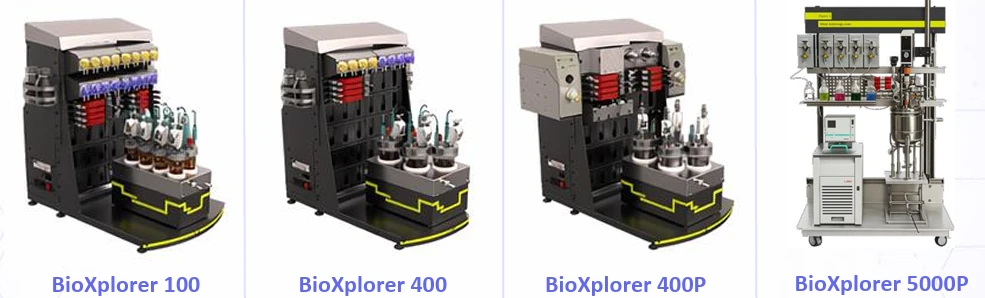
Parallel bioprocess platforms like the BioXplorer are built for exactly that stage, helping researchers work through those variables early and build the data needed to make better decisions before committing to larger-scale fermentation. For an industry trying to get from promising proteins to affordable ingredients, that step may end up being one of the most important of all.
The future of alternative protein might not be about making meat in a tank. It might be about making the right ingredients in one.
Curious how parallel bioprocess development supports precision fermentation work? Explore the BioXplorer range to see how researchers are accelerating strain characterization and process optimization for alternative proteins.
Related reading
How can we feed the world and fight global warming? With microbes!
A practical guide to high-density microbial cultivation
The rise of carbon-negative biomanufacturing: can microbes help fight climate change?
Frequently asked questions
What is precision fermentation?
Precision fermentation uses genetically engineered microorganisms — typically yeast, bacteria or filamentous fungi — as small-scale biological factories. The microbe is given the genetic instructions for a specific molecule, such as a milk protein, an egg protein, heme or an enzyme, and produces it in a fermenter. The target ingredient is then recovered and purified for use in food. Unlike biomass fermentation, where the whole microbial culture becomes the food, precision fermentation makes one defined ingredient.
How is precision fermentation different from cultivated meat?
Cultivated meat grows real animal cells into muscle and fat tissue, so the end product is meat. Precision fermentation does not try to recreate an animal product at all; it produces the individual proteins, fats and other molecules that give meat, dairy and eggs their flavor, texture and functionality, and those ingredients are then used in plant-based or hybrid foods. The two technologies solve different problems and are more likely to be combined than to compete.
What foods and ingredients are already made with precision fermentation?
The best-known example is heme, the iron-containing molecule behind the color and much of the flavor of meat. Fermentation-derived whey and casein proteins are used in animal-free dairy, and egg proteins such as ovalbumin are being produced for baking and food formulation. Beyond proteins, the same approach is used for enzymes, fats, flavor compounds and vitamins. A 2026 review in Applied Food Research describes how far the platform now extends past proteins into lipids, carbohydrates and other functional ingredients.
Why is scaling precision fermentation for food harder than for pharmaceuticals?
Food proteins are needed in far larger volumes and at far lower prices than therapeutic proteins, so a process that is perfectly economic for a high-value drug rarely works for a commodity ingredient. That puts pressure on titer, yield, productivity and feedstock cost, and on downstream processing: pharmaceutical-grade purification is usually too expensive for bulk food proteins, which is pushing the field toward cheaper recovery strategies built around functionality rather than purity.
Which process parameters matter most when developing a precision fermentation process?
Once a productive strain exists, the process has to be understood under controlled conditions: dissolved oxygen demand, agitation and its effect on growth, temperature, pH, nutrient availability and the feeding strategy over the course of the run. The harder question is which combination of these delivers the best balance of growth, productivity, yield and robustness, because the optimum for one parameter usually shifts when another changes.
How do parallel bioreactor systems help precision fermentation process development?
Testing conditions one bioreactor at a time makes the calendar the bottleneck. Running several reactors in parallel lets researchers compare strains, media, feed strategies, temperatures and agitation rates side by side within a single experimental batch, with consistent monitoring and control across every vessel. The BioXplorer 100 runs eight independent reactors at 50–150 mL, the BioXplorer 400 runs four at 120–400 mL, the 400P adds pressure to 10 bar for gas-dependent work, and the BioXplorer 5000 takes a single vessel to 1–5 L for scale-up.
1. Abo, A. (2026) “The next decade of alternative proteins.” Nature Food, 7, 393–394. doi.org/10.1038/s43016-026-01344-x
2. Keppler, J.K. & Boom, R.M. (2026) “Downstream Processing of Food Proteins from Precision Fermentation.” Annual Review of Food Science and Technology, 17, 459–474. doi.org/10.1146/annurev-food-060424-091647
3. Shukla, A.D., Rai, S., Ramachandran, P. et al. (2026) “Precision fermentation: Pioneering the future of sustainable and alternative animal protein production.” Applied Food Research, 6, 102015. doi.org/10.1016/j.afres.2026.102015
4. Good Food Institute (2026) State of the Industry: Fermentation for meat, seafood, eggs, dairy, and ingredients. gfi.org/resource/fermentation-meat-seafood-eggs-dairy-and-ingredients-state-of-the-industry/