

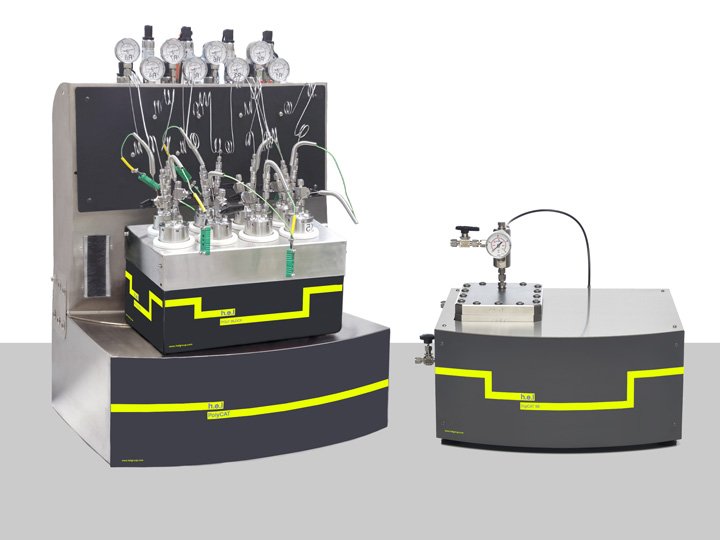
Catalyst Screening Platforms | Manual and Automated Systems
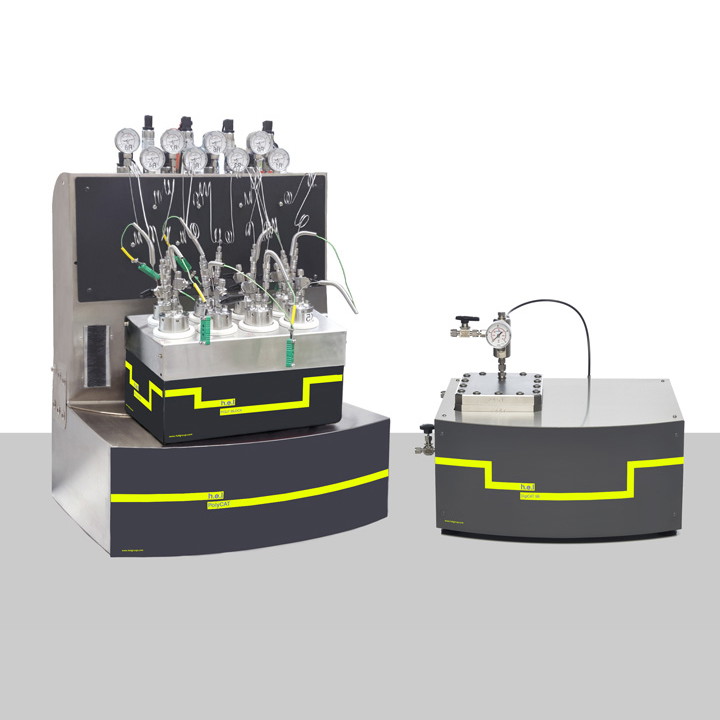
H.E.L’s CAT, DigiCAT, and PolyCAT systems provide a comprehensive range of high pressure catalyst screening reactors, from manual parallel screening to fully automated high throughput platforms. Designed for catalyst screening, reaction optimization, and process development, these systems support flexible workflows across early stage research through to advanced studies. With scalable configurations and varying levels of automation, they enable efficient identification of optimal reaction conditions.
Overview
Manual High Pressure Catalyst Screening
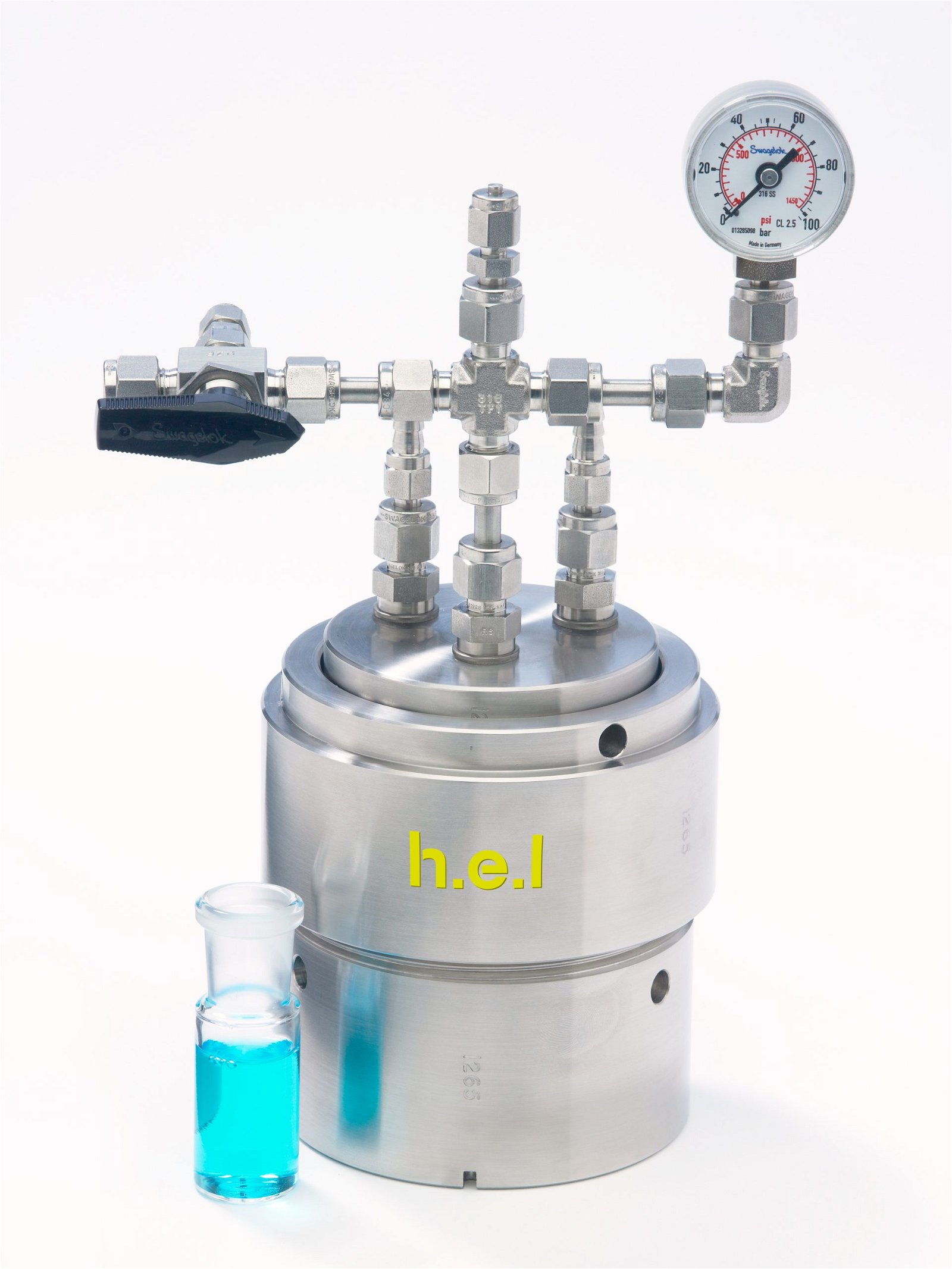
The CAT 7, CAT 18, and CAT 24 are manual high pressure catalyst screening reactors designed for cost effective parallel experimentation. Supporting 7, 18, and 24 glass vials respectively, these systems allow multiple catalysts or reaction conditions to be evaluated simultaneously.
They can be used with standard laboratory stirrer hotplates or oil baths, providing a simple and flexible solution for high pressure screening without complex automation.
High Throughput Screening with DigiCAT
The DigiCAT 96 is a high throughput catalyst screening platform designed for rapid evaluation during early stage development. Typically configured with a 96 well reactor block, it enables large scale parallel screening in a compact format.
Available in both automated and manual configurations, DigiCAT provides flexibility based on budget and application requirements while maintaining high efficiency and throughput.
Automated Parallel Catalysis with PolyCAT
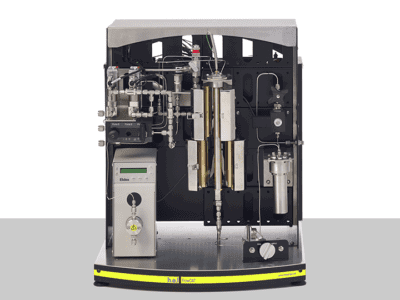
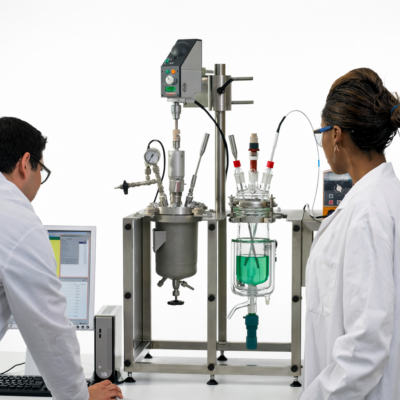
The PolyCAT 4 and PolyCAT 8 are automated high pressure reactor systems designed for advanced catalyst screening and reaction optimization. Supporting four or eight independently controlled reactors, they provide full flexibility for complex experimental design.
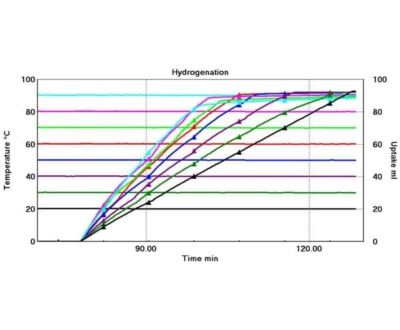
Each reactor operates independently, allowing experiments to be run simultaneously or individually with separate data files. The systems support stirred high pressure reactions with gas feeds, making them ideal for catalytic processes such as hydrogenation.
Flexible and Scalable Platform
Across the CAT, DigiCAT, and PolyCAT ranges, users can select the level of automation and throughput required for their application. From simple manual screening to fully automated parallel experimentation, these systems provide scalable solutions for catalyst development and process optimization.
Efficient High Throughput Experimentation
By enabling multiple reactions to be conducted in parallel, these platforms significantly reduce development time. They support rapid screening of variables such as temperature, pressure, catalyst type, and concentration, allowing faster identification of optimal reaction conditions in a compact and efficient setup.
CAT 7, CAT 18 & CAT 24
CAT Platforms:
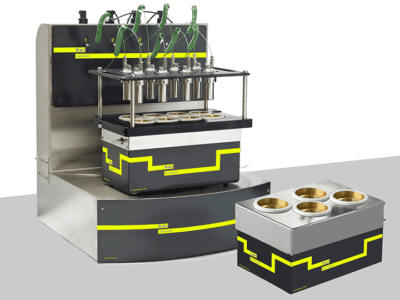
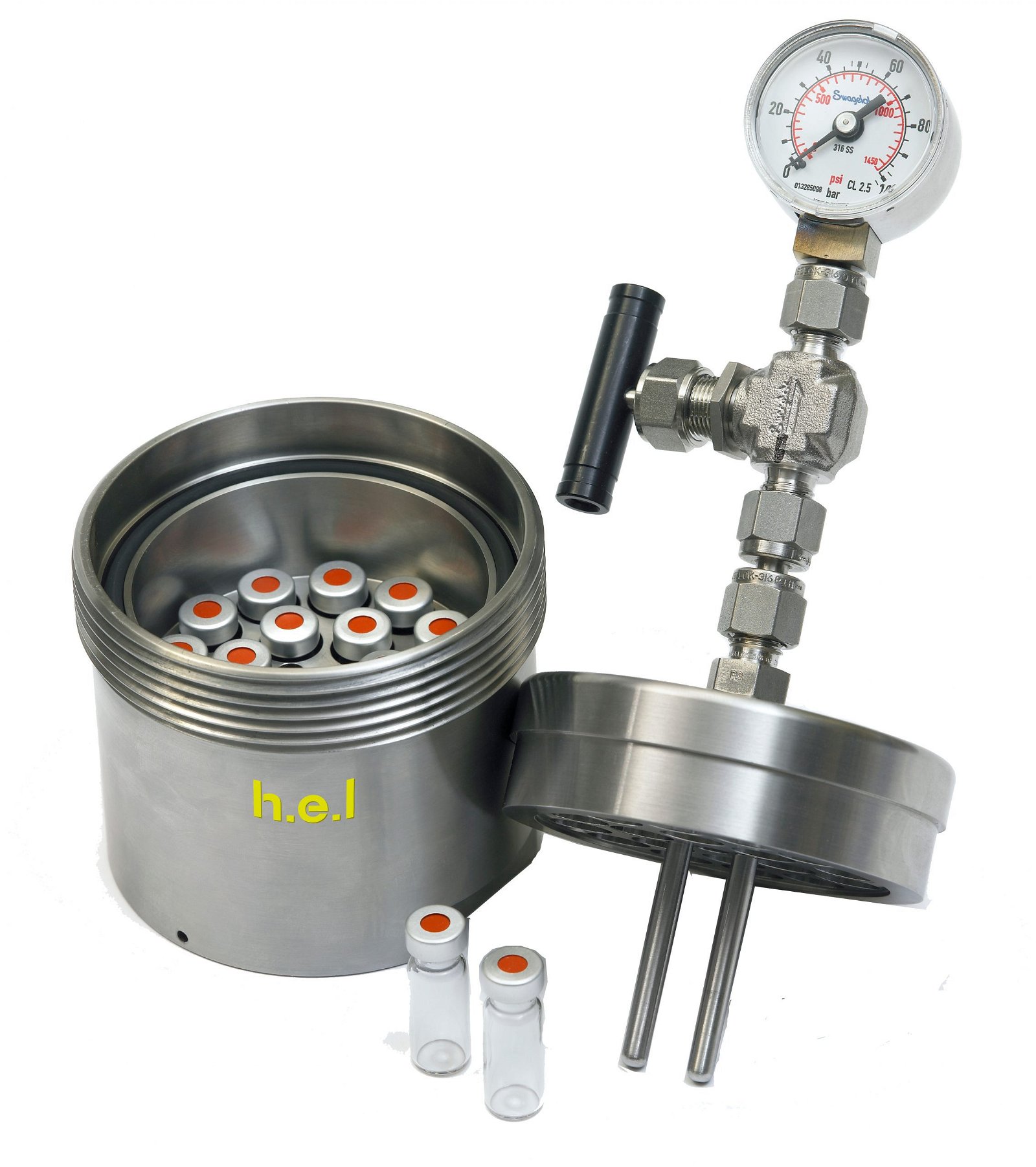
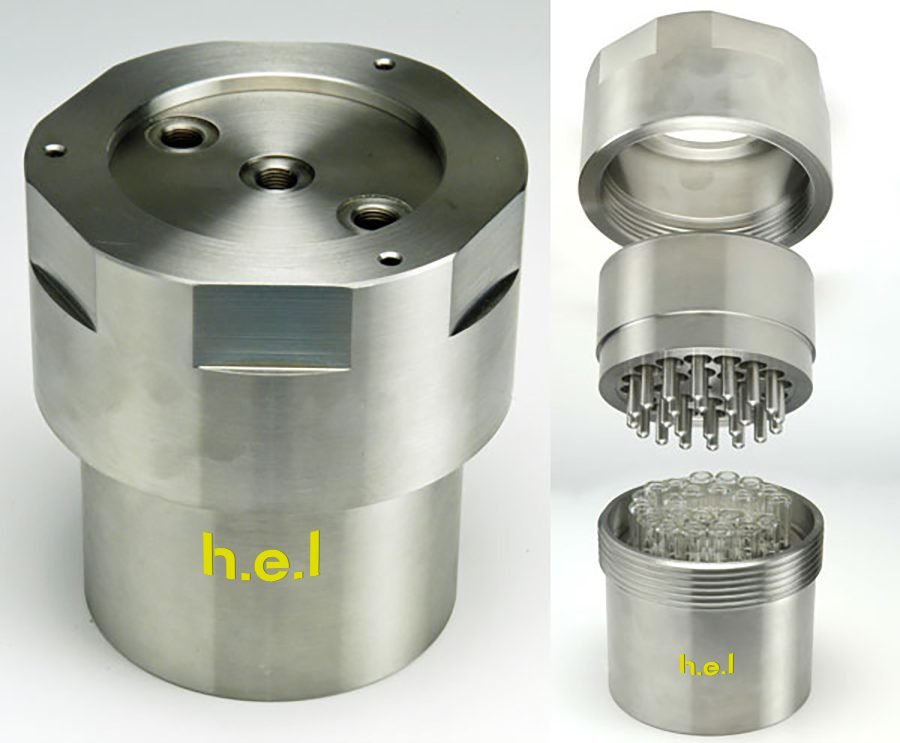
The CAT 7, CAT 18, and CAT 24 are high-pressure, manual catalyst screening reactors supporting 7, 18, and 24 glass reaction vials respectively. Each CAT unit comprises a single pressure vessel into which the individual reaction vials are placed.
The CAT 7 accommodates 10 mL vials, the CAT 18 supports 2 mL vials, and the CAT 24 supports 4 mL vials. The systems are typically heated and stirred using a standard magnetic stirrer hotplate, providing a simple and cost-effective solution for parallel high-pressure screening.
CAT 18 and CAT 24 units can also be integrated within a PolyBLOCK 4-zone system if enhanced temperature control or automation is required.
The CAT systems are manually pressurised and depressurised, with all vials operating under the same pressure and temperature conditions enabling the evaluation of multiple catalysts or reaction conditions in parallel and allows replicate experiments to be conducted within a single run, accelerating development timelines.
Features and Options:
Vessel Types and Volumes
- CAT 7: Designed to be used with 7 standard 10 ml vials
- CAT 18: Designed to be used with 18 standard 2 ml vials
- CAT 24: This allows the use of 24 open-top vials to be used at high pressure and temperature. The typical test volume is around 1 ml
Temperature
- All samples within each vessel are maintained at the same temperature and pressure, up to 100 bar / 250 °C.
- Reactor block temperature can be monitored directly via a thermocouple probe.
Manual High-Pressure Reactor
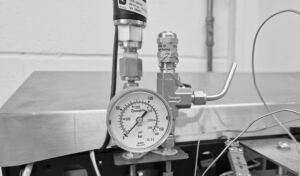
- Valves and pressure gauge provided to manually purge (for example, inert) and further pressurize with reacting gas (for example, hydrogenation), up to 100 bar.
Stirring Available
- Magnetic stirring in each reaction vial
Sample Integrity
- To prevent carryover, the vials can be fitted with septa.
- For larger vessels used in the CAT 24, the lids are fitted with cold fingers, which are chilled by an external coolant (eg tap water), to mitigate the crossover of vapors between reaction vessels.
DigiCAT 96
DigiCAT 96:
The DigiCAT 96 is a high-pressure, high-throughput catalyst screening platform typically supporting a 96-well Zinsser block (but not limited to). It has a compact, high specification design ideal for rapid screening during the early stages of catalyst development. Fully automated or manual DigiCAT 96 models are available depending on budget.
Features and Options:
Vessel Types and Volumes
- 96 well Zinsser block, for 96 simultaneous reactions in 1 ml vials.
Temperature
- All samples are maintained at the same temperature, between ambient and 200 °C.
High-Pressure Reactor
- Automated gas purge (for example, inert) and further pressurize with reacting gas (for example, hydrogenation), up to 100 bar
Stirring Available
- Magnetic stirring for each reaction vial
Intelligent Software Control and Analysis
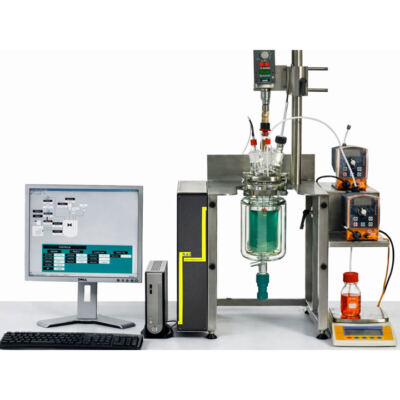
- Control software enables regular data logging, multi-step recipes, parameter control and feedback loops.
Safety Features
- Include automatic user-configurable shutdown procedures if a safety condition is exceeded to ensure user safety.
- Automatic hardware and software fail-safes are installed on every system
PolyCAT 4
PolyCAT 4:
The PolyCAT 4 is a automated, parallel, high-pressure catalysis reactor system, supporting four reactors (from 16 mL to 500 mL). These systems offer substantial versatility being truely independent and completely customisable to requirements. They have a compact, high specification design for stirred (magnetic or direct), high-pressure catalytic reactions involving one or more gas feeds, most commonly hydrogen. They offer significant advantages including a compact footprint, ease of use and high efficiency by conducting multiple, independent, small-scale reactions simultaneously. Experiments can initiated simultaneously or individually, with each reactor having an independent data file. Thus the PolyCAT systems are particularly valuable for more complex and versatile high-throughput screening and reaction optimisation as it allows for in depth identification of optimal conditions (for example, temperature, pressure, catalyst, and concentration) in a single, space-saving unit.
Features and Options:
Vessel Types and Volumes
- The system supports four reactors in parallel operation. Reactor volumes range from 16ml to 500ml, available in SS316 Stainless Steel or Hastelloy.
Temperature Control
- Ambient to 200 ⁰C.
- Options to decrease the range down to -40 ⁰C (circulator dependent)
- A separate mantle around each reactor allows the temperature to be controlled individually, with a range/difference of over 100 °C between the reactors.
High Pressure and Vacuum Systems
- Each reactor can be independently pressurized up to 200 bar.
- Pressure gauges, or optional transducers, enable reaction pressure monitoring.
Control Options
- Reactors can be set to different start pressures, allowing the controlled stirring to initiate the reaction.
- Availability of manual purge and gas feed for each reactor.
Stirring Available
- Indirect agitation with magnetic stirrer bar as standard.
- Suspended mechanical agitation for efficient mixing on small-scale and non-viscous samples.
- Optional Overhead direct agitation for larger vessels.
Intelligent Software Control and Analysis
- Control software enables regular data logging, multi-step recipes, parameter control, and feedback loops.
- Experiments can be designed to:
- Run all reactions at the same temperature and pressure -while varying the catalyst or reagents.
- Keep catalyst loads identical but vary the initial pressure.
- Run individual reactors with different loads, pressure, and temperatures
Safety Features
- Include automatic user-configurable reaction detection and shutdown procedures, to ensure user safety.
- Compact manifold for easy manual purge and pressurization.
- Automatic hardware and software fail-safes are installed on every system
PolyCAT 8
The PolyCAT 8 is a automated, parallel, high-pressure catalysis reactor system, supporting eight reactors (from 16 mL to 50 mL). These systems offer substantial versatility being truely independent and completely customisable to requirements. They have a compact, high specification design for stirred (magnetic or direct), high-pressure catalytic reactions involving one or more gas feeds, most commonly hydrogen. They offer significant advantages including a compact footprint, ease of use and high efficiency by conducting multiple, independent, small-scale reactions simultaneously. Experiments can initiated simultaneously or individually, with each reactor having an independent data file. Thus the PolyCAT systems are particularly valuable for more complex and versatile high-throughput screening and reaction optimisation as it allows for in depth identification of optimal conditions (for example, temperature, pressure, catalyst, and concentration) in a single, space-saving unit.
Features and Options:
Vessel Types and Volumes
- The system supports four reactors in parallel operation. Reactor volumes range from 16ml to 500ml, available in SS316 Stainless Steel or Hastelloy.
Temperature Control
- Ambient to 200 ⁰C.
- Options to decrease the range down to -40 ⁰C (circulator dependent)
- A separate mantle around each reactor allows the temperature to be controlled individually, with a range/difference of over 100 °C between the reactors.
High Pressure and Vacuum Systems
- Each reactor can be independently pressurized up to 200 bar.
- Pressure gauges, or optional transducers, enable reaction pressure monitoring.
Control Options
- Reactors can be set to different start pressures, allowing the controlled stirring to initiate the reaction.
- Availability of manual purge and gas feed for each reactor.
Stirring Available
- Indirect agitation with magnetic stirrer bar as standard.
- Suspended mechanical agitation for efficient mixing on small-scale and non-viscous samples.
- Optional Overhead direct agitation for larger vessels.
Intelligent Software Control and Analysis
- Control software enables regular data logging, multi-step recipes, parameter control, and feedback loops.
- Experiments can be designed to:
- Run all reactions at the same temperature and pressure -while varying the catalyst or reagents.
- Keep catalyst loads identical but vary the initial pressure.
- Run individual reactors with different loads, pressure, and temperatures
Safety Features
- Include automatic user-configurable reaction detection and shutdown procedures, to ensure user safety.
- Compact manifold for easy manual purge and pressurization.
- Automatic hardware and software fail-safes are installed on every system
Publications
The following are a list of some technical publications which highlight the use of the equipment.
PdCu single atom alloys supported on alumina for the selective hydrogenation of furfural
Mohammed J. Islam, Marta Granollers Mesa, Amin Osatiashtiani, Jinesh C. Manayil, Mark A. Isaacs, Martin J. Taylor, Sotirios Tsatsos, Georgios Kyriakou
15-Dec-2021
https://doi.org/10.1016/j.apcatb.2021.120652(Subscription or purchase maybe required for full access)
Production of ethyl lactate by activated carbon-supported Sn and Zn oxide catalysts utilizing lignocellulosic side streams
Riikka Kupila, Katja Lappalainen, Tao Hu, Anne Heponiemi, Davide Bergna, Ulla Lassi
01-Aug-2021
https://doi.org/10.1016/j.apcata.2021.118327(Subscription or purchase maybe required for full access)
Lignin-based activated carbon-supported metal oxide catalysts in lactic acid production from glucose
Riikka Kupila, Katja Lappalainen, Tao Hu, Anne Heponiemi, Davide Bergna, Ulla Lassi
01-Feb-2021
https://doi.org/10.1016/j.apcata.2021.118011(Subscription or purchase maybe required for full access)
The effect of metal precursor on copper phase dispersion and nanoparticle formation for the catalytic transformations of furfural
Mohammed J. Islam, Marta Granollers Mesa, Amin Osatiashtiani, Martin J. Taylor, Jinesh C. Manayil, Christopher M. A. Parlett, Mark A. Isaacs, Georgios Kyriakou
01-Sep-2020
https://doi.org/10.1016/j.apcatb.2020.119062(Subscription or purchase maybe required for full access)
Ruthenium Catalyzed Direct Asymmetric Reductive Amination of Simple Aliphatic Ketones Using Ammonium Iodide and Hydrogen
Dr. Tamal Ghosh, Dr. Martin Ernst, Prof. Dr. A. Stephen K. Hashmi, Dr. Thomas Schaub
01-Jun-2020
https://doi.org/10.1002/ejoc.202000750(Subscription or purchase maybe required for full access)
Quantification of Cavitation Activity by Sonoluminescence To Study the Sonocrystallization Process under Different Ultrasound Parameters
Judy Lee,*,†,∥ Kyuichi Yasui,‡ Muthupandian Ashokkumar,§ and Sandra E. Kentish
01-Jul-2018
https://doi.org/10.1021/acs.cgd.8b00547(Subscription or purchase maybe required for full access)
Platinum-Based Heterogeneous Catalysts for Nitrile Synthesis via Aerobic Oxidative Coupling of Alcohols and Ammonia
Yuliya Preger, Thatcher W. Root and Shannon S. Stahl
01-Jun-2018
https://doi.org/10.1021/acsomega.8b00911(Subscription or purchase maybe required for full access)
Pressurized CO2 as a carboxylating agent for the biocatalytic ortho-carboxylation of resorcinol
Katharina Plasch, Gerhard Hofer, Walter Keller, Sam Hay, Derren J. Heyes, Alexander Dennig, Silvia M. Glueck and Kurt Faber
01-Mar-2018
https://pubs.rsc.org/en/content/articlelanding/2018/gc/c8gc00008e(Subscription or purchase maybe required for full access)
Enantiopure Narrow Bite-Angle P–OP Ligands: Synthesis and Catalytic Performance in Asymmetric Hydroformylations and Hydrogenations
Dr. Héctor Fernández-Pérez,Dr. Jordi Benet-Buchholz,Prof. Dr. Anton Vidal-Ferran
21-Oct-2014
https://doi.org/10.1002/chem.201404731(Subscription or purchase maybe required for full access)
Direct synthesis of formic acid from carbon dioxide by hydrogenation in acidic media
Séverine Moret, Paul J. Dyson & Gábor Laurenczy
01-Jun-2014
https://www.nature.com/articles/ncomms5017?origin=ppub(Subscription or purchase maybe required for full access)
High-throughput screening of monometallic catalysts for aqueous-phase hydrogenation of biomass-derived oxygenates
Jechan Lee, Ye Xu, George W. Huber
01-Mar-2013
https://doi.org/10.1016/j.apcatb.2013.03.031(Subscription or purchase maybe required for full access)
Chiral Rhodium Complexes Derived From Electron-Rich Phosphine-Phosphites as Asymmetric Hydrogenation Catalysts
Wenqin Shen, Geoffrey A. Tompsett, Karl D. Hammond, Rong Xing, Fulya Dogan, Clare P. Grey, W. Curtis Conner, Scott M. Auerbach, George W. Huber
01-Oct-2010
https://doi.org/10.1021/om200933b(Subscription or purchase maybe required for full access)


Related Articles