
Thermal Runaway Testing of 790Ah Utility Scale Battery Cells Using the BTC 500
Need Advice?
Speak with our specialists today to discuss your specific requirements.
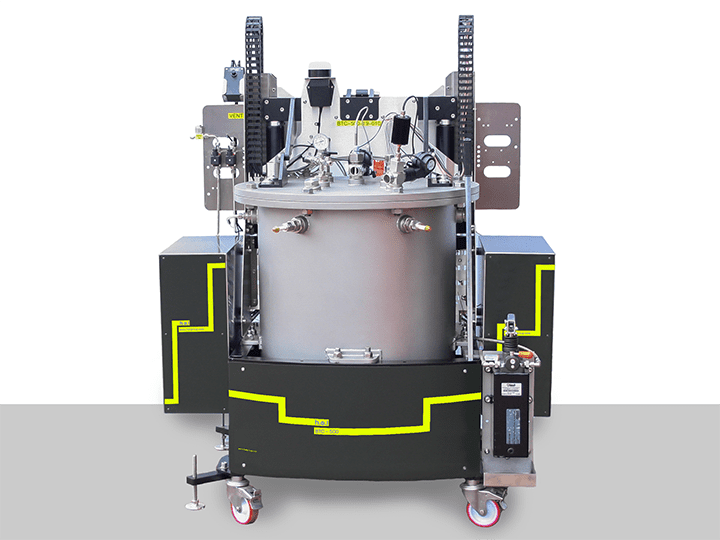
H.E.L Group's BTC 500
Introduction
As utility scale battery cell capacities move beyond 500 Ah and into the 700 Ah range, industry focus is shifting from maximizing capacity to ensuring stability and safety. Higher energy density at the cell level introduces increased complexity in thermal behavior, making early stage safety characterization critical for successful deployment.
The recent introduction of a 790 Ah prismatic wound type cell represents a significant step forward in cell design. However, this increase in capacity also raises important questions regarding thermal management, failure mechanisms, and system level risk.
This technical note outlines the use of the BTC 500 Large Battery Adiabatic Calorimeter to evaluate thermal runaway behavior in a 790 Ah cell and highlights the key data required to define safe operating boundaries.
Challenges of Ultra High Capacity Cells
As a result, understanding thermal runaway behavior is no longer optional. It is essential for validating cell design and ensuring safe integration into larger systems.
BTC 500 Testing Methodology
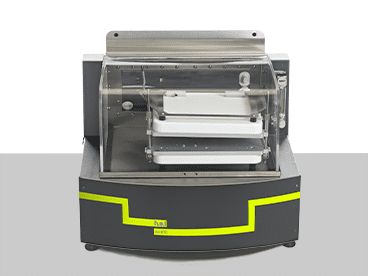
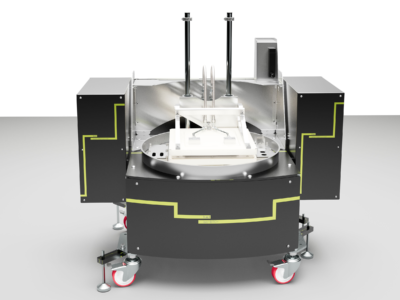
The BTC 500 is an adiabatic calorimeter designed specifically for large format cells and battery modules. It enables controlled evaluation of thermal runaway under combined stress conditions.
Adiabatic Environment
The system maintains true adiabatic conditions, ensuring that all heat generated by the cell is retained within the test chamber. This allows accurate simulation of worst case thermal runaway scenarios and provides a reliable basis for defining safety limits.
Multi Stress Testing
The BTC 500 integrates electrical and mechanical abuse testing capabilities, including:
- Overcharge and over discharge testing
- External and internal short circuit simulation
- Mechanical impact, puncture, and crush
This combined approach enables comprehensive assessment of potential failure triggers under realistic conditions.
Gas Analysis and Imaging
The system supports both automatic and manual gas sampling, allowing detailed analysis of gases released during thermal runaway. In addition, real time imaging enables correlation between thermal behavior and structural failure of the cell.
Discover the BTC-500
Key Test Outputs
Testing of the 790 Ah cell using the BTC 500 generated critical safety data, including:
- Thermal runaway trigger temperature and conditions
- Heat release rate and total heat output
- Thermal runaway propagation pathways and timing
- Gas composition and pressure evolution
These results provide essential inputs for:
- Thermal management system design
- Safety warning and detection strategies
- Module level isolation and barrier design
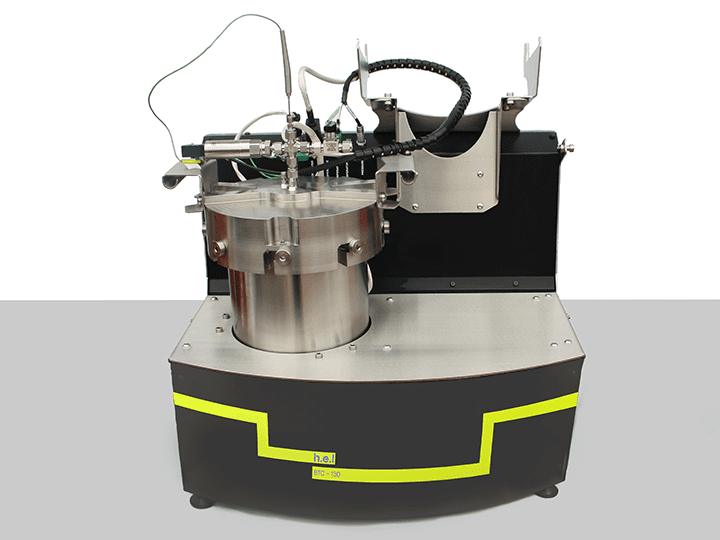
H.E.L's BTC-130
From Cell Level Data to System Level Safety
In modern energy storage applications, cell safety directly impacts system performance, reliability, and overall project economics. Accurate and reproducible thermal data enables engineers to move from cell-level validation to system-level risk mitigation with confidence.
The BTC series, including the BTC 130 and BTC 500, supports:
- Cell level thermal stability screening
- Module level propagation testing
- External short circuit simulation
- Mechanical abuse testing aligned with international standards
Interested in the BTC-500?
Interested in the BioXplorer 100?
Conclusion
The transition to 700 Ah class battery cells represents a major shift in the energy storage industry. While higher capacity offers clear advantages, it also requires a more rigorous approach to safety testing.
Adiabatic calorimetry using the BTC 500 provides the detailed thermal data needed to understand failure mechanisms, define safety limits, and support the safe deployment of next generation battery technologies.
Optimize your biomass measurements
Explore our Battery Testing Solutions
Discover how our battery testing solutions can enhance precision, safety, and performance across your energy storage development.
BTC-500 | Large-Scale, Battery Testing, Adiabatic Calorimeter
Enables the testing of thermal, electrical, and mechanical stress tests on larger battery cells….
BTC-130 | Bench Top, Battery Safety Testing, Adiabatic Calorimeter
Enables the testing of thermal, electrical, and mechanical stress tests on smaller battery cells.…
iso-BTC | Bench-Top, Battery Testing, Isothermal Calorimeter
For the characterization of thermal behavior and electrical performance of battery cells…
Looking to accelerate your battery testing capabilities?
Speak with our team to find the right solution for your requirements.