Introduction – Gut Microbes and Overall Health
The human gut microbiome has emerged as one of the most important areas of biomedical and disease research over the past two decades. Composed of trillions of microorganisms, this complex ecosystem plays a fundamental role in metabolism, immune regulation, nutrient processing, and overall health. Increasingly, researchers are discovering links between microbial community composition and a wide range of conditions, including inflammatory bowel disease, obesity, diabetes, cancer, and neurological disorders.
Challenge: Better Understanding of Microbes
Despite these advances, understanding how microbial ecosystems respond to environmental changes remains a significant challenge. While modern sequencing technologies allow researchers to identify which microorganisms are present, understanding how microbial communities function, adapt, and respond to interventions is far more difficult
One of the key questions facing researchers today is whether microbial ecosystems can be intentionally reshaped to promote health. Can targeted dietary interventions alter microbial community structure and metabolic outputs? Which nutritional strategies are most effective? And how can researchers determine which microbial changes are genuinely beneficial and which are merely transient responses?
A Solution: Development of Novel Experimental Models
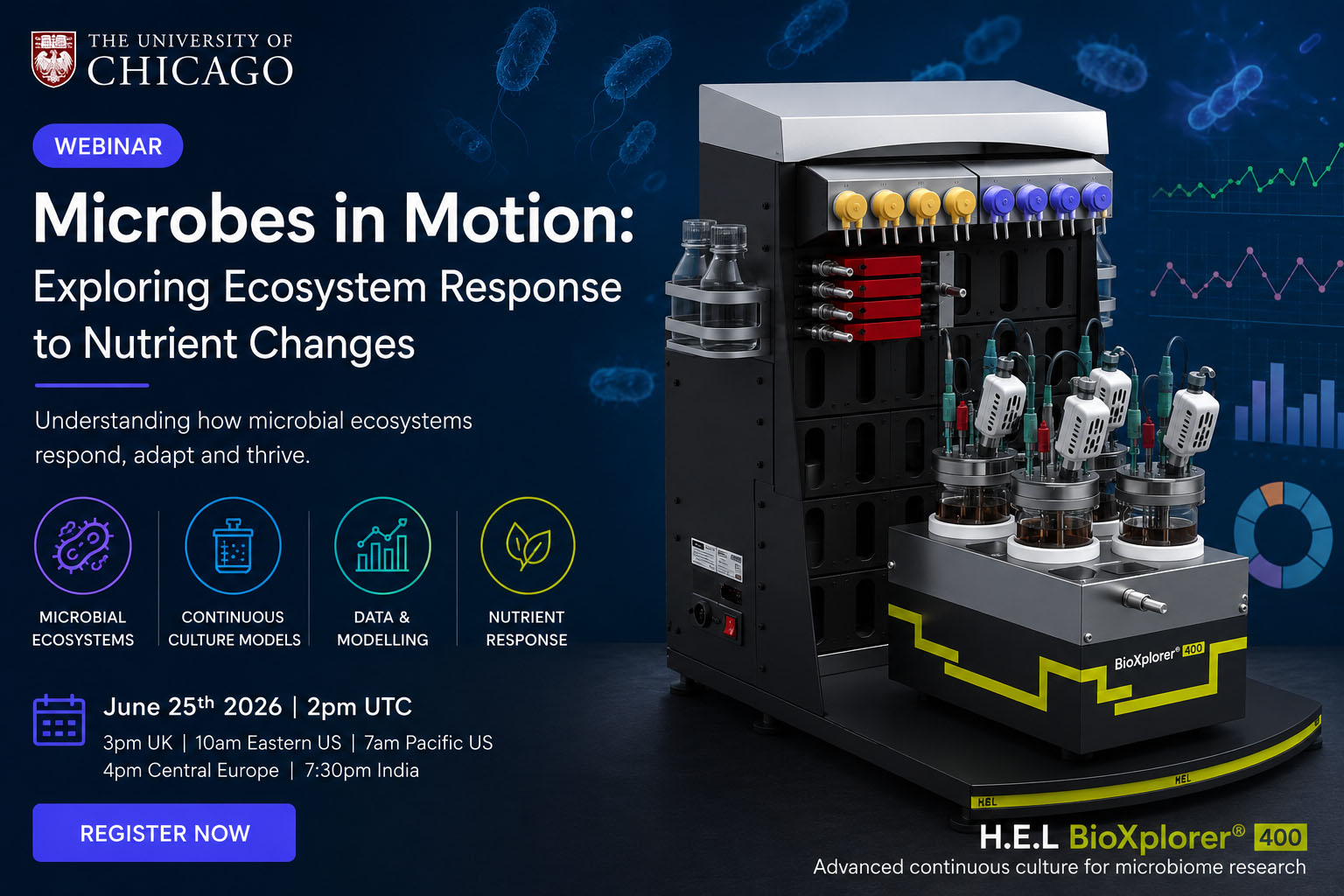
These questions and more form the basis of our upcoming webinar, Microbes in Motion: Exploring Ecosystem Response to Nutrient Changes, presented by researchers from The University of Chicago Biological Sciences Division
Featured Speakers

Dr. Eugene B. Chang
Director, University of Chicago Microbiome Medicine Program
Martin Boyer, Distinguished Professor of Medicine
A globally recognized authority on the gut microbiome, inflammation, and metabolic disease, Dr. Chang’s pioneering work investigates how interactions between microbes and their human hosts influence health and disease. His research is helping to shape the future of microbiome-based therapeutics and preventative healthcare.
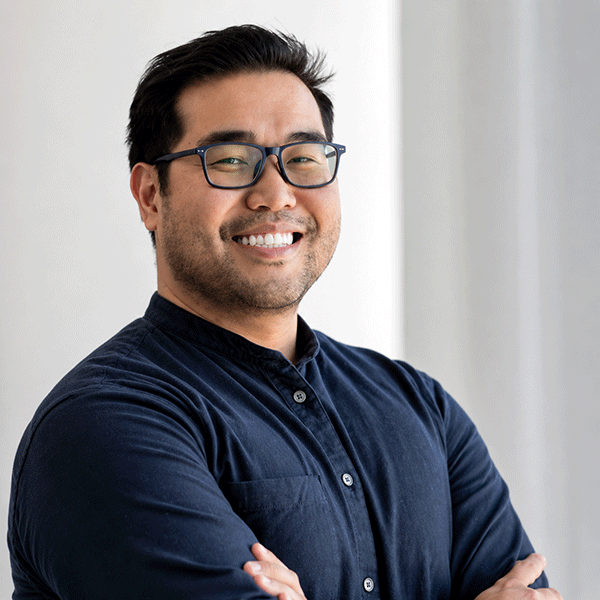
Dr. Orlando (Landon) DeLeon
Research Assistant Professor, University of Chicago
Dr. DeLeon’s research focuses on the mechanisms through which the gut microbiome influences metabolism, immunity, and overall human health. His work aims to translate discoveries in host-microbe interactions into innovative therapeutic approaches.
Additional Speakers who collectively bring expertise spanning microbiology, microbiome therapeutics, bioprocess development and computational biology include:
- Karen Lolans
- Dr Candace Cham
- Jason Koval
who collectively bring expertise spanning microbiology, microbiome therapeutics, bioprocess development, and computational biology.
Session Topics
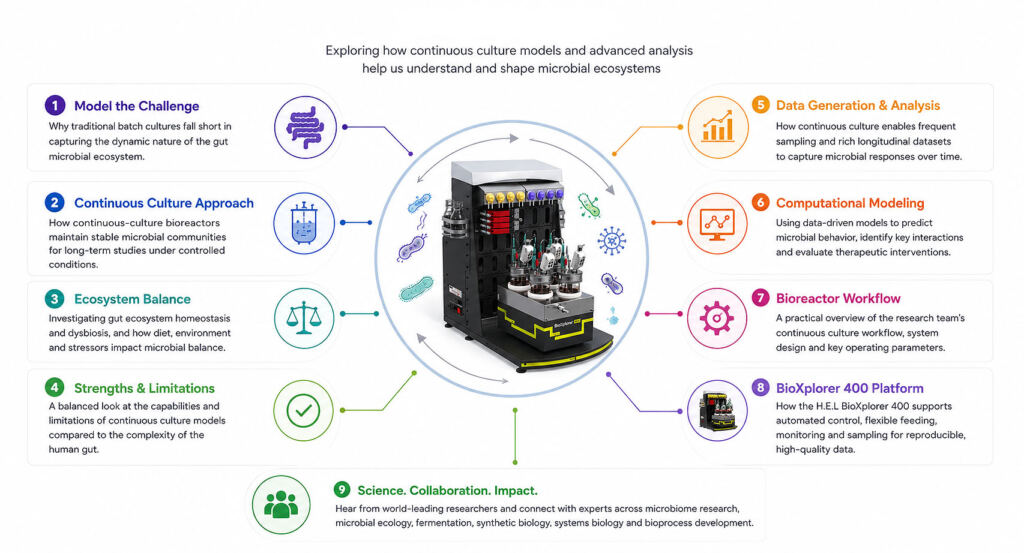
A major theme throughout the session will be the challenge of developing experimental models that accurately capture microbial ecosystem behaviour. Traditional batch cultures can provide useful information, but they often fail to replicate the varying nature of the gut environment. Microbial populations rapidly consume nutrients, produce metabolites, and alter their surroundings, making it difficult to study long-term responses under controlled conditions.
To address this challenge, the research team has developed a continuous-culture bioreactor approach that enables microbial communities to be maintained under stable conditions for extended periods. The webinar will discuss results and implications of these experiments, including controlled variables, nutrient changes and other environmental factors
Attendees will also gain insight into how these systems are being used to address important questions surrounding gut ecosystem homeostasis and dysbiosis. The speakers will discuss how dietary patterns, environmental factors, and other stressors can disrupt microbial balance and how researchers are beginning to investigate strategies to restore healthy ecosystem function.
Importantly, the team will also provide a balanced discussion of the strengths and limitations of continuous culture methodologies. While these systems offer significant advantages for studying microbial communities, they do not fully replicate the complexity of the human gastrointestinal tract. Regional differences throughout the gut, mucosal interactions and host-specific physiological factors remain challenging to reproduce in vitro. Understanding both the capabilities and limitations of these models is helpful for generating meaningful and translatable research outcomes in this field
Another important aspect of the webinar will focus on data generation and analysis. Continuous culture systems enable frequent sampling over days or weeks, creating rich datasets over time that capture microbial responses as they occur. This may provide researchers with ideas and ways to explore a deeper understanding of ecosystem function
As Dr. DeLeon will discuss, these datasets are increasingly used to support computational modeling approaches that predict microbial behavior, identify key ecosystem interactions, and evaluate potential therapeutic interventions. The ability to combine experimental microbiology with advanced data analysis represents an exciting frontier in microbiome science and may ultimately help guide the development of more effective precision medicine strategies.
The webinar will also provide a practical overview of the group’s continuous culture bioreactor workflow and how it complements existing microbiome research models. Karen Lolans will discuss the design of the bioreactor system, the rationale behind key operating parameters and examples of how the platform is being used to generate meaningful biological data
Attendees will also have the opportunity to see how the H.E.L BioXplorer 400 supports this work. The BioXplorer platform provides automated environmental control, flexible feeding strategies, integrated monitoring and sampling capabilities that help researchers establish reproducible experimental conditions and generate high-quality datasets from complex microbial communities.
For scientists working in microbiome research, microbial ecology, fermentation, synthetic biology, systems biology, or bioprocess development, this webinar also offers a valuable opportunity to hear and connect directly with one of the world’s leading microbiome research groups. Beyond the technology itself, the session will focus on the scientific questions driving the research and the experimental approaches being used to answer them.
FAQ
Who is this webinar for?
This webinar is for scientists, researchers and technical teams working in microbiome research, microbial ecology, fermentation, synthetic biology, systems biology or bioprocess development. It will also be useful for anyone interested in how microbial ecosystems respond to nutrient changes.
What will the webinar cover?
The webinar will explore how microbial ecosystems respond to nutrient changes, how continuous culture bioreactor approaches can support long-term microbiome studies, and how these models can help researchers study ecosystem behaviour under controlled conditions.
Who is presenting the webinar?
The webinar will be led by Professor Eugene B. Chang from The University of Chicago. He will be joined by members of the Chang and DeLeon laboratories, including Dr Orlando (London) DeLeon, Karen Lolans, Dr Candace Cham and Jason Koval.
Will the webinar discuss continuous culture bioreactors?
Yes. The webinar will discuss how continuous culture bioreactor approaches allow microbial communities to be maintained under stable conditions for extended periods. This helps researchers study microbial response, adaptation and ecosystem behaviour over time.
Will the H.E.L BioXplorer 400 be featured?
Yes. Attendees will see how the H.E.L BioXplorer 400 supports this work through automated environmental control, flexible feeding strategies, integrated monitoring and sampling capabilities.
Is this webinar more scientific or product-focused?
The main focus is on science. The session will look at the research questions, experimental models and data behind microbial ecosystem studies. The BioXplorer 400 will be discussed as part of the workflow supporting this research.
Is this suitable for both academic and industry researchers?
Yes. The topic is relevant to academic and industry teams working with microbial communities, gut microbiome research, fermentation systems, bioprocess workflows, microbiome therapeutics and computational modelling.
How do I register?
Click the registration button and complete the sign-up form. You will receive the webinar details after registering.