
ChemSCAN Parallel Reactor Platform
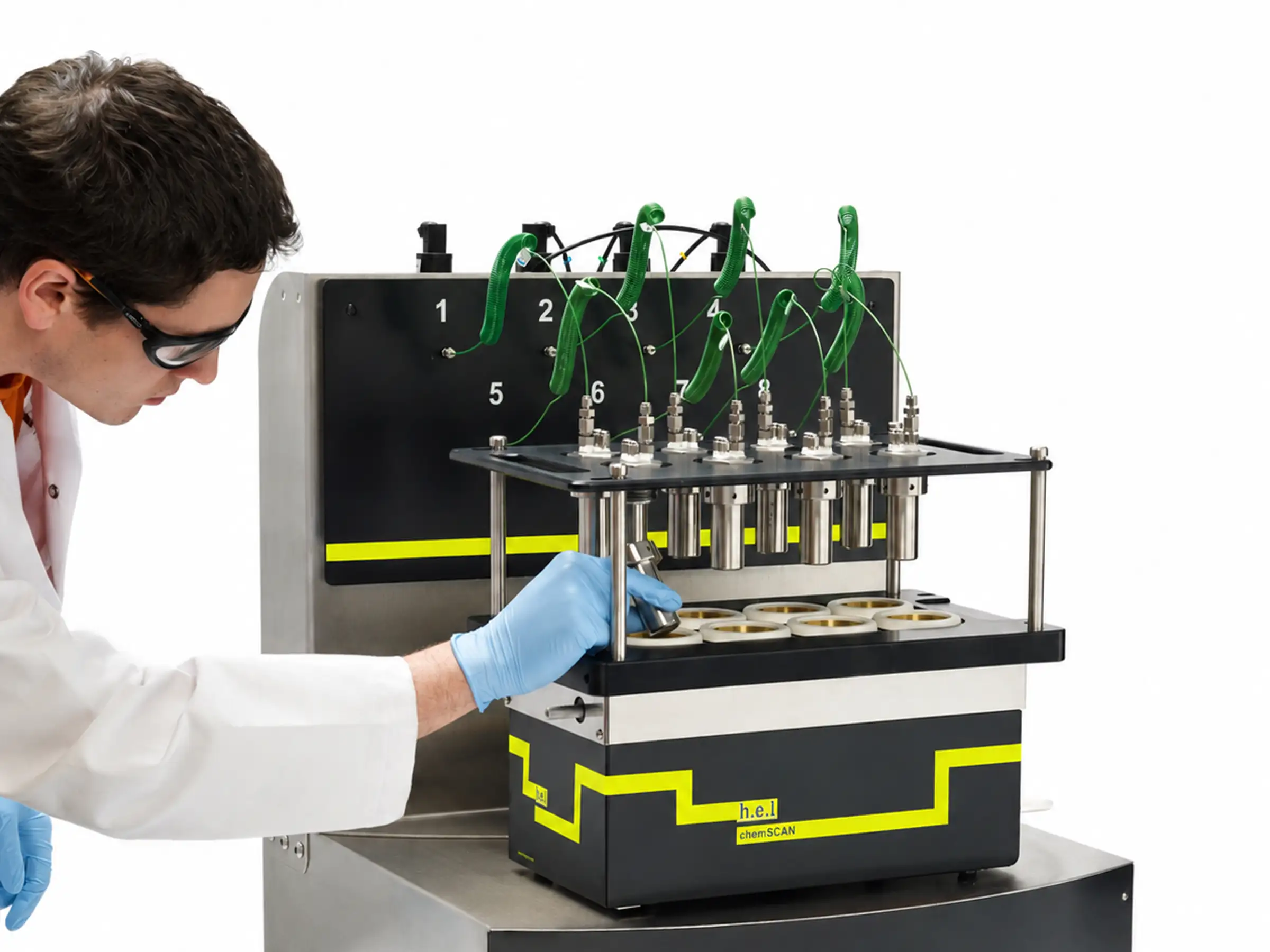
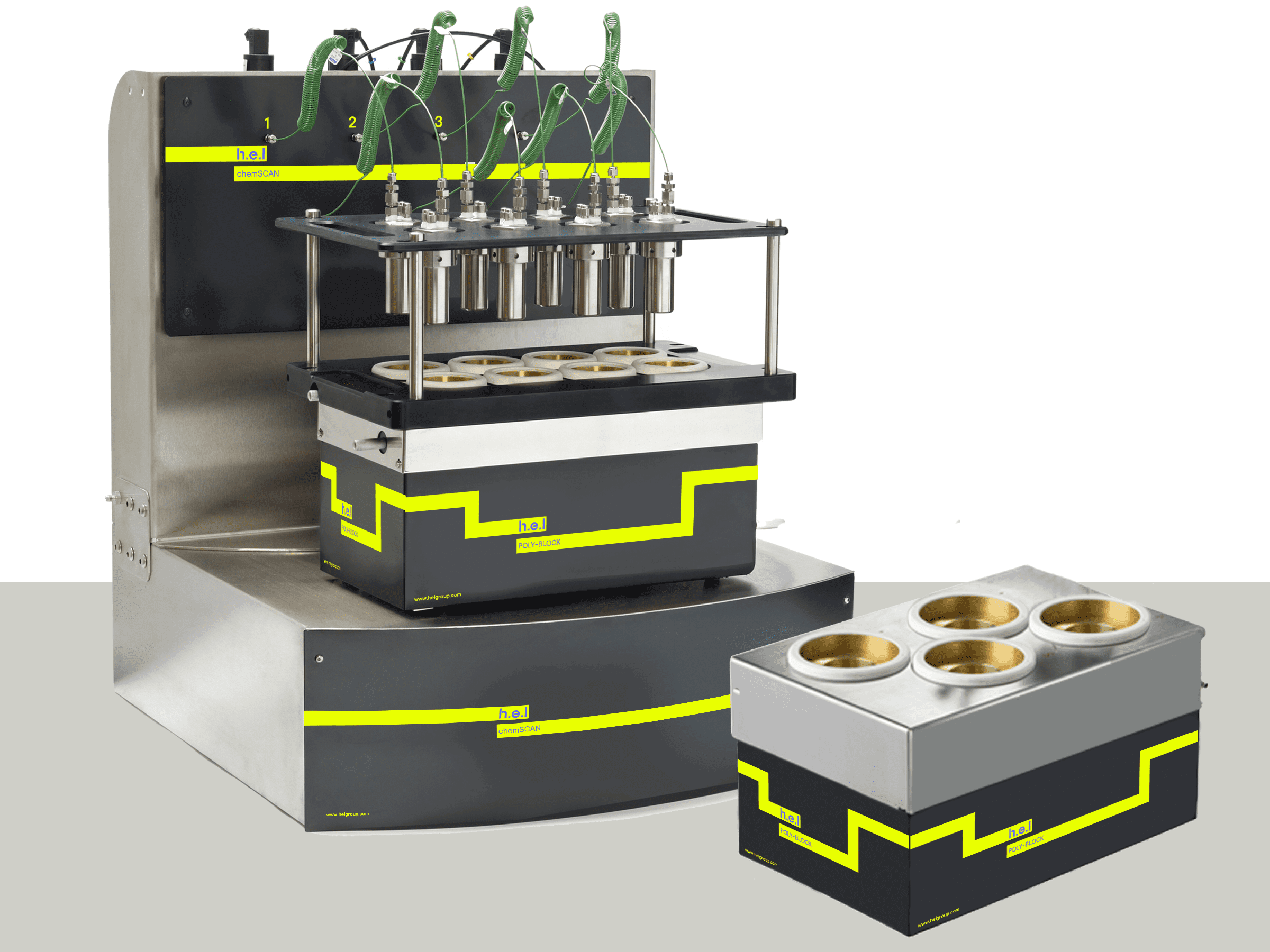
Bench-top system for automated screening and development of heterogeneous (or homogeneous) catalytic, parallel reactions at pressures of up to 200 bar and temperatures up to 200 °C, with an optional sub-ambient range down to −40 °C
The ChemSCAN controls reaction pressures and temperatures independently in each reactor, while determining the amount of gas consumed. Designed for reactions including hydrogenation, carbonylation, syngas chemistry as well as other challenging workflows, it accelerates discovery while reducing hands-on time.
Screening data
Every curve below comes from a single ChemSCAN experiment. That is the point of parallel screening — eight conditions in the time one would normally take.
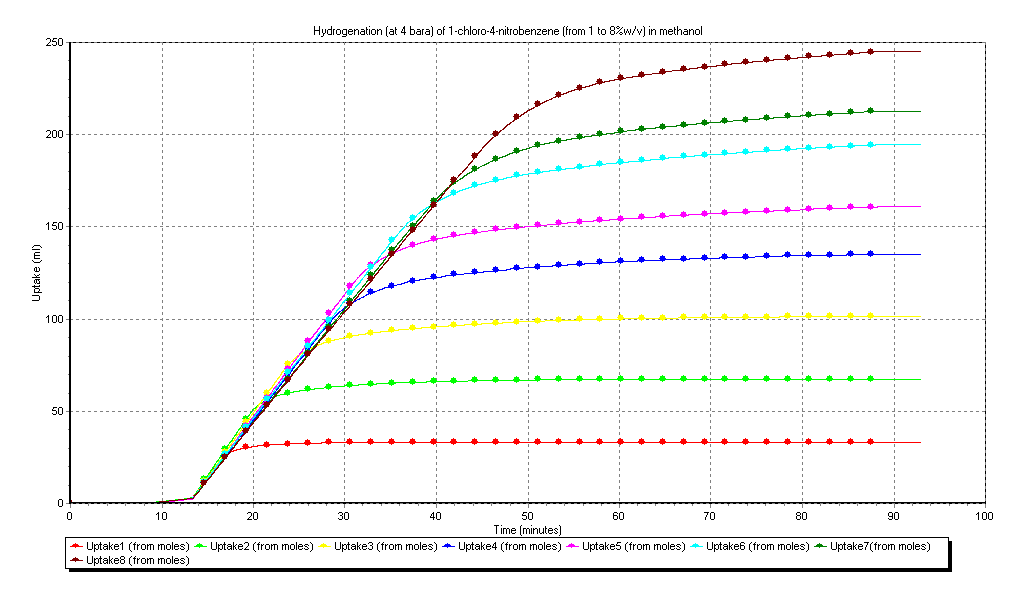
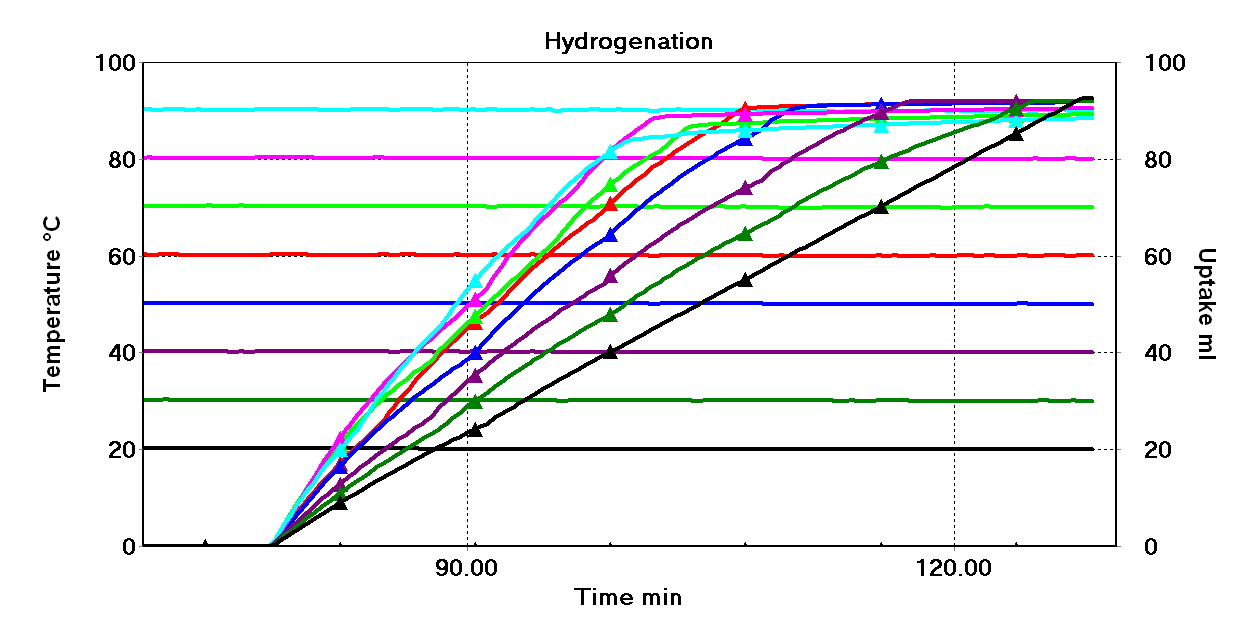
Tap any chart to enlarge.
Key features
What the platform does on the bench, reactor by reactor.
Independent temperature control
- Independent temperature control in each vessel
- A difference of over 100 °C between reactors can be set in the same run
- Optional sub-ambient operation down to −40 °C with a circulator
Individual pressure control
- Individual pressure control, allowing tests at different pressure
- Reactors can be set to different start pressures
Real-time gas uptake
- On-line gas consumption calculation and display, in each reactor
- Watch the kinetics as they happen rather than infer them afterwards
Agitation
- Excellent mixing – enabling heterogeneous and homogeneous catalytic gas–liquid reactions
- The mixing rate is such that gas uptake is mostly kinetic controlled, allowing scale up with confidence
Control system
- Software control and data logging
- Real time gas uptake display for each reactor
- Automated control sequence includes all inert purges as well as reactive stages
High-pressure liquid addition
- Fully automated, up to a pressure of 200 bar (3000 psi)
- Accuracy of around 0.05 mL or better
ChemSCAN 4 and 8
- All three configurations are available in 4- and 8-reactor designs
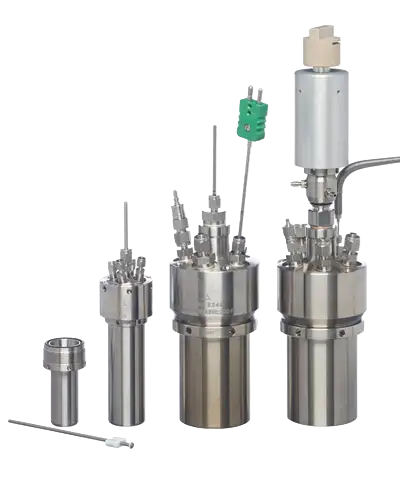
- 8-reactor takes 16, 25 and 50 mL vessels
- 4-reactor accommodates 500 mL and smaller
Three configurations
The classic ChemSCAN described above is also available in two other configurations. All three share the same reactors, heating, agitation and software — what changes is how pressure is controlled and how independently each reactor can be run.
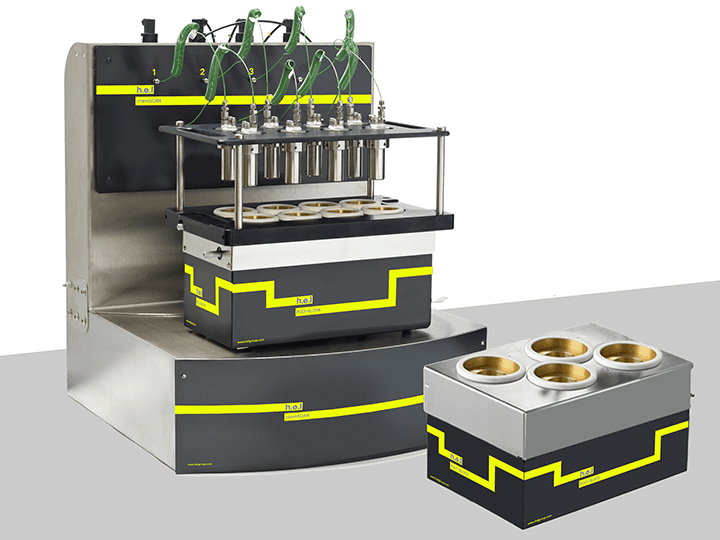
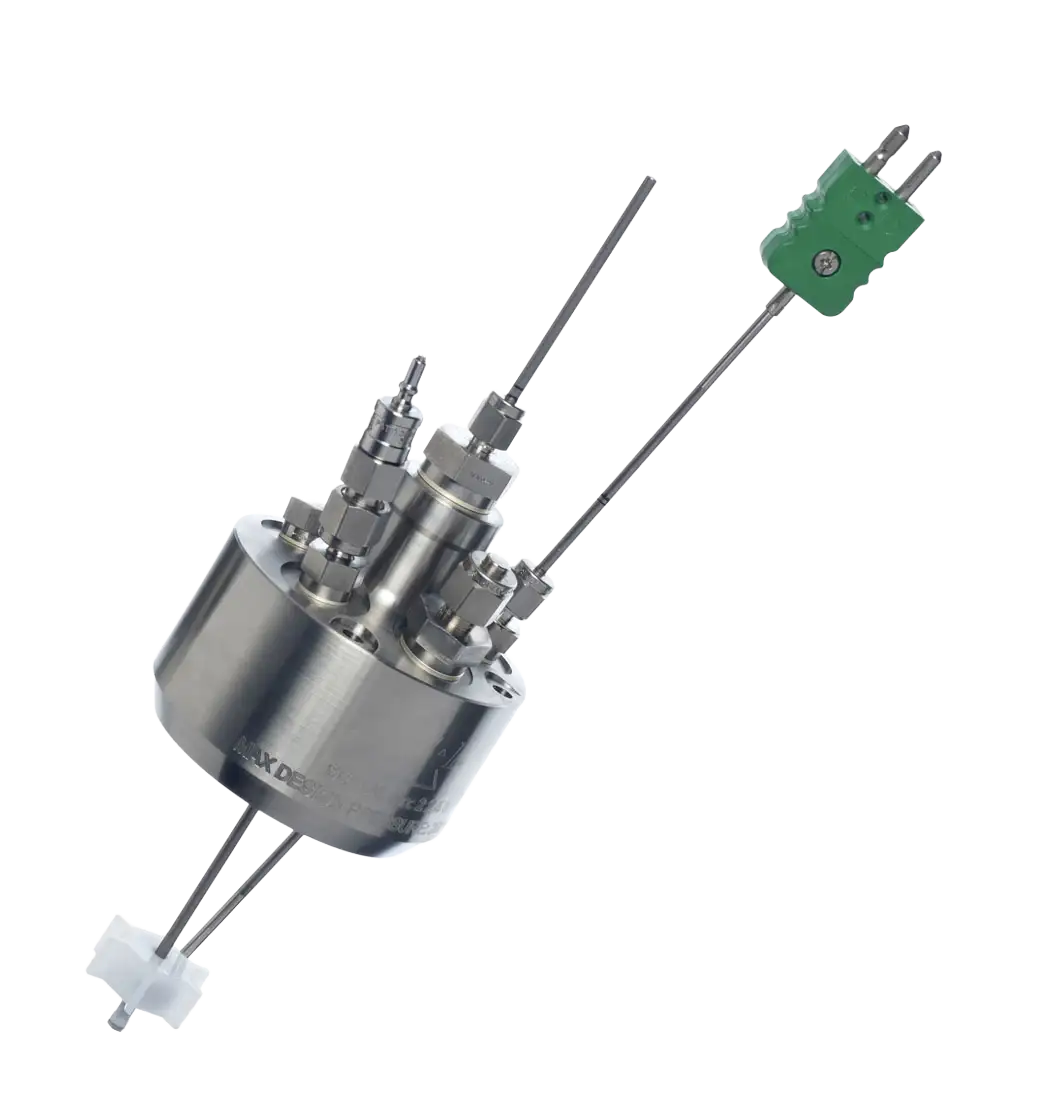
One platform, three levels of automation
ChemSCAN SA
All the features of the classic ChemSCAN, except that pressure is controlled manually rather than by computer-controlled solenoid valves. Two gas feeds, shared across the reactors.
Classic ChemSCAN
Automated, independent pressure control across all reactors for reproducible parallel screening. Reactions start together and vent automatically once all reactions are complete, with up to three gas feeds shared across the reactors.
ChemSCAN+
Maximum flexibility with independent control of every reactor. Start, feed, vent and purge each reactor independently, with up to three dedicated gas feeds per reactor for fully independent experiments.
ChemSCAN systems can be customised to requirements. Talk to a specialist about a configuration for your chemistry.
Key specifications
| Reactors | 4 or 8, independently controlled |
|---|---|
| Vessel volumes | 4-reactor: 16, 25, 50, 75, 125, 300 or 500 mL 8-reactor: 16, 25 or 50 mL |
| Working volume | 3 – 400 mL, or from 2 mL on the ChemSCAN+ 8-reactor: 3 – 40 mL |
| Vessel material | 316 stainless steel or Hastelloy C276 |
| Vessel rating | 200 bar, 350 °C |
| Temperature | Ambient to 200 °C, or 25 – 200 °C on the ChemSCAN+ Down to −40 °C with a circulator |
| Pressure | 1 – 100 bar, 200 bar optional |
| Gas feeds | ChemSCAN SA: 2, shared ChemSCAN: 3, shared ChemSCAN+: 3, individual |
| Agitation | 120 – 1500 rpm, magnetic or overhead |
| Liquid feed | Optional — 0.02 – 40 mL/min @ 100 bar, 0.01 – 20 mL/min @ 200 bar |
| Sampling | Optional port on the reactor lid |
| Gas uptake sensitivity | 0.04 mmol, equal to a 0.1 bar pressure change |
Software, control & safety
ChemSCAN runs on a user-friendly interface designed for both new and experienced users, with real-time monitoring and automation via live sensor data and feedback control. A predefined gas-uptake workflow is included for quick setup and consistent analysis, and a flexible protocol builder lets you save custom workflows — from simple runs to complex sequences.
Automatic, user-configurable reaction-detection and shutdown procedures protect the operator, with a compact manifold for easy manual purge and pressurization. Automatic hardware and software fail-safes are installed on every system, alongside built-in interlocks and emergency pressure relief.
See our application notes for worked ChemSCAN examples.
Applications
Frequently asked questions
What is ChemSCAN used for?
What is the difference between ChemSCAN SA, ChemSCAN and ChemSCAN+?
Is it automated?
How many reactions can it run in parallel?
What pressure and temperature can it reach?
What volumes does it handle?
Is it customisable to my chemistry?
Selected publications
Subscription or purchase may be required for full access. View all publications →
Explore the catalysis range
Related reading
Ready to accelerate your catalysis research?
Talk to a catalysis specialist about your screening and process-development needs.
“…we are very satisfied… the handling and programming is quite easy. It is for this reason that we bought a second HP ChemSCAN.” — Leibniz-Institut für Katalyse (LIKAT Rostock), 8 years