Optimizing chemical processes is a fundamental step in developing efficient, scalable, and economically viable manufacturing routes. Whether in fine chemicals, pharmaceuticals, or specialty sectors such as flavors and fragrances, identifying the right combination of process parameters can significantly impact yield, product quality, and cycle time.
Traditionally, this optimization has relied on sequential experimentation—adjusting one variable at a time. However, this approach is both time-consuming and often fails to capture interactions between variables. As process complexity increases, more structured and data-driven methodologies are required.
Moving Beyond Trial-and-Error
One of the key challenges in process development is understanding how multiple parameters interact. Variables such as temperature, feed rate, and mixing conditions rarely operate independently. Changing one parameter can influence the effect of another, making it difficult to identify true optimal conditions using conventional methods.
This is where Design of Experiments (DOE) provides a significant advantage.
The Role of Design of Experiments (DOE)
DOE is a statistical approach that enables systematic variation of multiple factors simultaneously. Instead of testing one parameter at a time, DOE evaluates combinations of variables in a structured way, allowing researchers to:
- Identify the most influential parameters
- Understand interactions between variables
- Reduce the total number of experiments required
- Define optimal operating conditions with confidence
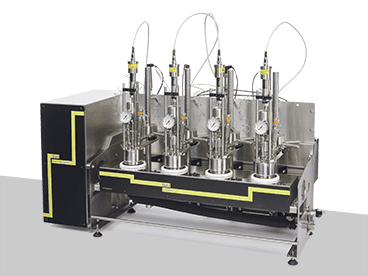
H.E.L's AutoMATE Platform
However, the effectiveness of DOE depends heavily on the quality and reproducibility of experimental data. Inconsistent measurements or manual variability can undermine the reliability of the results.
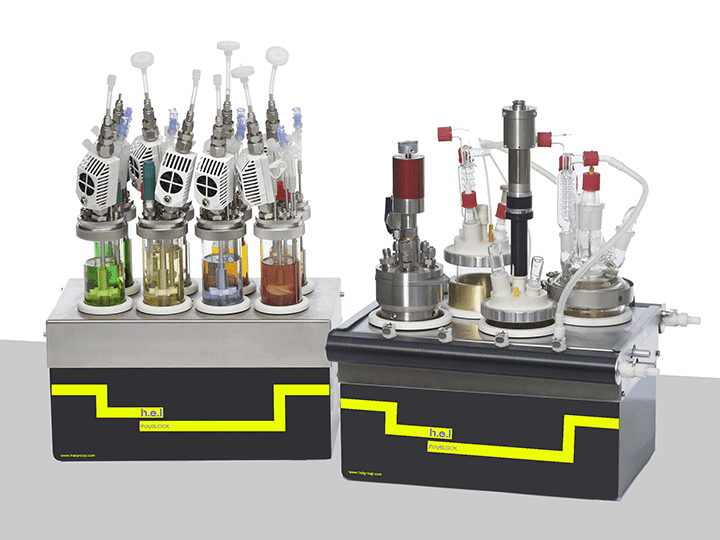
These systems enable multiple reactions to be conducted simultaneously under tightly controlled conditions, with integrated:
- Temperature and pressure monitoring
- Liquid and gas dosing
- Automated data logging
By reducing manual intervention, they improve data consistency while significantly increasing experimental throughput.
Case Study: Optimizing a Flavors and Fragrances Process
To demonstrate the impact of combining DOE with automation, a two-factor factorial DOE was applied to the production of a seasonal additive used in the flavors and fragrances industry.
Initial screening identified feed rate and temperature as the primary variables influencing batch performance. Other factors, such as agitation and the presence of residual additives from previous runs, were found to have minimal impact.
The DOE study revealed several key insights:
- Feed rate controlled the overall reaction duration and batch cycle time
- Temperature determined the upper limit for product stability and quality
- Batch cycle time was largely independent of temperature within the studied range
These findings allowed for a clearer definition of operating boundaries, enabling optimization of both productivity and product quality.
Integrating Reaction Calorimetry for Faster Insights
In addition to DOE, reaction calorimetry was used to monitor process performance in real time. Using a power-compensation method, heat release from the reaction was monitored to track reaction progress and completion.
This approach provided a significant advantage over traditional analytical methods such as gas chromatography, which can be time-intensive and require offline sampling.
By using calorimetry:
- Reaction endpoints could be identified more quickly
- Process deviations were detected in real time
- The need for extensive analytical workflows was reduced
Accelerating Process Development
The combination of DOE and automated parallel synthesis creates a powerful framework for process optimization. Together, they enable:
- Rapid exploration of process conditions
- High-quality, reproducible data generation
- Faster identification of optimal operating windows
For industries where time, cost, and consistency are critical, this approach offers a clear path from early-stage development to scalable manufacturing.