In industries ranging from pharmaceuticals to fine chemicals, scaling-up bench-top chemical reactions to production volumes carries a number of risks and challenges.
Central to the risks involved with scale-up are the changes in heat loss behavior with scale:
Many reactions are exothermic and require cooling to ensure safe operation when performed on a large scale;
Components in the reaction may become unstable under certain operating conditions, leading to additional thermal hazards.
Identifying and mitigating risk sources during the process scale-up is necessary.
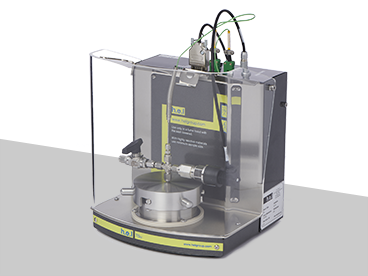
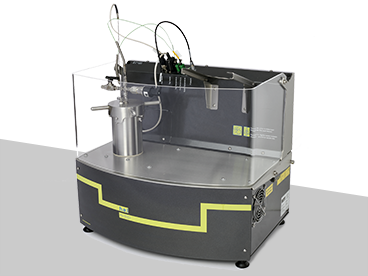
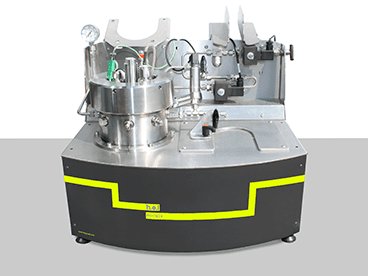
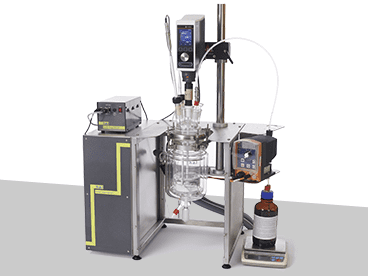
H.E.L Group has a range of solutions to help you identify and quantify thermal hazards at the laboratory scale, which support your process safety and scale-up requirements.
My experience with H.E.L dates since 2005. During these years H.E.L was the provider of the most important lab equipment with the help of which I developed many different API pharmaceutical processes in the companies l worked for including Merck, Pfizer, and Theravance. The versatility of the automated lab reactors (AutoLAB), the ease of use of and the accuracy of the TSu and Simular systems, as w....
Theravance Inc – USA
Relevant Publications for Process Safety
Research & studies where our equipment used in published papers
Determination of SADT and TMRad of 3-bromo-1-(3,5-dichloropyridin-2-yl)-4,5-dihydro-1H-pyrazole-5-carboxylic acid: Applying thermal decomposition kinetics
Use of isoperibolic reaction calorimeter for the study of reaction kinetics of acetic anhydride hydrolysis reaction: Effect of acetic anhydride and water ratio
Scale-Up of a Vilsmeier Formylation Reaction: Use of HEL Auto-MATE and Simulation Techniques for Rapid and Safe Transfer to Pilot Plant from Laboratory
Use of reaction calorimetry in thermal risk assessment studies and safe design of batch reactions that can lead to a runaway: application on hydrogen peroxide
Scale-Up of a Vilsmeier Formylation Reaction: Use of HEL Auto-MATE and Simulation Techniques for Rapid and Safe Transfer to Pilot Plant from Laboratory
Synopsis:
The journal describes the application of reaction calorimetry and process modelling to allow for rapid and safe scale-up of a Vilsmeier formylation reaction, wh
Isothermal reaction calorimetry as a tool for kinetic analysis
Synopsis:
This paper reviews the most important reaction calorimetric principles and their application in commercial or scientific devices, giving examples of various rea
Achieving pH and Qr oscillations in a palladium-catalysed phenylacetylene oxidative carbonylation reaction using an automated reactor system
Synopsis:
This experimental shows evidence for oscillations in both pH and heat output (Qr) during a palladium-catalysed phenylacetylene oxidative carbonylation reaction
Kinetics Estimation and Single and Multi-Objective Optimization of a Seeded, Anti-Solvent, Isothermal Batch Crystallizer
Synopsis:
This journal estimates the nucleation and growth kinetic parameters of paracetamol in an isopropanol-water antisolvent batch crystalliser, by nonlinear regressi
Autonomous reorganization of the oscillatory phase in the PdI2 catalyzed phenylacetylene carbonylation reaction
Synopsis:
The PdI2 catalyzed oxidative carbonylation of phenylacetylene has been shown to produce pH oscillations over the temperature range 0-40 °C under semi-batch con
Some Reaction Safety Aspects of Ruthenium-Catalyzed Allylic Oxidations of Δ-5-Steroids in the Pilot Plant
Synopsis:
This journal discusses the identification of thermal runaway in the ruthenium-catalysed allylic oxidation of ∆-5-steroids with tert-butyl hydroperoxide into u
The Use of Adiabatic Calorimetry for the Process Analysis and Safety Evaluation in Free Radical Polymerization
Synopsis:
This paper studies the free radical polymerisation of methyl methacrylate (MMA), which is exothermic and auto-accelerating, and so can lead to a runaway reactio
Thermal Stability: A Review of Methods and Interpretation of Data
Synopsis:
This review discusses the strengths and weaknesses of individual thermal testing methods, and how the data obtained from them can be applied. The assessment and
Calorimetric Approach and Simulation for Scale-Up of a Friedel−Crafts Reaction
Synopsis:
This journal studies the use of combined calorimetric and simulation techniques for the optimisation of the scale-up of a Friedel-Crafts acylation of toluene wi
Different scale experimental techniques to approach the problem of substances generated in the loss of control of chemical systems: a study on ethyl diazoacetate decomposition
Synopsis:
This journal discusses 4 scales of experimental techniques used to analyse substances generated in the exothermic decomposition of ethyl diaxoacetate (EDA). One
Safe and Productive Operation of Homogeneous Semibatch Reactors. II. The Nitration of N-(2-Phenoxyphenyl) Methane Sulfonamide
Synopsis:
This journal discusses an analysis of the nitration of N-(2-phenoxyphenyl) methane sulfonamide (FAM) to N-(4-nitro, 2-phenoxyphenyl) methane sulfonamide (NIM),
Calorimetric studies on the thermal stability of methyl ethyl ketone peroxide (MEKP) formulations
Synopsis:
This journal studies the energetic decomposition of methyl ethyl ketone (MEKP) and its formulations, which has a high number of reported dangerous incidents. Th
Simple Procedure for Optimally Scaling-up Fine Chemical Processes. I. Practical Tools
Synopsis:
A simple and general scale-up procedure, based on boundary and temperature diagram safety criteria for exothermic semibatch reactors (SBRs), has been developed.
Zero-Order Versus Intrinsic Kinetics for the Determination of the Time to Maximum Rate under Adiabatic Conditions (TMRad): Application to the Decomposition of Hydrogen Peroxide
Synopsis:
This journal compares the use of zero-order approximation to intrinsic kinetics, for easing the determination of maximum rate under adiabatic conditions (TMRad)
An integrated calorimetric approach for the scale-up of polymerization reactors
Synopsis:
This journal uses an integrated calorimetric approach to study the suspension polymerisation of methylmethacrylate (MMA). The Phi-TEC I was used to carry out ad
Applications of reaction calorimetry in reaction kinetics and thermal hazard evaluation
Synopsis:
This paper addresses a systematic approach to the determination of the kinetics of the exothermic esterification of methanol and acetic anhydride by reaction ca
Synopsis:
In this communication to the editor, an unexpected and violent polymerisation is discussed, which occurred during an attempt to prepare the condensation product
Development of a Scalable and Safe Procedure for the Production of (3R)-3-(2,3-Dihydro-1-benzofuran-5-yl)-1,2,3,4-tetrahydro-9H-pyrrolo[3,4-b]- quinolin-9-one, an Intermediate in the Synthesis of PDE-V Inhibitors RWJ387273 (R301249) & RWJ444772 (R290629)
Synopsis:
This journal discusses the development of a new process for the oxidative arrangement of 𝛽-carboline to quinoline derivatives, intermediates in the synthesis
Critical Assessment of Pharmaceutical Processes A Rationale for Changing the Synthetic Route
Synopsis:
This review was written as an analysis of the issues in creating a synthetic route for the pharmaceutical industry. It groups these issues into 6 categories: Sa
Safety Aspects of a Cyanamide Reaction: Inherent Safe Design through Kinetic Modelling and Adiabatic Testing
Synopsis:
This journal discusses cyanamide, a highly unstable compound, which begins to decompose at temperatures above ambient. It is used in the synthesis of Active Pha
Experimental sensitivity analysis of the runaway severity of Dicumyl peroxide decomposition using adiabatic calorimetry
Synopsis:
This journal investigates the behaviour of dicumyl peroxide (DCP) under runaway conditions using low and high 𝜑 factor calorimeters. Closed cell runaway expe
An Alternative Scalable Process for the Synthesis of 4,6-Dichloropyrimidine-5-carbonitrile
Synopsis:
This journal discusses an alternative synthesis of 4,6-dichloropyrimidine-5-carbonitrile, a key intermediate in active pharmaceutical ingredients (API) and pest
A Comparison of Reaction Hazard Screening Techniques
Synopsis:
The purpose of this journal was to compare the accuracy of different pieces of commercially available equipment used in chemical reaction screening. It compares
Nitrilase-Catalysed Desymmetrisation of 3-Hydroxyglutaronitrile: Preparation of a Statin Side-Chain Intermediate
Synopsis:
This journal describes an alternative, efficient route for the synthesis of (R)-4-chloro-3-hydroxybutyrate, a useful intermediate in statin side chain synthesis
Safety Concerns Regarding the Transportation of Organic Powders on Dry Ice: How CO 2 Adsorption Can Lead to Powder Spills
Synopsis:
In this letter, the transfer of active pharmaceutical ingredients (API) and intermediates between international laboratories in discussed. The stability of API
A Convenient and Stable Synthon for Ethyl Azide and Its Evaluation in a [3 + 2]-Cycloaddition Reaction under Continuous-Flow Conditions
Synopsis:
This research aims to create a safe, selective and high yielding process for the synthesis of N1-alkylated-1,2,3-triazole carboxamides. This requires a regiosel
2-Bromo-3-(cyclohexyloxy)acrylaldehyde: An Isolable Enol Ether of Bromomalonaldehyde Suitable for Use in the Manufacture of Imidazolecarboxaldehydes
Synopsis:
The purpose of this experimental was to find an enol ether which can be mass produced for use in the synthesis of imidazolecarboxaldehydes, which are used in ma
Aminodifluorosulfinium Salts: Selective Fluorination Reagents with Enhanced Thermal Stability and Ease of Handling
Synopsis:
This journal investigates the physiochemical properties of various dialkylaminodifluorosulfinium salts. These salts include: diethylaminodifluorosulfinium tetra
Thermal Decomposition Analysis and Safety Study on Di-tert-butyl Peroxide
Synopsis:
This safety study discusses a thermal decomposition analysis on di-tert-butyl peroxide (DTBP), which can be used as a modifier and polymerisation initiator in i
Explosion Hazards of Sodium Hydride in Dimethyl Sulfoxide, N,N-Dimethylformamide, and N,N-Dimethylacetamide
Synopsis:
NaH/solvent matrices are used frequently in synthetic chemistry, despite their very high hazard levels, their dangers are under communicated and underappreciate
Continuous Safety Improvements to Avoid Runaway Reactions: The Case of a Chloro-Thiadiazole Intermediate Synthesis toward Timolol
Synopsis:
The purpose of this research was to assess in detail, using thermal analysis, the synthesis of a morpholine-adduct used to produce the 𝛽-blocker timolol. The