
CrystalEYES
Real-time crystallization monitoring — turbidity, temperature & optional pH, from 3 mL to 10 L+
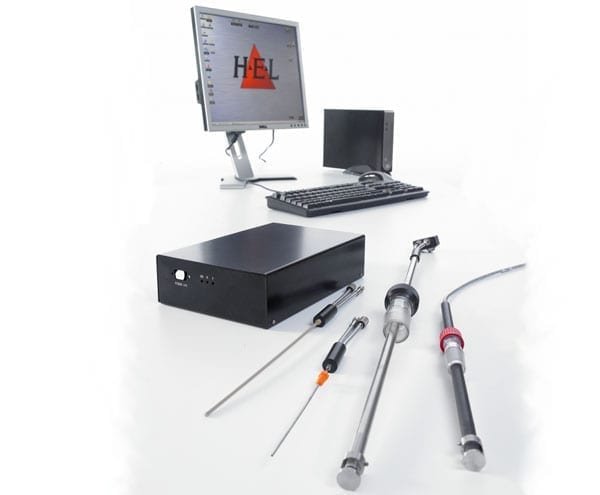
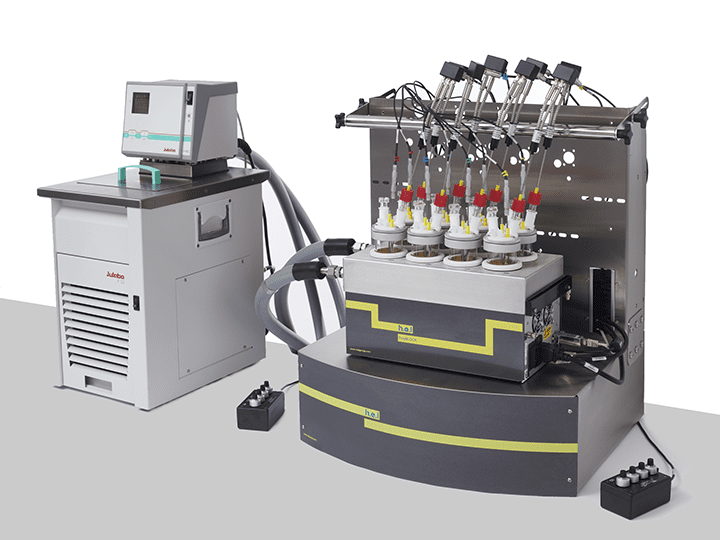
CrystalEYES is an advanced crystallization monitoring system that measures turbidity, temperature and optional pH during crystallization. It enables real-time detection of dissolution and nucleation points, supporting accurate crystallization analysis and process development. With scalable probe options and flexible upgrades, it is a versatile solution across all laboratory scales.
Overview
Crystallization Monitoring and Analysis
Crystallization determines the quality, performance and manufacturability of chemical and pharmaceutical products. CrystalEYES lets chemists monitor crystallization in real time, giving clear identification of dissolution and nucleation events for improved understanding and control.
Flexible Measurement Capabilities
The system measures turbidity and temperature as standard, with optional pH monitoring where required — a comprehensive view of the crystallization process for more accurate data collection and analysis.
Scalable Across All Development Stages
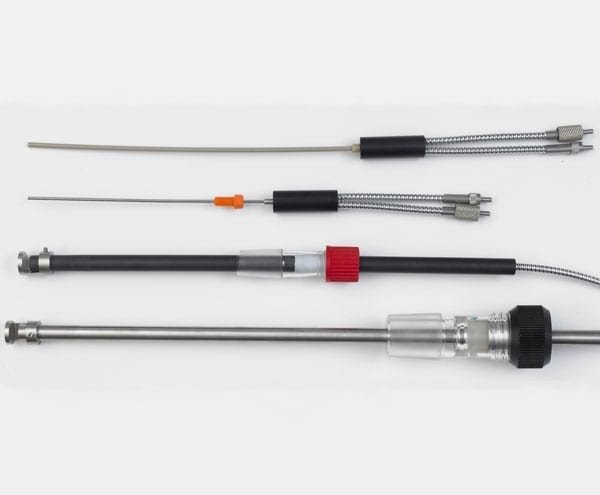
A wide range of probe options supports scales from ~3 mL test tubes to vessels exceeding 10 L, in materials including 316 stainless steel and Hastelloy. Scaling between applications needs only a probe change — no modification to electronics or software.
Upgradeable Control & Multi-Reactor Monitoring
CrystalEYES can be upgraded to full process control — precise management of heating, cooling, stirring and liquid dosing. Multi-channel configurations allow simultaneous monitoring and control of multiple reactors for higher throughput.
Key specifications
| Measured parameters | Turbidity and temperature (standard); optional pH monitoring |
|---|---|
| Detection | Real-time dissolution and nucleation — solubility & recrystallization points |
| Probe scale range | ~3 mL test tubes to >10 L vessels — scale with a probe change only |
| Probe materials | 316 stainless steel and Hastelloy (excellent chemical compatibility) |
| Probe diameter | 5 mm — usable in the smallest vessels; up to 8 probes on CrystalSCAN |
| Max temperature / pressure | 200 °C; MWP 10 bar at 25 °C |
| Sensing technology | H.E.L proprietary Near-Infrared (NIR) turbidity sensors |
| Data handling | Automatic CSV logging, real-time graphical display, one-click export to Excel |
| Control & software | Optional full process control (heat / cool / stir / dose) and multi-channel operation; WinISO Control software |
Applications
Turbidity sensing, control & software
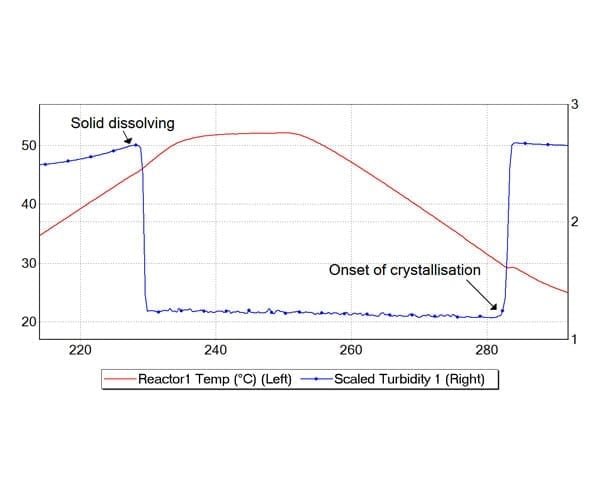
CrystalEYES uses H.E.L’s proprietary turbidity sensors and WinISO Control software for accurate detection of solubility and recrystallization points. The software detects these points from sharp changes in signal, displayed graphically in real time for immediate interpretation.
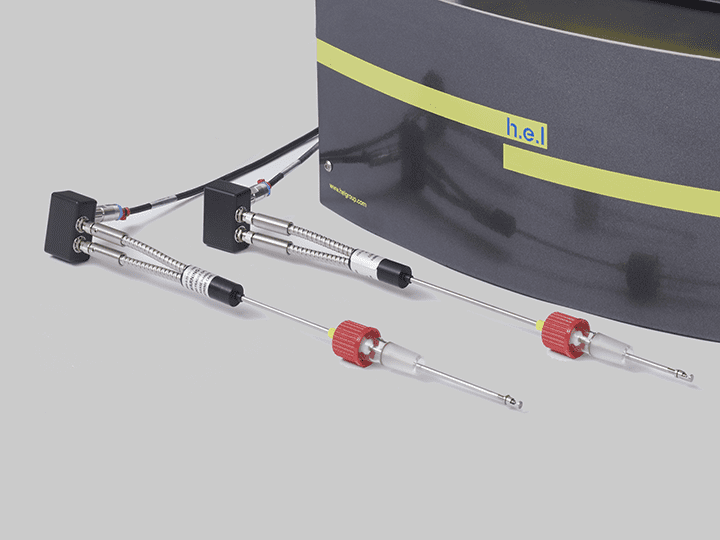
A Near-Infrared (NIR) source sends light through the solution and back to a detector via a mirror — as particles increase, light intensity drops and turbidity rises. The probes are simple, robust and cost-effective, constructed in hard-wearing Hastelloy for excellent chemical compatibility. At just 5 mm in diameter they suit the smallest vessels, and up to 8 probes can run simultaneously on the H.E.L CrystalSCAN system.
See our technical literature and application notes for worked crystallization examples.
Frequently asked questions
What does CrystalEYES measure?
How does it detect solubility and nucleation?
What scales does it work at?
Can it control the crystallization, not just monitor it?
What software does it use?
Is it customisable to my chemistry?
Selected publications
Subscription or purchase may be required for full access. View all publications →
Explore the range
Ready to see your crystallization in real time?
Talk to a specialist about probe options and upgrades for your chemistry.
“I use a H.E.L turbidity probe plus temperature probe for the determination of metastable zone widths… The system is easy to use and very robust and records faithfully all the happenings… The probes are neat and so can be used in small vessels, an advantage when dealing with valuable compounds.”